


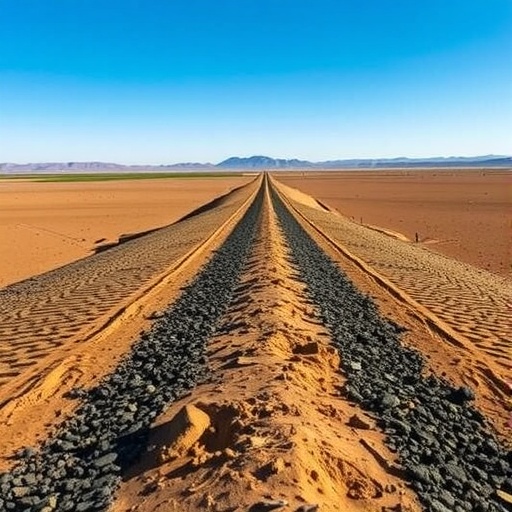
In a groundbreaking review recently published in the journal Biochar, researchers unveil the transformative potential of biochar—an innovative, carbon-rich material derived from agricultural waste—in restoring the health and resilience of dryland soils while simultaneously mitigating the escalating threat of desertification. Covering nearly 40 percent of Earth’s terrestrial surface, arid and semi-arid land regions face intensifying environmental pressures including diminishing soil fertility, prolonged water scarcity, and advancing desertification, which together jeopardize food security and ecosystem balance on a global scale.
Traditional land management approaches in these fragile ecosystems, such as heavy fertilization and extensive irrigation, often prove to provide ephemeral benefits and, over time, may exacerbate soil degradation through nutrient depletion and increased erosion. Addressing this paradox requires solutions that offer lasting improvements in soil structure and water management without compromising the environment. Biochar emerges as a compelling candidate by harnessing a suite of physical, chemical, and biological properties uniquely suited for arid landscapes.
Produced by pyrolysis—a thermal decomposition process conducted in low-oxygen conditions—biochar transforms crop residues, forestry by-products, and other organic materials into a stable, porous carbon matrix. This structure not only endows biochar with exceptional durability, enabling it to persist in soils for decades or even centuries, but also creates a myriad of microhabitats that support beneficial soil microbes critical for nutrient cycling. Such biological activity, when coupled with enhanced soil aggregation, fosters a revitalized soil ecosystem capable of supporting robust plant growth under water-limited conditions.
The biochar review highlights empirical data demonstrating substantial enhancements in soil water retention, typically ranging from 15 to 35 percent improvement after biochar amendment. This increase in moisture availability is vital in drylands, where water scarcity frequently limits crop productivity. By reducing evaporation losses and augmenting the soil’s capacity to hold water, biochar acts as a reservoir that sustains vegetation during dry spells. Moreover, this unique material significantly boosts microbial biomass—often by up to half—thereby reinforcing soil fertility through intensified organic matter decomposition and nutrient release.
The resilience imparted by biochar extends beyond microbiological benefits. Its capacity to stabilize soil aggregates counteracts erosion processes, a chronic challenge in dryland environments that leads to the loss of topsoil and essential nutrients. Field experiments document that introducing biochar into degraded soils can increase crop yields, with biomass improvements reported between 30 and 50 percent depending on local conditions. These findings suggest biochar can transform marginal lands into productive agricultural zones, thereby addressing food insecurity in vulnerable regions.
Complementing its soil health functions, biochar holds significant promise as a climate change mitigation tool. Its stable carbon composition effectively sequesters atmospheric carbon dioxide when applied to soils, locking it away for prolonged periods and reducing greenhouse gas concentrations. The longevity of biochar’s carbon storage contrasts sharply with the rapid decomposition of raw organic matter, positioning biochar as a strategic intervention that synergizes sustainable agriculture with global carbon management objectives.
Innovations pushing the boundaries of biochar application are rapidly emerging. Precision agriculture, employing technologies such as drone-assisted spreading, enables targeted, efficient biochar integration tailored to heterogeneous landscape features. Co-composting biochar with organic waste streams produces enriched fertilizers, amplifying nutrient availability and fostering soil microbial communities. Additionally, coupling biochar production with renewable energy inputs like solar-powered pyrolysis advances the sustainability and scalability of biochar supply chains by reducing fossil fuel dependence during its manufacture.
Despite these promising advances, the review authors caution against perceiving biochar as a universal remedy. The efficacy of biochar is intrinsically linked to factors such as the biomass feedstock source, pyrolysis parameters, and the chemistry and texture of the recipient soils. Misapplication or inappropriate biochar formulations can lead to unintended consequences, such as nutrient immobilization or increased soil salinity, which may impair crop growth rather than promote it. Thorough site-specific assessments remain essential to optimize outcomes.
Economic hurdles represent another significant barrier to widespread biochar adoption. The cost per ton of produced biochar often reaches hundreds of dollars, primarily driven by feedstock collection, transport logistics, and pyrolysis operations. To achieve meaningful impact, developing cost-effective and locally adapted biochar production and distribution systems is vital. Policy frameworks and industry partnerships that incentivize integration of biochar into existing agricultural and environmental management practices will be critical to overcoming these challenges.
Looking ahead, the researchers advocate for a multidisciplinary and collaborative approach involving scientific communities, policymakers, agribusiness stakeholders, and local land managers. Systematic long-term field studies are needed to rigorously evaluate the environmental, agronomic, and socioeconomic impacts of biochar under varied dryland scenarios. Such efforts will be instrumental in establishing biochar as an integral component of climate-smart land restoration, contributing simultaneously to biodiversity conservation, food security, and carbon sequestration.
As climate change accelerates and land degradation threatens the sustainability of dryland ecosystems, nature-based interventions like biochar assume ever greater significance. By reconnecting soil science with innovative carbon technologies, biochar presents a scientifically robust, scalable, and environmentally synergistic pathway that aligns agricultural productivity with climate resilience objectives. Its adoption could redefine land stewardship in vulnerable regions and chart a viable course toward more sustainable global food systems under mounting environmental pressures.
Cite Scienmag News
Alan Morgan. (March 27, 2026). Biochar: A Climate-Smart Solution to Restore Dryland Soils and Combat Desertification. Scienmag. https://scienmag.com/biochar-a-climate-smart-solution-to-restore-dryland-soils-and-combat-desertification/
Alan Morgan. "Biochar: A Climate-Smart Solution to Restore Dryland Soils and Combat Desertification." Scienmag, 27 March 2026, https://scienmag.com/biochar-a-climate-smart-solution-to-restore-dryland-soils-and-combat-desertification/. Accessed 3 September 2026.
Alan Morgan. "Biochar: A Climate-Smart Solution to Restore Dryland Soils and Combat Desertification." Scienmag. March 27, 2026. https://scienmag.com/biochar-a-climate-smart-solution-to-restore-dryland-soils-and-combat-desertification/


