

Thursday, July 30, 2026
Science
No Result
View All Result
  • Login
  • HOME
  • SCIENCE NEWS
  • CONTACT US
  • HOME
  • SCIENCE NEWS
  • CONTACT US
No Result
View All Result
Scienmag
No Result
View All Result
Home Science News Medicine

BET inhibition reveals glycolytic vulnerability via HIF1α in triple-negative breast cancer

July 9, 2026
in Medicine
Reading Time: 2 mins read
0
BET inhibition reveals glycolytic vulnerability via HIF1α in triple-negative breast cancer

BET inhibition reveals glycolytic vulnerability via HIF1α in triple-negative breast cancer

65
SHARES
587
VIEWS
Share on FacebookShare on Twitter
ADVERTISEMENT

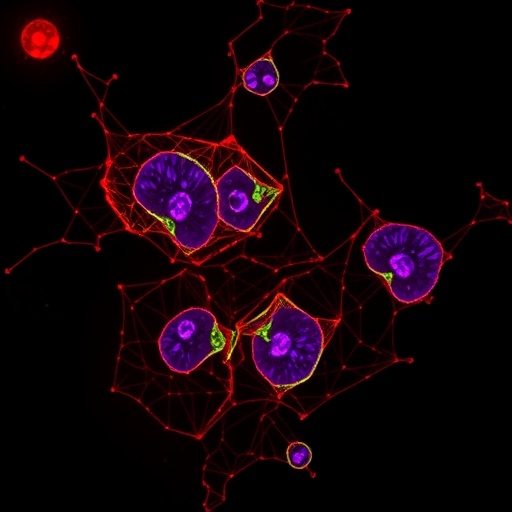
In a groundbreaking study poised to reshape the therapeutic landscape of aggressive breast cancers, researchers have uncovered a novel metabolic vulnerability in a specific subset of triple-negative breast cancer (TNBC). This discovery hinges on the interplay between BET protein inhibition and the stabilization of hypoxia-inducible factor 1-alpha (HIF1α), revealing a targetable dependency on glycolysis that may pave the way for innovative treatment strategies.

Triple-negative breast cancer, known for its lack of hormone receptors and HER2 expression, has long eluded targeted therapies, making chemotherapy the mainstay despite its limited efficacy and high relapse rates. The latest findings, published in Cell Death Discovery, shed light on a molecular mechanism that could disrupt this grim status quo. The research team, led by Rossi, Iorio, and Chirico, demonstrated that inhibiting Bromodomain and Extra-Terminal domain (BET) proteins triggers a profound metabolic shift governed by HIF1α stabilization.

BET proteins are epigenetic readers that regulate gene expression by binding to acetylated histones, and their inhibition has been explored as a strategy to dampen oncogenic transcriptional programs. However, the unintended consequence of BET inhibition, as revealed in this study, is the stabilization of HIF1α—a critical transcription factor that governs cellular responses to hypoxia and orchestrates glycolytic metabolism.

The accumulation of HIF1α initiates a transcriptional program that reprograms cancer cell metabolism towards enhanced glycolysis, a process often leveraged by tumor cells to sustain their rapid growth and survival under low oxygen conditions. This metabolic rewiring exposes a previously hidden dependency on glycolysis in TNBC cells subjected to BET inhibition, effectively unmasking a therapeutic target.

Importantly, the research delineates that this glycolytic dependency is not uniform across all TNBC cases but is confined to a well-defined molecular subset. This stratification opens avenues for precision medicine approaches, enabling clinicians to identify patients who might benefit from combinatorial therapies targeting both BET proteins and glycolytic pathways.

From a therapeutic perspective, dual targeting could suppress tumor proliferation more effectively, circumvent resistance mechanisms, and improve patient outcomes. The study underscores the potential of employing glycolytic inhibitors alongside BET inhibitors, exploiting the synthetic lethality arising from the metabolic vulnerabilities induced by epigenetic modulation.

This discovery highlights the intricate network between epigenetic regulators and metabolic pathways in cancer, emphasizing the necessity for integrated treatment paradigms that address these interconnected axes. By illuminating the HIF1α-driven transcriptional landscape following BET inhibition, the study provides valuable insights into tumor biology and metabolic plasticity.

As triple-negative breast cancer continues to pose a significant clinical challenge, findings such as these inject optimism into the quest for durable targeted therapies. Future research will undoubtedly focus on validating these mechanisms in clinical settings and developing potent, selective glycolytic inhibitors compatible with BET-targeted regimens.

In conclusion, this transformative research opens a new frontier in cancer therapy by revealing how modulating epigenetic factors can unveil metabolic susceptibilities. The exploitation of HIF1α stabilization-induced glycolytic dependencies offers a promising strategy that could eventually translate into more effective interventions for patients afflicted with this formidable breast cancer subtype.

Subject of Research: Targeting glycolytic dependency through HIF1α stabilization induced by BET inhibition in a subset of triple-negative breast cancer.

Article Title: BET inhibition unmasks a targetable glycolytic dependency through a HIF1α stabilization and driven transcriptional program in a defined subset of triple-negative breast Cancer.

Article References:
Rossi, T., Iorio, E., Chirico, M. et al. BET inhibition unmasks a targetable glycolytic dependency through a HIF1α stabilization and driven transcriptional program in a defined subset of triple-negative breast Cancer. Cell Death Discov. (2026). https://doi.org/10.1038/s41420-026-03230-8

Image Credits: AI Generated

DOI: https://doi.org/10.1038/s41420-026-03230-8

Tags: BET protein inhibitionbromodomain inhibitorscancer metabolism and epigeneticsepigenetic regulation in cancerglycolysis dependency in tumor cellsglycolytic vulnerabilityHIF1α stabilizationhypoxia-inducible factors in cancermetabolic reprogramming in TNBCnovel therapeutic strategies for TNBCtargeted therapy for aggressive breast cancerstriple-negative breast cancer
Share26Tweet16
Previous Post

Food Waste Treatment Boosts Renewable Energy but Produces Harmful Brown Byproduct

Next Post

GLP-1 Receptor Agonists Aid Weight Management in Mental Illness

Related Posts

Representations of the intrinsic value of information in mouse orbitofrontal cortex
Medicine

Representations of the intrinsic value of information in mouse orbitofrontal cortex

July 30, 2026
Ferroptotic propagation: from single-cell execution to tissue-scale death programs
Medicine

Ferroptotic propagation: from single-cell execution to tissue-scale death programs

July 30, 2026
Residential proximity to major roadways and prevalent diabetes in older adults: a cross-sectional study based on CLHLS
Medicine

Residential proximity to major roadways and prevalent diabetes in older adults: a cross-sectional study based on CLHLS

July 30, 2026
Overestimations in the cyclization efficiency of small, restriction enzyme-digested DNA fragments
Medicine

Overestimations in the cyclization efficiency of small, restriction enzyme-digested DNA fragments

July 30, 2026
Sulfated polysaccharides target RANK Lys97 to inhibit osteoclast differentiation and reverse osteoporosis
Medicine

Sulfated polysaccharides target RANK Lys97 to inhibit osteoclast differentiation and reverse osteoporosis

July 30, 2026
Regulation of RNA transcript elongation in metazoans and its relevance to disease
Medicine

Regulation of RNA transcript elongation in metazoans and its relevance to disease

July 30, 2026
Next Post
GLP-1 Receptor Agonists Aid Weight Management in Mental Illness

GLP-1 Receptor Agonists Aid Weight Management in Mental Illness

  • Mothers who receive childcare support from maternal grandparents show more

    Mothers who receive childcare support from maternal grandparents show more parental warmth, finds NTU Singapore study

    27656 shares
    Share 11059 Tweet 6912
  • University of Seville Breaks 120-Year-Old Mystery, Revises a Key Einstein Concept

    1061 shares
    Share 424 Tweet 265
  • Bee body mass, pathogens and local climate influence heat tolerance

    682 shares
    Share 273 Tweet 171
  • Researchers record first-ever images and data of a shark experiencing a boat strike

    546 shares
    Share 218 Tweet 137
  • Groundbreaking Clinical Trial Reveals Lubiprostone Enhances Kidney Function

    531 shares
    Share 212 Tweet 133
Science

Embark on a thrilling journey of discovery with Scienmag.com—your ultimate source for cutting-edge breakthroughs. Immerse yourself in a world where curiosity knows no limits and tomorrow’s possibilities become today’s reality!

RECENT NEWS

  • Ancient DNA reveals Ice Age humans preferred female mammoths
  • Public research and development money unlocks private investment and lasting economic growth
  • Satellite mapping reveals global inequities in lake water quality: over one-third of lakes fail to meet good water quality standards
  • One million euros allocated to six EUniWell study programmes on the way towards the Joint European Degree Label

Categories

  • Agriculture
  • Anthropology
  • Archaeology
  • Athmospheric
  • Biology
  • Biotechnology
  • Blog
  • Bussines
  • Cancer
  • Chemistry
  • Climate
  • Earth Science
  • Editorial Policy
  • Marine
  • Mathematics
  • Medicine
  • Pediatry
  • Policy
  • Psychology & Psychiatry
  • Science Education
  • Social Science
  • Space
  • Technology and Engineering

Subscribe to Blog via Email

Success! An email was just sent to confirm your subscription. Please find the email now and click 'Confirm Follow' to start subscribing.

Join 5,147 other subscribers

© 2025 Scienmag - Science Magazine

Welcome Back!

Login to your account below

Forgotten Password?

Retrieve your password

Please enter your username or email address to reset your password.

Log In
No Result
View All Result
  • HOME
  • SCIENCE NEWS
  • CONTACT US

© 2025 Scienmag - Science Magazine
