


Choosing the right cancer drug for an individual patient remains one of the most stubborn problems in oncology. Genetic sequencing can identify the mutations driving a tumor, but knowing which mutation is present does not always reveal which drug will work. Colorectal cancer illustrates the gap particularly well: the genetic influences on drug resistance are still poorly understood, so matching treatments to mutations often falls short. A team at the University of South Carolina has now built a platform designed to sidestep that problem entirely, testing drugs directly on living tumor tissue rather than inferring sensitivity from a mutation list.
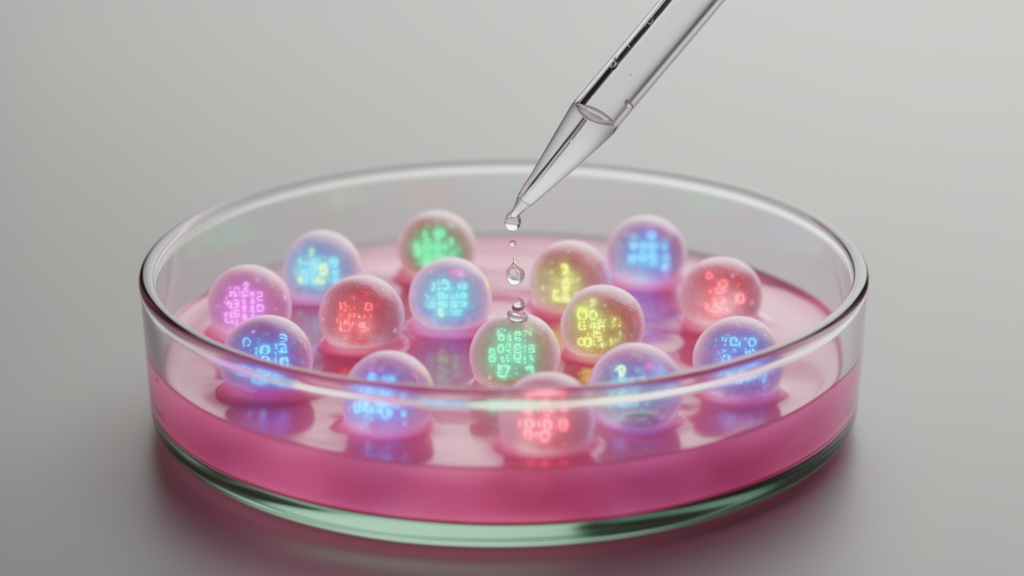
The platform, described in BMC Cancer, is called StarTrace, and its central idea is deceptively simple. Patient-derived organoids, miniature tumors grown in the laboratory from a patient’s own cancer cells, are already recognized as accurate avatars of the tumors they came from. What StarTrace adds is a way to pool organoids from many different patients into a single dish, expose the entire pool to a drug, and then determine how each patient’s organoid fared. The trick that makes this possible is clonal DNA barcoding: each organoid line is tagged with a unique DNA barcode, one of 72 distinct sequences assembled for the study, that travels with the cells as they grow, divide, and respond to treatment.
Reading out the results relies on a Darwinian logic. When a pool of barcoded organoids is treated with a drug, sensitive organoids die or stop proliferating, so the abundance of their barcodes in the population falls. Resistant organoids keep growing, and their barcodes rise in relative frequency. By comparing barcode abundance before and after treatment, the researchers obtain a quantitative measure of the relative fitness of every organoid in the pool under every drug condition tested. A barcode that drops sharply in frequency after 28 days of exposure to a tyrosine kinase inhibitor flags that patient’s tumor as sensitive; a barcode that holds steady or climbs flags resistance.
Two complementary readout methods track the barcodes. The first is quantitative real-time PCR, a fast and inexpensive assay that can measure the abundance of specific barcode sequences directly. The second is next-generation sequencing, which in this study took the form of single-molecule sequencing assays capable of counting all 72 barcodes simultaneously and deconvoluting the pool over time. The team used the sequencing approach to follow the log-fold change in frequency of each barcoded organoid across a 28-day treatment course, comparing each barcode against a vehicle-treated control. Supplementary data released with the paper include the barcode sequences and their raw counts after each drug treatment, allowing the fitness calculations to be examined in detail.
The organoids themselves came from a biobank of colorectal cancer samples collected under an approved institutional protocol, the Palmetto Health–University of South Carolina Biorepository. Each organoid line was genetically characterized by whole exome sequencing, and somatic mutations in known driver genes were cataloged, with patient-matched normal organoids serving as controls to distinguish inherited variants from tumor-specific ones. The lines included both TP53-mutant and TP53-wildtype organoids, giving the pool a spread of genetic backgrounds against which drug responses could be compared. This genetic annotation matters because one long-term aim of the work is to connect observed drug sensitivity or resistance back to the mutations that cause it, building a map of drug-genetic interactions from real phenotypic data.
The multiplexing is what transforms the economics of the assay. In a conventional organoid drug screen, each patient’s organoids must be plated, treated, and analyzed separately, so testing ten patients against ten drugs requires a hundred independent cultures. In a StarTrace pool, those same hundred data points emerge from a handful of pooled cultures, because every dish contains all ten patients’ organoids at once and each drug condition is tested against the full pool simultaneously. The researchers describe the approach as streamlined and scalable, and the barcode counts from sequencing provide the quantitative depth needed to detect relative fitness changes even when individual organoids grow at different baseline rates within the pool.
The study focused on small molecule inhibitors, including tyrosine kinase inhibitors of the kind widely used in cancer therapy. By tracking relative changes in barcode abundance, the platform compared different patients’ organoid avatars’ responses to the various drugs, generating sensitivity and resistance profiles for each line. The authors note that these comparative response patterns may inform treatment selection in future applications, effectively offering a phase-zero-style phenotypic trial conducted entirely in vitro before any drug reaches the patient. Rather than asking whether a mutation predicts response, the assay asks the tumor itself how it responds, which is the question clinicians actually need answered.
The implications run in two directions. For personalized medicine, a platform that can test a patient’s organoid avatar against a panel of drugs quickly and quantitatively could help oncologists rank treatment options when genetic data alone is ambiguous, a common situation in colorectal cancer where resistance mechanisms are poorly mapped. For preclinical drug development, the same multiplexing logic allows a candidate compound to be screened against dozens of genetically diverse tumor avatars at once, revealing early whether activity is broad or confined to a specific molecular subset. High-throughput screening, phenotypic drug screening, and lab-on-a-chip technologies are all listed among the related subject areas, reflecting where the authors see the platform fitting into the broader research landscape.
The work is early-stage, and the authors are careful about what the current results demonstrate. The published study establishes the quantitative platform and shows that pooled barcode readouts can compare organoid drug responses across patients; clinical validation, prospective trials, and regulatory pathways remain ahead. The team has also moved to protect the invention, filing a U.S. patent application in November 2024 covering the multiplex drug testing platform. Organoid biobanking was supported by an NCI Small Business Innovation Research award, signaling that the group intends to develop the technology toward practical use rather than leave it as a laboratory curiosity.
StarTrace arrives at a moment when organoid technology is maturing from a research tool into a potential clinical decision-support system. Its contribution is architectural rather than biological: by borrowing the barcode-counting logic of modern genomics and applying it to pooled living tumor avatars, it converts drug sensitivity testing from a series of separate experiments into a single scalable measurement. If subsequent studies confirm that pooled barcode fitness readouts predict patient outcomes, the days of choosing cancer therapy by mutation guesswork may be numbered, replaced by a quantitative answer delivered by the tumor itself.
Subject of Research: Multiplex DNA-barcoded organoid avatars for pooled drug sensitivity testing in colorectal cancer
Article Title: StarTrace: a multiplex organoid avatar drug testing platform for personalized medicine
Article References: Khalili, S., Patel, S., Patel, N., Moy, V., Lyons, S., Gray, E., Brents, R., Banister, C. E., Morrison, S. E., & Buckhaults, P. J. (2026). StarTrace: a multiplex organoid avatar drug testing platform for personalized medicine. BMC Cancer. https://doi.org/10.1186/s12885-026-16921-3
Image Credits: AI Generated
DOI: 10.1186/s12885-026-16921-3
Keywords: patient-derived organoids, colorectal cancer, drug screening, precision medicine, DNA barcoding, high-throughput screening, quantitative PCR, next-generation sequencing, StarTrace, multiplex, organoid, avatar
Cite Scienmag News
Nathaniel Bowman. (October 17, 2026). Barcoded organoid pools test cancer drugs in one dish. Scienmag. https://scienmag.com/barcoded-organoid-pools-test-cancer-drugs-in-one-dish/
Nathaniel Bowman. "Barcoded organoid pools test cancer drugs in one dish." Scienmag, 17 October 2026, https://scienmag.com/barcoded-organoid-pools-test-cancer-drugs-in-one-dish/. Accessed 17 October 2026.
Nathaniel Bowman. "Barcoded organoid pools test cancer drugs in one dish." Scienmag. October 17, 2026. https://scienmag.com/barcoded-organoid-pools-test-cancer-drugs-in-one-dish/


