


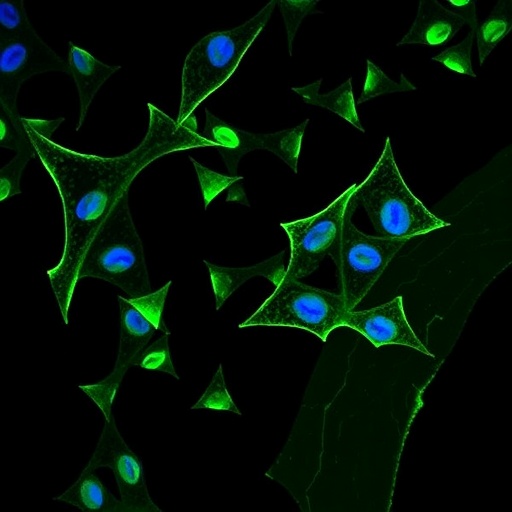
In a groundbreaking study published in 2026, researchers have unveiled a pivotal mechanism behind the stubborn acquired resistance to KRAS G12C inhibitors in non-small cell lung cancer (NSCLC), opening fresh avenues for therapeutic intervention. The collaborative work led by Liao, Lan, Chen, and colleagues identifies the AURKA/PHB2 signaling axis as a central driver, transforming our understanding of resistance development in KRAS G12C-mutant NSCLC—a context where effective treatment options are critically needed.
The KRAS oncogene, particularly the G12C mutation, has been a focal point of targeted cancer therapies over recent years. KRAS G12C inhibitors originally promised a breakthrough by selectively targeting mutant KRAS proteins and thereby stalling tumor growth. However, a significant clinical challenge has emerged: tumors initially susceptible to these agents eventually regain proliferative capacity, undermining sustained therapeutic success. The molecular underpinnings of this adaptive resistance have remained elusive until now.
Diving deeply into cellular dynamics, the study delineates how Aurora kinase A (AURKA), a serine/threonine kinase intricately involved in mitotic progression and cell cycle regulation, collaborates with prohibitin 2 (PHB2), a mitochondrial chaperone known for roles in membrane integrity and signaling. This novel AURKA/PHB2 partnership appears to orchestrate escape pathways enabling KRAS G12C-mutant NSCLC cells to circumvent pharmacological blockade by G12C inhibitors.
Mechanistically, AURKA activation intensifies downstream signaling cascades that neutralize the intended suppressive effects of KRAS G12C-targeted drugs. Concomitantly, PHB2 reinforces mitochondrial resilience and bioenergetic homeostasis, facilitating tumor cells’ survival under drug-induced stress. Together, this signaling nexus underpins a cellular state permissive to continued growth despite targeted intervention, highlighting a sophisticated resistance framework.
The experimental approach combined cutting-edge molecular biology techniques with advanced in vitro and in vivo models. Using CRISPR-mediated gene editing and pharmacologic inhibition strategies, the researchers demonstrated that disrupting AURKA or PHB2 led to resensitization of resistant cancer cells to KRAS G12C inhibitors. These observations not only confirm the functional role of the AURKA/PHB2 axis but also underscore its potential as a druggable target to overcome resistance.
Clinically, this study holds profound implications. The currently available KRAS G12C inhibitors, while revolutionary, fall short of durable outcome improvement due to adaptive resistance mechanisms. Targeting the AURKA/PHB2 pathway could pave the way for combinatory therapeutic strategies that preempt or reverse resistance, thereby extending progression-free survival and enhancing response rates in NSCLC patients harboring KRAS G12C mutations.
Moreover, the delineation of mitochondrial involvement via PHB2 adds a layer of metabolic complexity to the resistance phenotype. As mitochondria are central to cellular energy balance, reactive oxygen species production, and apoptosis regulation, their stabilization by PHB2 represents an underappreciated survival strategy within cancer cells confronting targeted therapy stress.
This discovery also sheds light on the broader landscape of kinase-driven resistance mechanisms. AURKA, already implicated in numerous oncogenic processes, now emerges as a linchpin in the adaptive plasticity of KRAS-mutant tumors. Therapeutic targeting of AURKA, either through direct inhibitors or allosteric modulators, gains renewed interest—not only in NSCLC but potentially across diverse malignancies exhibiting KRAS dependency.
Notably, the research team explored signaling crosstalk and feedback loops, revealing that AURKA/PHB2 activation attenuates apoptosis and fosters compensatory proliferative signals. This dual functionality accelerates tumor cell evasion from drug effects, suggesting a multifaceted role of this axis in resistance evolution. These insights advocate for molecularly informed therapeutic design, emphasizing the need for integrated targeting of oncogenic drivers and their resistance facilitators.
The translational potential of these findings is underscored by preliminary data indicating that patients exhibiting elevated AURKA/PHB2 expression profiles display poorer responses to KRAS G12C inhibitors. Biomarker-guided clinical trials could refine patient selection for combination therapies, elevating the precision medicine paradigm in lung cancer management.
Finally, these advances echo the growing recognition of tumor heterogeneity and plasticity as formidable obstacles in cancer therapeutics. By unmasking the AURKA/PHB2 axis as a key node in resistance networks, the study provides a compelling blueprint for future drug discovery and therapeutic innovation aimed at durable cancer control.
In summary, the elucidation of AURKA/PHB2 signaling in driving acquired resistance to KRAS G12C inhibitors marks a significant milestone in oncology research. This work not only deepens mechanistic understanding but also charts a path toward more effective, lasting treatments for KRAS-driven NSCLC. As follow-up studies emerge, the oncology community eagerly anticipates translational applications that could transform patient outcomes, satisfying a critical unmet clinical need.
Cite Scienmag News
Nathaniel Bowman. (April 25, 2026). AURKA/PHB2 Signaling Fuels Resistance to KRAS G12C Inhibitors. Scienmag. https://scienmag.com/aurka-phb2-signaling-fuels-resistance-to-kras-g12c-inhibitors/
Nathaniel Bowman. "AURKA/PHB2 Signaling Fuels Resistance to KRAS G12C Inhibitors." Scienmag, 25 April 2026, https://scienmag.com/aurka-phb2-signaling-fuels-resistance-to-kras-g12c-inhibitors/. Accessed 3 September 2026.
Nathaniel Bowman. "AURKA/PHB2 Signaling Fuels Resistance to KRAS G12C Inhibitors." Scienmag. April 25, 2026. https://scienmag.com/aurka-phb2-signaling-fuels-resistance-to-kras-g12c-inhibitors/


