


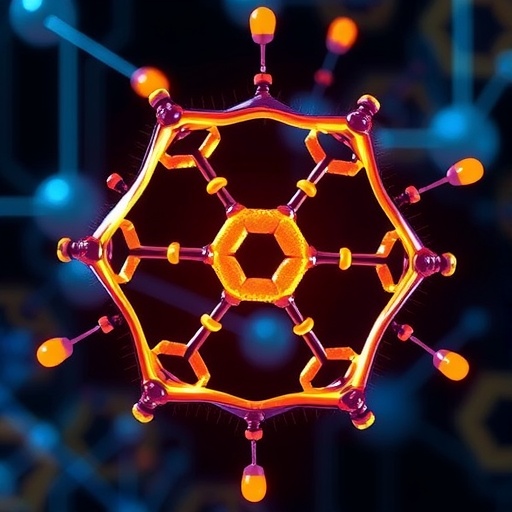
Artificial intelligence is revolutionizing the chemical engineering sector, fundamentally transforming how processes are designed, optimized, and managed. Across academia and industry, AI-driven algorithms and data-intensive models are accelerating innovation in production efficiency, safety, molecular design, and sustainability. This wave of digital transformation promises to reshape chemical manufacturing into a smarter and greener endeavor.
One of the most impactful applications lies in reaction engineering and process optimization. Machine learning models assimilate experimental and operational data to accurately predict reaction yields and optimum conditions. Reinforcement learning techniques manage the complex, nonlinear dynamics of industrial reactors, enabling them to self-optimize by continuously adjusting inputs in real-time. Coupled with digital twins—virtual replicas of production units synchronized with live sensor data—AI enhances anomaly detection, forecasting, and operational decision-making. This integration elevates process control to unprecedented levels of precision and adaptability.
Molecular design and materials discovery benefit profoundly from AI’s vast predictive power. Large foundation models pre-trained on extensive chemical datasets can be fine-tuned for tasks such as property prediction, synthesis route planning, and novel molecule generation. Advanced generative frameworks including GANs, variational autoencoders, and diffusion models propose innovative candidate molecules, expediting the search for high-performance materials. Autonomous laboratories, which integrate AI-driven hypothesis generation with robotic synthesis and testing, are compressing development timelines from years to months. Furthermore, natural language processing tools mine scientific literature, extracting experimental conditions and outcomes to build rich databases that fuel further discoveries.
AI’s role in process safety and sustainability is equally transformative. Continuous analysis of sensor data enables early identification of equipment degradation and hazardous conditions, supporting predictive maintenance and preventing accidents. Natural language processing applied to incident reports and operational logs reveals systemic failure patterns and refines best practice guidelines. Beyond safety, AI informs multi-objective process optimization, balancing economic viability with reduced energy consumption, emissions, and waste. These capabilities are integral to advancing green chemistry and sustainable industrial operations.
The convergence of AI with the Industrial Internet of Things and automation is fostering smart manufacturing ecosystems characterized by flexibility, efficiency, and resilience. Around-the-clock AI monitoring adjusts production parameters dynamically, elevating operational responsiveness. Looking forward, emerging frontiers include the application of quantum machine learning to catalysis and embedding AI within circular economy frameworks, linking molecular innovation to comprehensive life-cycle environmental assessments.
Despite immense potential, challenges remain. Data scarcity, quality, and integration with legacy systems present ongoing hurdles. Trustworthy AI mandates advances in explainability, uncertainty quantification, and robust safeguards. Computational demands and cybersecurity risks further complicate deployment. Responsible AI development, emphasizing safety, ethics, and environmental stewardship, remains paramount. Combining mechanistic understanding with AI insights ensures reliability and human oversight in critical decision-making.
This transformative integration of AI within chemical engineering heralds a new era where intelligent algorithms and human expertise coalesce. By harnessing data in unprecedented ways, the field is poised not only for scientific breakthroughs but also for sustainable, safer, and more efficient chemical manufacturing—a leap toward a smarter, greener industrial future.
Keywords
Artificial intelligence, chemical engineering, reaction optimization, molecular design, digital twins, smart manufacturing, process safety, sustainability
Cite Scienmag News
Denise Maddox. (July 13, 2026). Artificial Intelligence Transforms Chemical Engineering from Design to Manufacturing. Scienmag. https://scienmag.com/artificial-intelligence-transforms-chemical-engineering-from-design-to-manufacturing/
Denise Maddox. "Artificial Intelligence Transforms Chemical Engineering from Design to Manufacturing." Scienmag, 13 July 2026, https://scienmag.com/artificial-intelligence-transforms-chemical-engineering-from-design-to-manufacturing/. Accessed 3 September 2026.
Denise Maddox. "Artificial Intelligence Transforms Chemical Engineering from Design to Manufacturing." Scienmag. July 13, 2026. https://scienmag.com/artificial-intelligence-transforms-chemical-engineering-from-design-to-manufacturing/


