


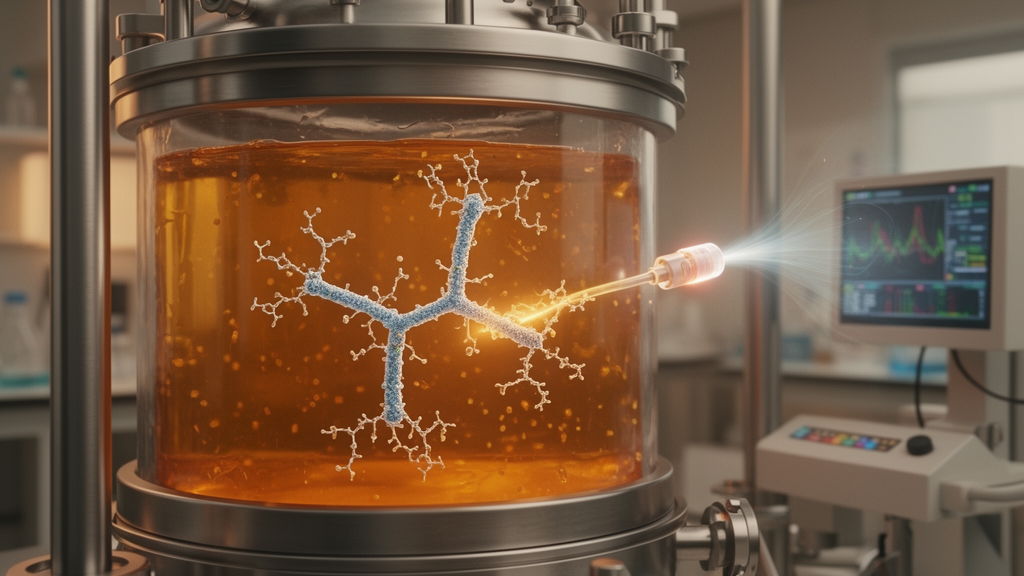
Monoclonal antibodies have become one of the most commercially and clinically consequential classes of modern medicine, yet the single sugar chain attached to each of their Fc regions remains one of the most underappreciated features of these blockbuster drugs. A new perspective published in Frontiers in Chemical Engineering argues that this N-linked glycan, far from being a late-stage quality attribute to be characterized after a cell line and manufacturing process are locked in, should instead be treated as an intrinsic design variable from the very beginning of drug development. The author, Aron Gyorgypal of Massachusetts General Hospital and Harvard Medical School, frames the concept as the “mAb glyco-better”: an antibody whose defined glycoform is the demonstrated basis of a pharmacological advantage over a comparator, carried forward as a design specification and release criterion rather than merely a characterization result.
The biology at stake is subtle. Unlike amino acid sequences, which are encoded in DNA and faithfully translated through RNA, glycosylation is not template-driven. Instead, it emerges from a network of enzymes operating in the endoplasmic reticulum and Golgi apparatus, dependent on nucleotide sugars and cofactors such as manganese, and sensitive to cell stress and nutrient availability. Every therapeutic antibody carries a single heavy-chain glycan at the asparagine 297 residue of its Fc region, typically a complex-type structure whose terminal sugars vary with the culture conditions inside the bioreactor. Medium composition, temperature, dissolved oxygen, pH, feeding strategy, and accumulated waste metabolites all shift the final glycan pattern, which is why batches sometimes fall outside release specifications and why glycosylation remains among the largest manufacturing challenges in the industry.
What makes this challenge paradoxical, according to the perspective, is that the same process sensitivity that plagues manufacturing also represents the most underexploited therapeutic opportunity. Each terminal sugar plays a distinct role in immune engagement. Loss of core fucose increases activating Fc gamma receptor engagement, a strategy already validated in the clinic. Terminal galactose enhances C1q binding and complement-dependent cytotoxicity. Sialic acid is associated with anti-inflammatory activity, although the mechanism remains contested. High-mannose glycoforms are cleared more rapidly from circulation through mannose receptor-mediated uptake and are therefore controlled as a liability. Small changes in the sugar tree can thus translate into meaningful differences in safety, stability, and efficacy.
The clinical precedent is striking. Mogamulizumab became the first FDA-approved biologic produced in a FUT8 knockout cell line in 2018, exploiting the fact that removing core fucose from the Fc glycan increases affinity for the activating receptor Fc gamma RIIIa by more than fifty-fold, thereby enhancing antibody-dependent cellular cytotoxicity by natural killer cells. Obinutuzumab, a type II anti-CD20 antibody approved in 2013, combines afucosylation with a distinct binding mode; in previously untreated patients with chronic lymphocytic leukemia, obinutuzumab plus chlorambucil extended median progression-free survival from 15.2 to 26.7 months compared with rituximab plus chlorambucil. Yet the same Fc gamma RIIIa engagement that drives efficacy also drives cytokine release, and obinutuzumab elicits marked elevations in IL-6 and IL-8 with infusion-related reactions during first infusion. Effector function, the perspective emphasizes, carries an upper as well as a lower bound, meaning glycan control is often defined by proximity to a specified target rather than maximization of a single glycoform.
Sialylation presents a different opportunity with a more uncertain mechanistic foundation. Only a minor fraction of endogenous human antibodies carries terminal alpha 2,6-linked sialic acid, and Chinese hamster ovary cells, the workhorse of antibody manufacturing, lack the ST6GAL1 enzyme needed to install this human-type linkage. Hypersialylated intravenous immunoglobulin has been shown to produce comparable anti-inflammatory efficacy at a fraction of the typical dose, raising the prospect that a recombinantly sialylated monoclonal could recapitulate that benefit at substantially lower cost. However, the originally proposed pathway, in which sialylated Fc engages the lectin receptor DC-SIGN to upregulate the inhibitory receptor Fc gamma RIIB, was derived largely from murine models, and subsequent work in human systems reported no detectable binding of sialylated human IgG to DC-SIGN regardless of glycan composition. The therapeutic hypothesis is supported by functional data but not yet by a settled receptor-level mechanism, a distinction the author argues matters greatly for any developer pursuing a sialylated glyco-better.
On the engineering side, the toolbox has matured considerably. Beyond single-gene knockouts and knock-ins, CRISPR-Cas9 now enables multiplexed disruption of glycosylation pathway genes and site-specific knock-in of heterologous glycosyltransferases at defined genomic loci. One systematic screen of 42 glycosyltransferase genes in CHO cells identified bottlenecks in the N-glycosylation pathway and alleviated them through overexpression, yielding antibody glycan variants with up to 80 percent galactosylated or 70 percent sialylated species, though specific productivity decreased markedly in many overexpressing pools. CRISPR activation of endogenous genes such as MGAT3 and ST6GAL1 has also increased total sialylation. Complementing these genetic approaches, feeding strategies target the substrate side of the same constraint: the Golgi-luminal availability of GDP-fucose, UDP-galactose, and CMP-sialic acid limits glycosyltransferase reaction rates, and targeted feeding of galactose with manganese, the cofactor for galactosyltransferase, has raised antibody galactosylation from roughly 34 to 69 percent. Combining enzyme overexpression with precursor supplementation pushes glycoforms toward their true ceiling, as demonstrated by B4GALT1 overexpression with galactose feeding achieving 82 percent galactosylation without loss of antibody yield.
But engineering the cell line only sets the ceiling; holding the target requires process analytical technology, or PAT, that can monitor glycosylation in near real time. Recent platforms integrate liquid chromatography-mass spectrometry with automated fluidics for protein A purification, deglycosylation, and tryptic digestion, enabling autonomous glycan measurements within a few hours of sample collection. Raman spectroscopy offers a non-invasive alternative that avoids contamination risk, though it relies on partial least squares models that carry risks of poor extrapolation and spectral overlap in complex reactor media. The current limitation, the perspective notes, is a trade-off between slower, more precise methods and rapid approximation methods, and the few-hour latency of LC-MS-based approaches is sufficient for semi-batch processes but problematic for continuous operations running for weeks.
Continuous perfusion bioreactors, which add fresh medium while bleeding off cells to maintain optimal density, represent the prevailing direction in next-generation manufacturing, and a regulatory pathway has developed in parallel. ICH Q13, the harmonized guideline on continuous manufacturing adopted in November 2022 and implemented by the FDA and EMA in 2023, explicitly recognizes PAT-enabled monitoring and real-time release testing as core elements of the control strategy for therapeutic proteins. Single-use continuous facilities achieve approximately 35 percent cost savings relative to stainless-steel batch facilities at annual demand in the hundreds of kilograms, an advantage that narrows at multi-ton scale. Because a glyco-better derives its advantage from enhanced potency that may permit lower dosing, reduced annual mass demand could place such products squarely within the volume range where continuous manufacturing is most economically favorable.
The crux of the argument is that neither cell line engineering nor PAT alone is sufficient; the gap lies in their integration. Glycoengineered cell lines are typically developed and characterized at bench scale with little forethought toward manufacturing-scale performance, and the genetic modifications themselves can alter cellular metabolism in ways that demand a different control strategy than the one designed around the parent line. Conversely, a continuous process designed without a cell line characterized under relevant process stresses leaves the PAT system without a stable biological reference. The result, the author warns, is a glycan specification met probabilistically rather than by rational design. Closed-loop glycosylation control, in which PAT readouts feed directly into automated calculations of how much glycan precursor to feed, would remove the need for operator intervention and substantially increase the probability of maintaining the target glycoform, but four bottlenecks remain: loop dynamics, the absence of a validated interface between analytical instruments and process control systems, the underactuated nature of the available control levers, and the regulatory challenge of qualifying a control system that deliberately varies its actions rather than following a fixed recipe.
The near-term horizon, the perspective concludes, is promising. The first integrated glycan control platforms combining glycoengineered cell lines with perfusion bioreactors operated under at-line, glycan-informed feedback control may emerge in the coming years, enabled by robust rapid analytics interfaces and validated hybrid models of CHO N-glycosylation. The biological knowledge to design monoclonal antibody glyco-betters already exists; the engineering knowledge to manufacture them consistently is converging. Cell line engineering sets the ceiling, the author writes, and the imperative is to develop the process capability that reaches it, together and from the start. While the framework is framed around the IgG1 backbone, where a single conserved glycosylation site per heavy chain keeps the control problem tractable, extending it to Fc-fusion proteins with multiple glycan sites, such as etanercept with its three N-glycosylation sites, would present a considerably harder challenge, making monoclonal antibodies the logical proving ground for this next generation of glycan-intrinsic biomanufacturing.
Subject of Research: Glycan-intrinsic biomanufacturing of monoclonal antibodies through integrated cell line glycoengineering and process analytical technology
Article Title: Glycan-intrinsic monoclonal antibody biomanufacturing
Article References: Glycan-intrinsic monoclonal antibody biomanufacturing. (n.d.). https://doi.org/10.3389/fceng.2026.1955792
Image Credits: AI Generated
DOI: 10.3389/fceng.2026.1955792
Keywords: monoclonal antibodies, N-linked glycosylation, glycoengineering, process analytical technology, continuous biomanufacturing, CHO cells, quality by design, Fc glycan, perfusion bioreactors, CRISPR, ICH Q13, biopharmaceutical manufacturing
Cite Scienmag News
Denise Maddox. (October 15, 2026). Antibody Sugar Engineering Meets Real-Time Monitoring to Reshape Biomanufacturing. Scienmag. https://scienmag.com/antibody-sugar-engineering-meets-real-time-monitoring-to-reshape-biomanufacturing/
Denise Maddox. "Antibody Sugar Engineering Meets Real-Time Monitoring to Reshape Biomanufacturing." Scienmag, 15 October 2026, https://scienmag.com/antibody-sugar-engineering-meets-real-time-monitoring-to-reshape-biomanufacturing/. Accessed 15 October 2026.
Denise Maddox. "Antibody Sugar Engineering Meets Real-Time Monitoring to Reshape Biomanufacturing." Scienmag. October 15, 2026. https://scienmag.com/antibody-sugar-engineering-meets-real-time-monitoring-to-reshape-biomanufacturing/


