Saturday, October 24, 2026
Science
No Result
View All Result
  • Login
  • HOME
  • SCIENCE NEWS
  • CONTACT US
  • HOME
  • SCIENCE NEWS
  • CONTACT US
No Result
View All Result
Scienmag
No Result
View All Result
Home Science News Climate

Antibiotic-Metal Complexes Prove More Toxic to Freshwater Algae Than Either Contaminant Alone

October 24, 2026
in Climate
Sloane Callahan
By Sloane Callahan Scienmag Editorial Profile - Climate Mitigation
Reading Time: 3 mins read
0
Antibiotic-Metal Complexes Prove More Toxic to Freshwater Algae Than Either Contaminant Alone

Antibiotic-Metal Complexes Prove More Toxic to Freshwater Algae Than Either Contaminant Alone

65
SHARES
587
VIEWS
Share on FacebookShare on Twitter
ADVERTISEMENT

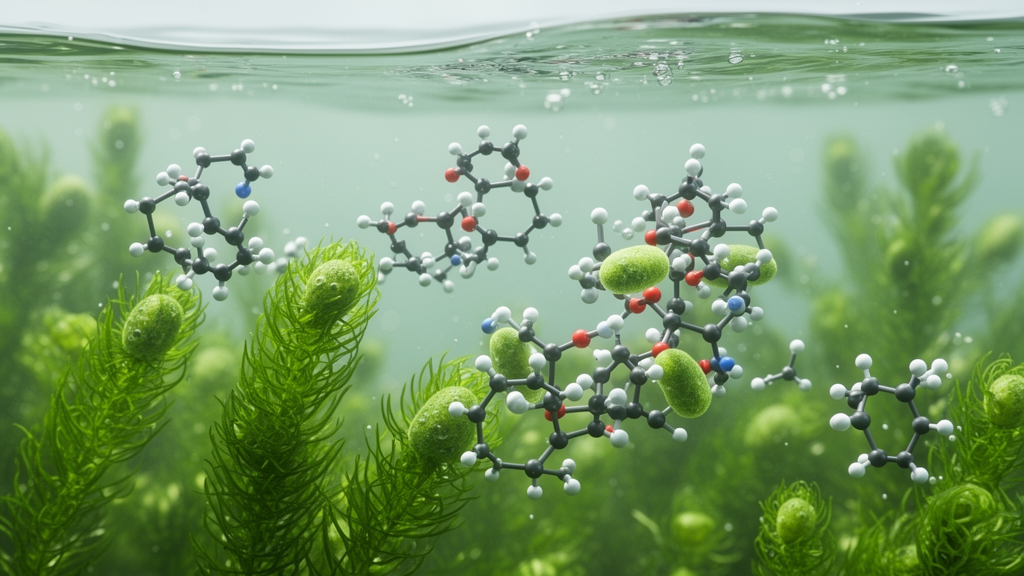
When antibiotics and heavy metals meet in polluted water, they can chemically bind together into complexes whose effects on aquatic life differ sharply from those of the parent compounds. A laboratory study published in Ecotoxicology has synthesized four such complexes of the widely used antibiotic ciprofloxacin — with iron(III), cobalt(II), nickel(II), and copper(II) — and found that each one inhibited the growth of a freshwater alga more strongly than either the antibiotic or the free metal ions on their own. Of the four, the ciprofloxacin-copper(II) complex showed the strongest toxic effect.

The research team, Dipak Baral, Ajaya Bhattarai, and Narendra Kumar Chaudhary, prepared the four ciprofloxacin-metal complexes and characterized them using several complementary techniques. Fourier-transform infrared spectroscopy (FT-IR) and UV-visible spectroscopy were used to probe the bonding between the antibiotic and each metal, while MALDI-TOF mass spectrometry and inductively coupled plasma mass spectrometry (ICP-MS) provided information on the complexes’ molecular masses and metal content.

To compare toxicity, the researchers exposed the freshwater alga Spirogyra columbiana to ciprofloxacin alone, to free metal ions, and to each of the four complexes under controlled laboratory conditions. After 72 hours of exposure, they measured two endpoints by UV-visible spectroscopy: algal growth inhibition and chlorophyll content. Both measurements track the health of the alga’s photosynthetic machinery, and the absorbance assays confirmed impaired photosynthesis following pollutant exposure.

The results showed a consistent pattern: the complexes were more toxic than either of their individual components. Ciprofloxacin-copper(II) stood out as the strongest inhibitor of growth among the four complexes tested. The authors attribute this enhanced toxicity to three linked mechanisms: increased lipophilicity of the complexes relative to the free antibiotic, improved bioavailability to the algal cells, and oxidative stress driven by elevated levels of reactive oxygen species (ROS) — chemically reactive molecules that can damage cell membranes, proteins, and DNA.

The broader implication is one of environmental risk assessment. Antibiotic residues and heavy metals frequently co-occur in rivers, lakes, and wastewater-affected waterways, yet regulatory testing often evaluates contaminants individually. If pairing a common antibiotic with common metals produces complexes more toxic than either component alone, single-substance testing could underestimate the ecological hazard these mixtures pose to algae and other primary producers.

As with all controlled laboratory studies, the findings come with scope limitations. The results derive from a single algal species, Spirogyra columbiana, exposed under artificial conditions with fixed endpoints of growth and chlorophyll measured after 72 hours; real-world waterways involve fluctuating concentrations, additional contaminants, and many species. The proposed mechanisms — lipophilicity, bioavailability, and ROS-induced oxidative stress — are offered by the authors as explanations for the observed toxicity pattern, based on the measurements reported in the study. Even so, the work adds concrete experimental evidence that chemical interactions between co-occurring pollutants can elevate ecological risk, strengthening the case for assessing pollutant mixtures rather than isolated compounds when judging the health of freshwater ecosystems.

Subject of Research: Ecotoxicity of ciprofloxacin-metal complexes against freshwater algae

Article Title: Synthesis, spectroscopic characterization, and ecotoxicity evaluation of ciprofloxacin-metal (Fe, Co, Ni, Cu) complexes on freshwater algae

Article References: Baral, D., Bhattarai, A., & Chaudhary, N. K. (2026). Synthesis, spectroscopic characterization, and ecotoxicity evaluation of ciprofloxacin-metal (Fe, Co, Ni, Cu) complexes on freshwater algae. Ecotoxicology, 35(9), Article 193. https://doi.org/10.1007/s10646-026-03178-6

Image Credits: AI Generated

DOI: 10.1007/s10646-026-03178-6

Keywords: ciprofloxacin, heavy metals, metal complexes, ecotoxicology, freshwater algae, Spirogyra columbiana, oxidative stress, reactive oxygen species, chlorophyll, growth inhibition, environmental risk assessment, water pollution

Cite Scienmag News

Sloane Callahan. (October 24, 2026). Antibiotic-Metal Complexes Prove More Toxic to Freshwater Algae Than Either Contaminant Alone. Scienmag. https://scienmag.com/antibiotic-metal-complexes-prove-more-toxic-to-freshwater-algae-than-either-contaminant-alone/

Sloane Callahan. "Antibiotic-Metal Complexes Prove More Toxic to Freshwater Algae Than Either Contaminant Alone." Scienmag, 24 October 2026, https://scienmag.com/antibiotic-metal-complexes-prove-more-toxic-to-freshwater-algae-than-either-contaminant-alone/. Accessed 24 October 2026.

Sloane Callahan. "Antibiotic-Metal Complexes Prove More Toxic to Freshwater Algae Than Either Contaminant Alone." Scienmag. October 24, 2026. https://scienmag.com/antibiotic-metal-complexes-prove-more-toxic-to-freshwater-algae-than-either-contaminant-alone/

Tags: antibiotic-metal complex toxicityaquatic toxicology studieschemical bonding in antibiotic-metal complexeschlorophyllciprofloxacinciprofloxacin heavy metal complexesciprofloxacin-copper complex effectsecotoxicologyecotoxicology of antibiotic-metal interactionsenvironmental risk assessmentenvironmental risk of antibiotic-metal complexesfreshwater algaefreshwater algae toxicitygrowth inhibitionheavy metal contamination in aquatic ecosystemsheavy metalsheavy metals and antibiotics in polluted waterimpact of antibiotic-metal complexes on algal growthmetal complexesOxidative stressreactive oxygen speciesspectroscopic characterization of metal complexesSpirogyra columbianaWater pollution
Share26Tweet16
Previous Post

Two Sleep Questionnaires Flag Different Nurses After Emergency Deployment

Next Post

Simple Blood-Based ABT Score Predicts Survival in Liver Cancer Patients on Triple Therapy

Related Posts

Coastal Bangladesh farmers diversify crops to survive salt, but benefits are unevenly shared
Climate

Coastal Bangladesh farmers diversify crops to survive salt, but benefits are unevenly shared

October 24, 2026
Cigarette Filter Nanoplastics Rapidly Alter the Blood Chemistry of Amazon’s Tambaqui Fish
Climate

Cigarette Filter Nanoplastics Rapidly Alter the Blood Chemistry of Amazon’s Tambaqui Fish

October 24, 2026
Photographs from all ten Zambian provinces frame climate change through local eyes
Climate

Photographs from all ten Zambian provinces frame climate change through local eyes

October 24, 2026
Coal Still Drives Poland’s Emissions, Study of 2000–2023 Finds
Climate

Coal Still Drives Poland’s Emissions, Study of 2000–2023 Finds

October 24, 2026
Digital-Government Carbon Decline Steepens Where Electoral Democracy Is Stronger, 193-Country Panel Finds
Climate

Digital-Government Carbon Decline Steepens Where Electoral Democracy Is Stronger, 193-Country Panel Finds

October 24, 2026
Biodegradable Microplastics Are Not Benign: Soil Review Reveals Context-Dependent Effects
Climate

Biodegradable Microplastics Are Not Benign: Soil Review Reveals Context-Dependent Effects

October 24, 2026
Next Post
Simple Blood-Based ABT Score Predicts Survival in Liver Cancer Patients on Triple Therapy

Simple Blood-Based ABT Score Predicts Survival in Liver Cancer Patients on Triple Therapy

  • Mothers who receive childcare support from maternal grandparents show more optimized

    Mothers who receive childcare support from maternal grandparents show more parental warmth, finds NTU Singapore study

    27656 shares
    Share 11059 Tweet 6912
  • University of Seville Breaks 120-Year-Old Mystery, Revises a Key Einstein Concept

    1061 shares
    Share 424 Tweet 265
  • Bee body mass, pathogens and local climate influence heat tolerance

    682 shares
    Share 273 Tweet 171
  • Researchers record first-ever images and data of a shark experiencing a boat strike

    546 shares
    Share 218 Tweet 137
  • Groundbreaking Clinical Trial Reveals Lubiprostone Enhances Kidney Function

    531 shares
    Share 212 Tweet 133
Science

Embark on a thrilling journey of discovery with Scienmag.com—your ultimate source for cutting-edge breakthroughs. Immerse yourself in a world where curiosity knows no limits and tomorrow’s possibilities become today’s reality!

RECENT NEWS

  • Flicker Light Test and Machine Learning Estimate Age from Retinal Vessels
  • Study finds no link between physical activity and quality of life in Riyadh university
  • Traditional Law Still Shapes Customary Land Management, Global Review Finds
  • Neurosurgical bills in Nigeria push vulnerable households deeper into poverty

Categories

  • Agriculture
  • Anthropology
  • Archaeology
  • Athmospheric
  • Biology
  • Biotechnology
  • Blog
  • Bussines
  • Cancer
  • Chemistry
  • Climate
  • Earth Science
  • Editorial Policy
  • Marine
  • Mathematics
  • Medicine
  • Pediatry
  • Policy
  • Psychology & Psychiatry
  • Science Education
  • Science News
  • Social Science
  • Space
  • Technology and Engineering

Subscribe to Blog via Email

Enter your email address to subscribe to this blog and receive notifications of new posts by email.

Join 5,152 other subscribers

© 2025 Scienmag - Science Magazine

Welcome Back!

Login to your account below

Forgotten Password?

Retrieve your password

Please enter your username or email address to reset your password.

Log In
No Result
View All Result
  • HOME
  • SCIENCE NEWS
  • CONTACT US

© 2025 Scienmag - Science Magazine

Discover more from Science

Subscribe now to keep reading and get access to the full archive.

Continue reading