


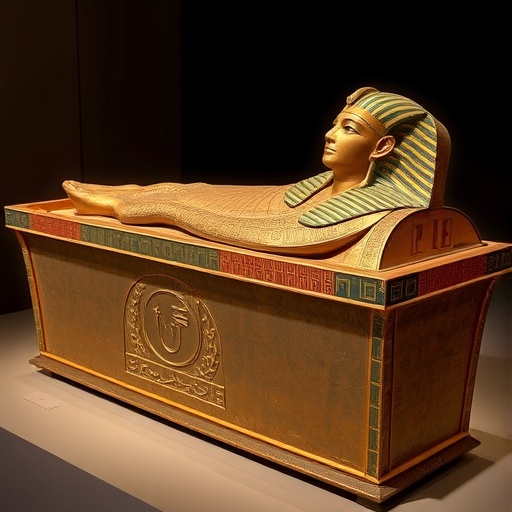
In a groundbreaking exploration of ancient Egyptian funerary practices, the latest research conducted by esteemed scholars M. Vandenbeusch and Kara Cooney sheds light on the fascinating phenomenon of coffin reuse in the context of the Theban royal caches. Set to be published in the 2024 volume of the American University in Cairo’s prestigious imprint, the work titled “Recycling for Death: Coffin Reuse in Ancient Egypt and the Theban Royal Caches” delves deep into the archaeological and cultural significance of this practice. With a staggering 476 pages and extensive academic rigor, the book is poised to captivate not just historians and archaeologists, but a wider audience intrigued by the complexities of ancient civilizations.
The authors meticulously analyze the context in which these reused coffins were discovered, particularly focusing on the royal caches located in Thebes. These caches, a treasure trove of artifacts, provide invaluable insights into the funerary customs and beliefs surrounding death in ancient Egypt. The practice of repurposing coffins not only symbolizes the continuum of life beyond death but also offers a glimpse into the economic and social factors that influenced such decisions. As detailed in the research, coffins were often beautifully adorned, containing elaborate inscriptions and illustrations that spoke of their owners’ status and aspirations in the afterlife.
The reuse of coffins within royal contexts reveals complex societal layers. Vandenbeusch and Cooney illuminate how these re-circulated funerary items reflect the economic realities of ancient Egypt, particularly during periods of political instability or resource scarcity. When the necessary materials or resources were limited, reusing coffins allowed for a form of symbolic recycling that preserved the cultural importance of the artifacts. This practice further underscores the ancient Egyptians’ profound respect for the dead and their commitment to ensuring continuity in the afterlife, despite the economic constraints they faced.
Central to this study is the methodology employed by the researchers. Vandenbeusch and Cooney combined archaeological fieldwork with material analysis, examining the structural integrity and decorative elements of the coffins. By employing advanced imaging technologies and analytical techniques, they could discern the layers of repurposing involved in the coffins’ history. This approach not only identifies the materials used in these coffins but allows for a deeper understanding of their evolution over time, illustrating how societal shifts influenced funerary customs.
A particularly compelling aspect of the research is the authors’ exploration of the meaning behind coffin inscriptions. In ancient Egypt, these inscriptions served more than just aesthetic purposes; they were imbued with religious significance, designed to assist the deceased in their journey through the afterlife. The repurposing of such coffins raises questions regarding the beliefs held by ancient Egyptians. Did those who reused coffins alter the inscriptions, adapting their spiritual significance? Or did they rely on the original texts? This inquiry leads to a rich dialogue about identity and memory in the afterlife, essential themes that resonate throughout the annals of Egyptian history.
The ramifications of this research extend beyond archaeology; they prompt broader reflections on contemporary practices surrounding death and memorialization. In a world where sustainability and recycling have become pressing topics, examining the ancient Egyptians’ approach to reusing coffins encourages a re-evaluation of our own attitudes toward death and the way we commemorate loved ones. Vandenbeusch and Cooney’s findings suggest an ancient wisdom that aligns with modern principles, wherein the act of remembering ones’ ancestors can take multiple forms rather than a linear, one-time process.
Furthermore, as the study illustrates, the act of recycling coffins did not diminish their value or symbolic weight. Instead, it enriched the societal narrative of ancient Egypt, contributing layers of meaning and demonstrating resilience in the face of adversity. The Theban royal caches, seen through this lens, become not merely sites of archaeological interest, but vibrant stories of life and death, hope and despair, all interconnected through the material culture of burial practices.
While the world of ancient Egyptian archaeology continually unveils its secrets, the significance of this study lies in its ability to bridge the gap between academic research and public understanding. Vandenbeusch and Cooney present their findings in a highly accessible manner, inviting readers from all backgrounds to engage with the manifold complexities of ancient Egyptian culture. This commitment to inclusivity is vital as it emphasizes the need for a collective understanding of the past and how it informs our present experiences and beliefs.
Moreover, the broader implications of this research touch upon cultural heritage and identity. In light of recent debates surrounding the preservation of artifacts and repatriation, the authors highlight the ethical considerations inherent in the study of reused coffins. By acknowledging the multifaceted nature of ownership and cultural significance, they urge a reconsideration of how societies value their pasts and the artifacts that tell those stories. This reflection is crucial not only for Egypt but also for other cultures grappling with the legacy of their historical artifacts.
The work of Vandenbeusch and Cooney also finds resonance against the backdrop of a global pandemic, where notions of mortality and remembrance have taken on new urgency. The similarities between how ancient people approached death and how contemporary societies cope with loss can serve as templates for navigating grief. This research underscores that death is a shared human experience that transcends time and space, prompting audiences to reflect on their traditions and practices surrounding funerary customs.
As we prepare for the publication of “Recycling for Death,” it is worth celebrating the underlying message of resilience in both ancient and modern contexts. This scholarly work not only illuminates the unique traits of ancient Egyptian culture but encourages us to embrace innovative practices that honor memory and life. By understanding the past, we can shape a more responsible and meaningful relationship with our customs surrounding death and remembrance.
The anticipation surrounding this publication is palpable, as both scholars and enthusiasts eagerly await its release. The robust analysis it promises is destined to make waves in academic circles while reaching far beyond, igniting conversations about culture, identity, and our collective future. With undeniable relevance in today’s world, the research will likely encourage a renaissance of thought surrounding sustainability, ethics, and the ways we honor those who have passed.
In conclusion, “Recycling for Death” stands to not only enrich the existing literature on ancient Egyptian funerary practices but to foster a dialogue that bridges past and present. Vandenbeusch and Cooney’s timely research underscores how the art of recycling, in its most profound sense, can honor the complexities of human life, weaving an intricate tapestry that ties generations together. As our societies evolve, may we look to ancient wisdom to guide our futures in remembrance, identity, and cultural preservation.
Vandenbeusch, M. Kara Cooney, Recycling for Death: Coffin Reuse in Ancient Egypt and the Theban Royal Caches, AUC, Cairo, 2024, 476 pp. ISBN 978–1649031280.
Afr Archaeol Rev 42, 539–541 (2025). https://doi.org/10.1007/s10437-025-09634-8
Cite Scienmag News
Courtney Benton. (January 19, 2026). Ancient Egyptians Reused Coffins: New Insights Uncovered. Scienmag. https://scienmag.com/ancient-egyptians-reused-coffins-new-insights-uncovered/
Courtney Benton. "Ancient Egyptians Reused Coffins: New Insights Uncovered." Scienmag, 19 January 2026, https://scienmag.com/ancient-egyptians-reused-coffins-new-insights-uncovered/. Accessed 3 September 2026.
Courtney Benton. "Ancient Egyptians Reused Coffins: New Insights Uncovered." Scienmag. January 19, 2026. https://scienmag.com/ancient-egyptians-reused-coffins-new-insights-uncovered/


