

Friday, July 17, 2026
Science
No Result
View All Result
  • Login
  • HOME
  • SCIENCE NEWS
  • CONTACT US
  • HOME
  • SCIENCE NEWS
  • CONTACT US
No Result
View All Result
Scienmag
No Result
View All Result
Home Science News Archaeology

Ancient Egyptian princesses from 4,000 years ago were skilled archers, study finds

July 17, 2026
in Archaeology
Reading Time: 2 mins read
0
Ancient Egyptian princesses from 4,000 years ago were skilled archers,
65
SHARES
587
VIEWS
Share on FacebookShare on Twitter
ADVERTISEMENT

For decades, the weapons found in the tombs of ancient Egyptian princesses have sparked debate: were they mere symbols of status, or evidence of real-life skill? A new bioarchaeological reassessment of royal mummies from Egypt’s Middle Kingdom suggests that at least some of these women did not simply carry prestige items—they may have used them.

Researchers re-examined six high-status individuals associated with the Dahshur funerary complex, originally discovered in the 1890s and later recovered during a 2020 curation project at the Egyptian Museum. The team focused on preserved postcranial remains, since the soft tissues had largely degraded and the skulls were lost in the early 1900s.

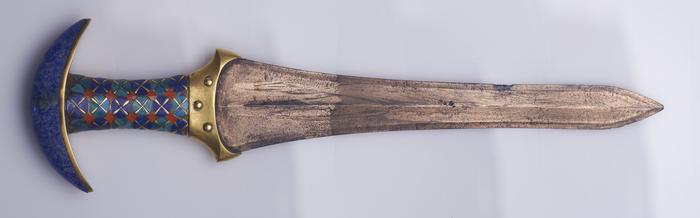
Four of the six were sisters, daughters of Amenemhat II, interred in matching underground chambers alongside other royal individuals. Their grave goods included archery-related equipment—traditionally coded as masculine in later cultural interpretation—and, in one case, a finely crafted dagger.

Instead of relying on the objects alone, the study uses osteological markers of habitual activity. Pronounced muscle attachment sites in the upper limbs indicate repetitive, high-intensity movements consistent with archery and the stabilization or handling of weapons. In other words, the bones record functional behavior, not just ceremonial burial practice.

The reassessment also documents a medical dimension. Several individuals show healed trauma, including broken ribs and foot fractures, while infections and nutritional stress markers were identified across multiple skeletons. Rare spinal anomalies shared among the sisters were interpreted as evidence of close familial relationships.

Importantly, the authors connect injury patterns with an active lifestyle—potentially involving hunting, training, or other physically demanding pursuits—rather than accidental burial symbolism. The healing quality of injuries suggests access to care that may have been more advanced than commonly assumed for the period.

While the study’s conclusions are constrained by the missing skull material and by the fact that additional analyses (such as stable isotope work) have not yet been completed, the results shift the debate toward lived experience. The weapons appear less like theatrical props and more like everyday tools carried into the afterlife.

Beyond reconstructing activity, the team frames the broader significance: these royals were not passive figures in museum collections. Their bodies and artifacts together can restore agency, health histories, and social roles that have long been overshadowed by the focus on objects alone.

Subject of Research: People
Article Title: Bioarcheological Reassessment of Dahshur Royal Skeletal Remains from the late middle kingdom (c. 1850 to 1700 BCE)
News Publication Date: 17-Jul-2026
Web References: https://doi.org/10.3389/fearc.2026.1844402
References: 10.3389/fearc.2026.1844402
Image Credits: Sameh Abdel Mohsen

Keywords: Egyptology, Biomechanics, Mummified remains, Archaeology, Historical archaeology

Tags: Ancient Egyptian princessesarchaeological evidence of female warriorsarchery skills in womenbioarchaeological studyfunerary customsgender roles in ancient EgyptMiddle Kingdom Egyptosteological markers of activityroyal grave goodsroyal mummiestomb artifactsweapon symbolism in ancient Egypt
Share26Tweet16
Previous Post

Global urban RNA virome diversity and unique traits vary by setting

Related Posts

Precolonial Brazilian Cerrado Villages Grew Maize-Based Polyculture for Centuries
Archaeology

Precolonial Brazilian Cerrado Villages Grew Maize-Based Polyculture for Centuries

July 15, 2026
Hasmonean and Qumran calendars combine to solve a Dead Sea
Archaeology

Hasmonean and Qumran calendars combine to solve a Dead Sea Scrolls mystery

July 14, 2026
Medieval Graves Rarely Shared by Close Relatives
Archaeology

Medieval Graves Rarely Shared by Close Relatives

July 10, 2026
Genomic Analysis Reveals Ancestral Connections Among Scythian Elite Burials Across
Archaeology

Genomic Analysis Reveals Ancestral Connections Among Scythian Elite Burials Across the Eurasian Steppe

July 4, 2026
Superworms: The Future of Skeleton Cleaning
Archaeology

Superworms: The Future of Skeleton Cleaning

July 1, 2026
Were Late Pleistocene Clovis People Skilled Big-Game Hunters or Mere
Archaeology

Were Late Pleistocene Clovis People Skilled Big-Game Hunters or Mere Scavengers?

July 1, 2026
  • Mothers who receive childcare support from maternal grandparents show more

    Mothers who receive childcare support from maternal grandparents show more parental warmth, finds NTU Singapore study

    27656 shares
    Share 11059 Tweet 6912
  • University of Seville Breaks 120-Year-Old Mystery, Revises a Key Einstein Concept

    1061 shares
    Share 424 Tweet 265
  • Bee body mass, pathogens and local climate influence heat tolerance

    682 shares
    Share 273 Tweet 171
  • Researchers record first-ever images and data of a shark experiencing a boat strike

    546 shares
    Share 218 Tweet 137
  • Groundbreaking Clinical Trial Reveals Lubiprostone Enhances Kidney Function

    531 shares
    Share 212 Tweet 133
Science

Embark on a thrilling journey of discovery with Scienmag.com—your ultimate source for cutting-edge breakthroughs. Immerse yourself in a world where curiosity knows no limits and tomorrow’s possibilities become today’s reality!

RECENT NEWS

  • Ancient Egyptian princesses from 4,000 years ago were skilled archers, study finds
  • Global urban RNA virome diversity and unique traits vary by setting
  • Japan Study Explores Community Supporters’ Experiences with Team Orange Dementia Program
  • Phosphorus Promotes Synergistic Activity in Evolving NiFe Phosphides for Better Water Oxidation

Categories

  • Agriculture
  • Anthropology
  • Archaeology
  • Athmospheric
  • Biology
  • Biotechnology
  • Blog
  • Bussines
  • Cancer
  • Chemistry
  • Climate
  • Earth Science
  • Editorial Policy
  • Marine
  • Mathematics
  • Medicine
  • Pediatry
  • Policy
  • Psychology & Psychiatry
  • Science Education
  • Social Science
  • Space
  • Technology and Engineering

Subscribe to Blog via Email

Enter your email address to subscribe to this blog and receive notifications of new posts by email.

Join 5,146 other subscribers

© 2025 Scienmag - Science Magazine

Welcome Back!

Login to your account below

Forgotten Password?

Retrieve your password

Please enter your username or email address to reset your password.

Log In
No Result
View All Result
  • HOME
  • SCIENCE NEWS
  • CONTACT US

© 2025 Scienmag - Science Magazine

Discover more from Science

Subscribe now to keep reading and get access to the full archive.

Continue reading
