


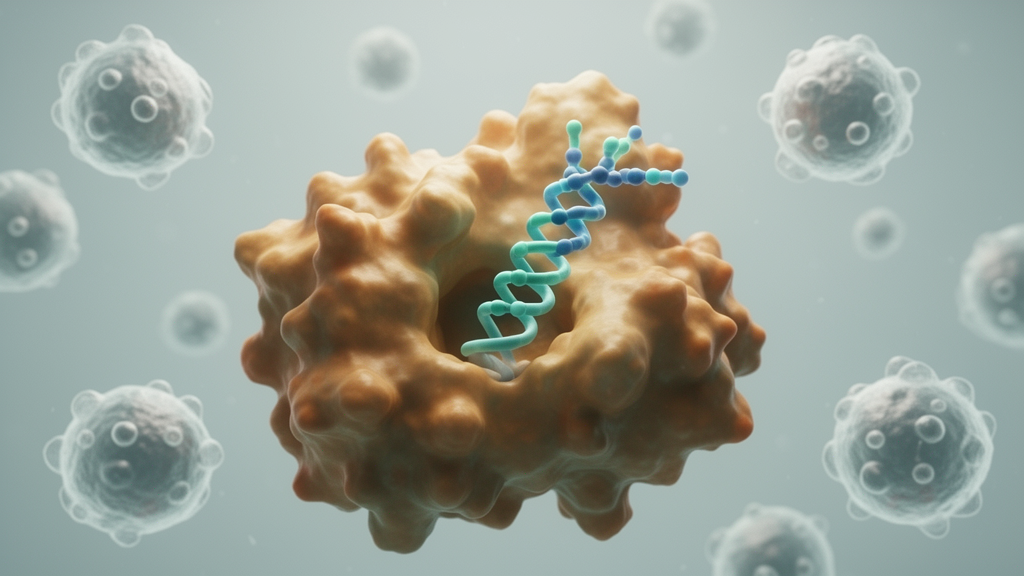
Rectal cancer remains one of the most stubborn challenges in gastrointestinal oncology, and a growing body of evidence points to a surprising culprit hiding in plain sight: not the tumor cells themselves, but the dense stromal scaffolding that surrounds them. A new computational study published in 3 Biotech has taken aim at that scaffolding by identifying fibroblast activation protein, or FAP, as the single most promising stromal drug target in rectal cancer, and then using structure-based design to engineer a peptide inhibitor candidate named Pep17 that is ready for laboratory validation.
The research team, led by Zhendong Zhou and Tingting Wang of Ningbo No. 2 Hospital in Zhejiang, China, began with a question that has frustrated oncologists for years. Why do so many rectal tumors resist chemotherapy and radiotherapy even when the treatment appears to work initially? The answer, increasingly, lies in the tumor microenvironment, the complex ecosystem of fibroblasts, immune cells, blood vessels, and extracellular matrix that physically and chemically shields cancer cells from therapeutic attack. Cancer-associated fibroblasts, the dominant stromal cell type in many solid tumors, secrete growth factors, remodel collagen, and actively suppress antitumor immunity, making them attractive but historically difficult drug targets.
FAP is a membrane-bound serine protease that is barely detectable in healthy adult tissue but is dramatically upregulated on activated fibroblasts within tumors. This near-tumor-specific expression pattern has made it a darling of both diagnostic imaging and therapeutic development, with FAP-targeted radiopharmaceuticals already advancing through clinical trials for several cancer types. What the new study adds is a rigorous, data-driven case that FAP deserves the same attention in rectal cancer specifically, backed by a concrete molecular candidate designed to shut it down.
To build that case, the investigators assembled an unusually large transcriptomic dataset, combining gene expression profiles from 1,236 rectal cancer and normal rectal tissue samples drawn from The Cancer Genome Atlas rectal adenocarcinoma cohort, known as TCGA-READ, and two independent Gene Expression Omnibus datasets, GSE38718 and GSE87211. They then deployed two complementary machine learning algorithms, random forest and LASSO regression, to sift through thousands of candidate genes and prioritize those most likely to drive tumor progression and treatment resistance. The scoring system evaluated targets across six dimensions, and FAP emerged at the very top with a comprehensive score of 0.89, ahead of every other stromal gene examined.
The expression data were strikingly consistent. FAP messenger RNA levels were elevated by 4.32-fold in the TCGA-READ cohort, 3.87-fold in GSE38718, and 4.15-fold in GSE87211, a reproducibility across three independent patient populations that lends considerable statistical weight to the finding. When the researchers tested FAP expression as a diagnostic marker, it distinguished rectal cancer tissue from normal rectal tissue with an area under the receiver operating characteristic curve, or AUC, of 0.82, a level of discrimination considered good for a single-gene biomarker.
Clinical correlations were equally compelling. High FAP expression was associated with more advanced tumor stage, the presence of lymph node metastasis, and significantly lower five-year overall survival. The team also performed stromal and immune cell deconvolution analyses, which revealed that FAP-high tumors were enriched for stromal components and infiltrated by immunosuppressive cell populations. This pattern suggests that FAP-positive fibroblasts are not passive bystanders but active participants in creating an immune-cold microenvironment, one of the key reasons rectal cancers often respond poorly to immunotherapy.
With the target validated, the researchers turned to structure-based drug design to find a molecule capable of binding FAP and inhibiting its activity. They screened a virtual library of 10,000 peptides against the three-dimensional crystal structure of human FAP, using molecular docking to evaluate how each peptide fit into the protein’s active site. From this initial computational gauntlet, 32 candidate peptides survived. The team then subjected the top three candidates to 100-nanosecond molecular dynamics simulations in explicit solvent to assess whether their binding poses remained stable over time, a critical filter because a peptide that docks well but falls apart during simulation is unlikely to function as a real inhibitor.
Pep17 distinguished itself among the three tested peptides. During the molecular dynamics simulation, it maintained relatively stable contact with FAP, and clustering analysis of the trajectory showed that its dominant binding pose accounted for 42.3 percent of the simulation population, indicating that the peptide reliably returned to a single preferred conformation rather than wandering among multiple unstable states. Free energy calculations using the MM/PBSA method, which estimates binding affinity from the energetics of the simulated complex, yielded a binding free energy of -4.82 plus or minus 0.36 kilojoules per mole for Pep17, the most favorable value among the three candidates evaluated.
The authors are careful to frame Pep17 as a promising candidate rather than a finished drug. The entire study was conducted in silico, meaning that no peptide has yet been synthesized, tested against purified FAP enzyme, or evaluated in cell culture or animal models. The next steps will involve experimental validation of Pep17’s binding affinity and inhibitory potency, followed by assessment of its stability, toxicity, and antitumor activity in preclinical systems. Peptide inhibitors face well-known pharmacological hurdles, including susceptibility to proteolytic degradation and limited cell permeability, but they also offer advantages such as high specificity, low toxicity, and the ability to target protein-protein interfaces that small molecules struggle to reach.
What makes this study notable in the broader landscape of cancer drug discovery is its methodological blueprint. Rather than starting from a single hypothesis or a single dataset, the team integrated multi-cohort transcriptomics, machine learning-based target prioritization, and structure-based peptide screening into a single pipeline that moves logically from clinical relevance to molecular design. As artificial intelligence and computational screening tools become faster and more accurate, this kind of end-to-end in silico drug development is likely to become an increasingly common first step in the search for new cancer therapeutics. For rectal cancer patients, whose disease often resists conventional treatment and whose tumors are frequently immunologically cold, a therapy aimed at reprogramming the stromal fortress rather than attacking the cancer cells directly could represent a genuinely new therapeutic frontier, and Pep17 may prove to be the first concrete step toward it.
Subject of Research: Structure-based computational design of a peptide inhibitor targeting fibroblast activation protein for rectal cancer treatment
Article Title: Structure-based development of a peptide inhibitor targeting fibroblast activation protein for the treatment of rectal cancer
Article References: Zhou, Z., Chen, B., Zhao, J., & Wang, T. (2026). Structure-based development of a peptide inhibitor targeting fibroblast activation protein for the treatment of rectal cancer. 3 Biotech, 16(11), Article 462. https://doi.org/10.1007/s13205-026-05061-x
Image Credits: AI Generated
DOI: 10.1007/s13205-026-05061-x
Keywords: rectal cancer, fibroblast activation protein, peptide inhibitor, structure-based drug design, tumor microenvironment, molecular dynamics, machine learning, cancer-associated fibroblasts, Structure-based, development, peptide, inhibitor
Cite Scienmag News
Nathaniel Bowman. (October 16, 2026). AI-Guided Peptide Design Targets Fibroblast Activation Protein in Rectal Cancer. Scienmag. https://scienmag.com/ai-guided-peptide-design-targets-fibroblast-activation-protein-in-rectal-cancer/
Nathaniel Bowman. "AI-Guided Peptide Design Targets Fibroblast Activation Protein in Rectal Cancer." Scienmag, 16 October 2026, https://scienmag.com/ai-guided-peptide-design-targets-fibroblast-activation-protein-in-rectal-cancer/. Accessed 16 October 2026.
Nathaniel Bowman. "AI-Guided Peptide Design Targets Fibroblast Activation Protein in Rectal Cancer." Scienmag. October 16, 2026. https://scienmag.com/ai-guided-peptide-design-targets-fibroblast-activation-protein-in-rectal-cancer/


