


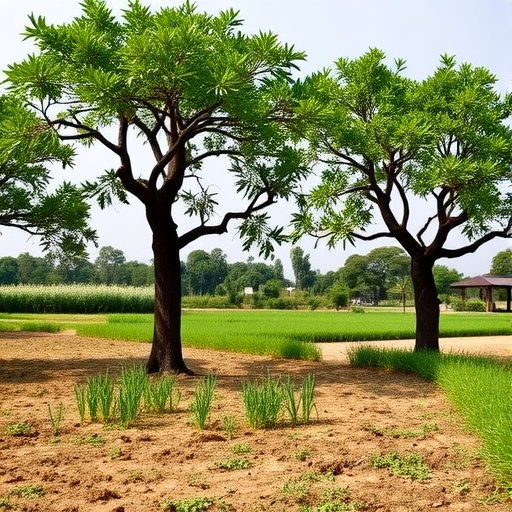
The increasing urgency of climate change has prompted researchers to investigate viable solutions that mitigate its impacts, particularly in vulnerable regions such as the Republic of Congo and Chad. A recent study sheds light on agroforestry as a promising adaptation strategy within these countries. The study conducted by Awazi et al. presents a comparative analysis of agroforestry adoption and highlights its potential benefits in enhancing resilience against climatic challenges.
Agroforestry, which integrates trees into agricultural landscapes, not only supports biodiversity but also enhances soil health, improves water retention, and contributes to carbon sequestration. These attributes are critical as the agricultural sectors in both the Republic of Congo and Chad are highly susceptible to the effects of climate variability. With increased incidences of droughts, floods, and shifting weather patterns, the need for effective adaptation strategies has never been more pressing.
The researchers carried out surveys and in-depth interviews with local farmers to gather data on agroforestry practices, decision-making processes, and perceptions of climate change. One striking finding was the varying levels of agroforestry adoption between the two countries. In the Republic of Congo, there was a notably higher acceptance and integration of agroforestry practices compared to Chad, where traditional farming methods remain predominant. This divergence can be attributed to socio-economic differences, access to resources, and governmental support for environmental initiatives.
One of the key elements driving agroforestry adoption in the Republic of Congo is the growing awareness among farmers about the benefits of tree planting. Many farmers reported increased crop yields and improved soil quality as a direct result of integrating trees into their agricultural practices. The presence of trees not only provided shade but also attracted beneficial insects, which play a vital role in pollination. Furthermore, the diverse plant combinations in agroforestry systems proved to be more resilient to pests and diseases, a crucial factor as climate conditions continue to fluctuate unpredictably.
Conversely, in Chad, the study indicates that agroforestry adoption faces significant barriers. Limited access to financial resources and insufficient extension services contributed to the reluctance among farmers to switch from traditional practices. Many individuals expressed skepticism about the immediate benefits of agroforestry, prioritizing short-term gains over long-term sustainability. Despite these challenges, some community initiatives demonstrate the potential for agroforestry, particularly in areas where NGOs have facilitated knowledge transfer and provided training.
Education and awareness campaigns are vital components in promoting agroforestry practices in Chad. The study emphasizes the importance of incorporating indigenous knowledge into training programs to foster a deeper connection between local communities and their environment. These educational initiatives could serve as a bridge to encourage more farmers to consider the advantages of agroforestry, thereby enhancing food security and climate resilience.
The implications of the study extend beyond the borders of the countries under investigation. The findings resonate globally, as many regions grapple with the dual challenges of food insecurity and climate change. Agroforestry represents not only an agricultural practice but a holistic approach to land management that addresses environmental and socio-economic concerns concurrently. Policymakers and stakeholders are urged to recognize the potential of agroforestry as a climate adaptation strategy that can be tailored to diverse ecological settings.
Moreover, the research illustrates the importance of collaboration between governments, local communities, and international organizations in facilitating the transition to agroforestry. Strong partnerships can lead to the establishment of more supportive policies, investment in research, and the allocation of resources necessary for promoting sustainable agricultural practices. The momentum garnered from successful case studies can serve as a catalyst for broader implementation across the continent.
In conclusion, Awazi et al. provide a comprehensive insight into the dynamics surrounding agroforestry adoption in the Republic of Congo and Chad. Their findings offer valuable lessons on the challenges and opportunities presented by climate change adaptation strategies. As the world contemplates innovative ways to respond to climate disruptions, agroforestry stands out as a viable solution that warrants further exploration and support. The study calls for an urgent need to mobilize resources and expertise towards promoting agroforestry practices, ensuring that the vulnerable populations in these regions are equipped to face the mounting pressures of a changing climate.
Through increased adoption of agroforestry, the Republic of Congo and Chad could enhance their adaptive capacity and foster a sustainable future, bridging the gap between agricultural productivity and environmental stewardship. The successful integration of trees into farming systems holds the promise of transforming landscapes and communities, ultimately paving the way for resilience against climate change in the years to come.
Awazi, N.P., Ngoma, C.R.M., Temgoua, L.F. et al. A comparative study of agroforestry adoption as a climate change adaptation option in the Republic of Congo and Chad. Discov. For. 1, 50 (2025). https://doi.org/10.1007/s44415-025-00050-z
Cite Scienmag News
Alan Morgan. (November 18, 2025). Agroforestry Adoption in Congo vs. Chad: A Comparative Study. Scienmag. https://scienmag.com/agroforestry-adoption-in-congo-vs-chad-a-comparative-study/
Alan Morgan. "Agroforestry Adoption in Congo vs. Chad: A Comparative Study." Scienmag, 18 November 2025, https://scienmag.com/agroforestry-adoption-in-congo-vs-chad-a-comparative-study/. Accessed 3 September 2026.
Alan Morgan. "Agroforestry Adoption in Congo vs. Chad: A Comparative Study." Scienmag. November 18, 2025. https://scienmag.com/agroforestry-adoption-in-congo-vs-chad-a-comparative-study/


