


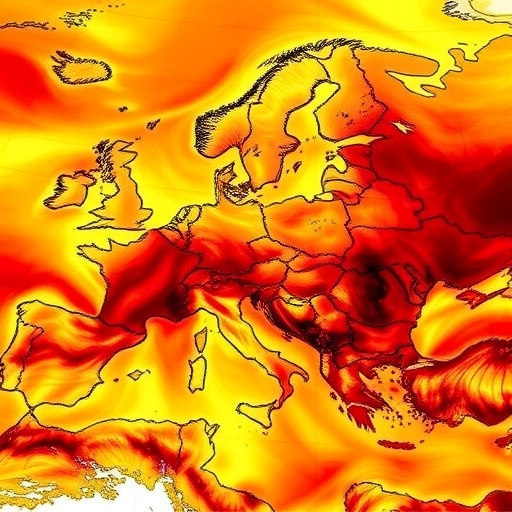
A hidden layer of Earth’s atmosphere may be influencing what happens beneath our feet weeks later, according to a study examining how the stratosphere affects soil moisture across Eurasia. Published in Nature Communications, the research by Y. Dai, P. Hitchcock, F. Lehner and colleagues investigates a connection between atmospheric processes high above the weather systems we experience and the amount of water retained in soils across one of the planet’s largest land regions. The findings place the stratosphere—often regarded as a distant and relatively stable zone of the atmosphere—at the center of a climate story involving drought, agriculture and subseasonal predictability.
The stratosphere begins roughly 10 to 15 kilometers above Earth’s surface, above the troposphere where clouds, storms and most familiar weather develop. It contains the ozone layer and is characterized by temperature patterns and circulation structures that differ sharply from those near the ground. Yet the boundary between the two atmospheric layers is not an impenetrable wall. Large-scale disturbances in the stratosphere can alter the winds, pressure patterns and wave activity that eventually reach the troposphere, potentially reshaping weather conditions over continents. The new study focuses on whether these downward influences can also be detected in soil moisture, a variable that changes more slowly than daily weather and can retain the imprint of earlier atmospheric events.
Soil moisture is far more than a measure of how wet the ground feels. It regulates evaporation, controls how much rainfall runs off or infiltrates the soil, and affects the exchange of heat and water between land and atmosphere. When soil is moist, a greater share of incoming solar energy can be used to evaporate water, helping cool the surface. When soil is dry, more energy is converted into heat, raising land temperatures and potentially intensifying hot conditions. Because of these feedbacks, a change in soil moisture can become both a consequence of weather and a force that helps shape later weather.
The timescale examined by the researchers is especially important. Subseasonal prediction occupies the gap between conventional weather forecasts, which are most reliable over days, and seasonal outlooks, which describe average conditions over months. This intermediate period—typically extending from several weeks to around two months—is notoriously difficult to predict because it is too long for initial weather details to remain fully useful but too short for slow climate drivers to dominate. If stratospheric signals can provide additional information during this window, they could improve early warnings of developing dryness or unusual wetness across Eurasia.
Eurasia offers an unusually large laboratory for studying these links. The continent stretches across a wide range of climates, from humid regions to arid interiors, and contains vast agricultural zones, forests, grasslands and densely populated river basins. Soil moisture changes across such an immense area can influence crop conditions, wildfire risk, water availability and heat extremes. The researchers’ focus on Eurasian soils therefore connects atmospheric dynamics to consequences that extend far beyond meteorological charts, potentially affecting food systems and communities across multiple countries.
A central scientific challenge is identifying causation rather than simple coincidence. Soil moisture is influenced by rainfall, snow cover, evaporation, vegetation, temperature and land use, all of which vary across space and time. Atmospheric circulation can also respond to conditions at the surface, making the direction of influence difficult to establish. To isolate the stratospheric contribution, research of this kind typically combines atmospheric observations or reanalysis datasets with land-surface records and statistical or dynamical analysis. The goal is to determine whether changes in the upper atmosphere consistently precede recognizable shifts in Eurasian soil moisture and whether the relationship remains after other drivers are taken into account.
The physical pathway may involve planetary-scale waves, which are enormous undulations in the atmosphere generated by mountains, land–sea contrasts and large weather systems. When these waves disturb the stratospheric circulation, they can modify the strength and position of high-altitude winds. Those changes may then propagate downward, influencing jet streams, blocking patterns and the distribution of high- and low-pressure systems in the troposphere. Over land, the resulting changes in precipitation and temperature can alter evaporation and water storage in the soil. The process is not a sudden atmospheric switch, but a chain of interactions unfolding across days and weeks.
The study’s significance lies in the possibility that the stratosphere could serve as an early-warning signal for land-surface conditions. A stratospheric disturbance may occur before the full development of a persistent weather pattern, creating a lead time that conventional forecasts could use. Such information would not mean that every atmospheric anomaly produces a predictable soil-moisture response, nor that the stratosphere determines conditions independently of the surface. Instead, it could become one component of a broader forecasting system that combines ocean temperatures, snow cover, land conditions and atmospheric circulation.
For farmers, water managers and disaster-response agencies, even modest improvements in subseasonal prediction could have practical value. Knowing that a region faces an elevated risk of drying several weeks in advance could support irrigation planning, reservoir operations and wildfire preparation. Conversely, anticipating persistently wet soils could help authorities prepare for flooding, crop disease or transport disruption. The research also highlights how climate hazards are connected across vertical layers of the atmosphere: events occurring high above the surface may help shape the environmental conditions that societies experience much later and thousands of kilometers away. By tracing that connection across the stratosphere, the troposphere and the land, the work opens a new route toward understanding—and potentially forecasting—the hidden atmospheric controls on Eurasian water availability.
Cite Scienmag News
Violet Maxwell. (August 8, 2026). Stratosphere Influences Eurasian Soil Moisture Over Subseasonal Timescales. Scienmag. https://scienmag.com/stratosphere-influences-eurasian-soil-moisture-over-subseasonal-timescales/
Violet Maxwell. "Stratosphere Influences Eurasian Soil Moisture Over Subseasonal Timescales." Scienmag, 8 August 2026, https://scienmag.com/stratosphere-influences-eurasian-soil-moisture-over-subseasonal-timescales/. Accessed 3 September 2026.
Violet Maxwell. "Stratosphere Influences Eurasian Soil Moisture Over Subseasonal Timescales." Scienmag. August 8, 2026. https://scienmag.com/stratosphere-influences-eurasian-soil-moisture-over-subseasonal-timescales/


