


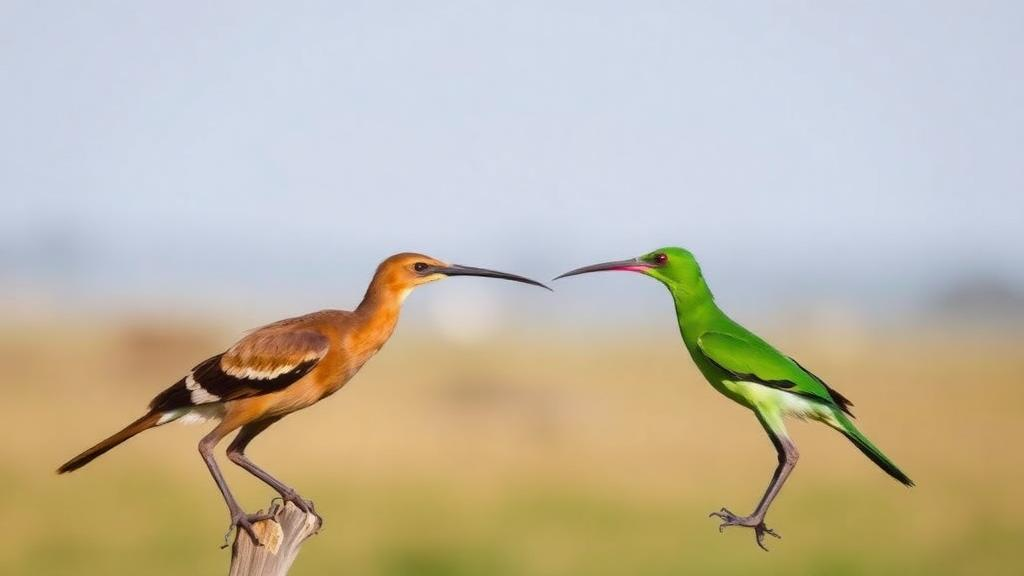
Two birds are quietly waging a continental campaign against Africa’s farms, cities, and public health systems, and a sweeping new analysis of five decades of research reveals just how differently they do it. The Indian house crow, an invasive scavenger from southern Asia, and the red-billed quelea, a native weaver bird that forms the largest flocks of any bird species on Earth, have long been treated as separate problems. Now a team of Tanzanian researchers has placed them side by side for the first time, synthesizing 59 peer-reviewed studies published between 1975 and 2025 to compare their ecological damage, economic toll, and the increasingly sophisticated arsenal deployed against them. The verdict is sobering: despite half a century of innovation, from scarecrows to drones and machine learning, no control method has yet proven fully effective against either species.
The review, conducted by Paulo Chiza Athumani and colleagues at the University of Dodoma and published in the journal Discover Conservation, followed rigorous PRISMA guidelines for scoping reviews. The team searched Google Scholar, Scopus, and EBSCOhost using carefully constructed Boolean search strings combining terms for the two species with keywords covering socio-ecological impact, economic damage, crop loss, and pest management. From an initial haul of 643 publications, the researchers screened titles and abstracts, assessed full texts, and ultimately included 59 studies for analysis. Because the two species differ so markedly in how their impacts are measured, the authors could not compare them metric by metric. Instead they used a frequency-of-reporting framework, counting how often each type of impact appeared across the literature.
The headline finding is a stark asymmetry in research attention. The red-billed quelea dominated the literature, appearing in 73 percent of the included studies, most of which concentrated on economic damage and control measures. The Indian house crow attracted fewer papers, but those studies spanned a far wider range of topics, from biodiversity loss and disease transmission to competition with native birds and urban nuisance. Geographically, the picture splits just as cleanly. Quelea research is spread across Western, Eastern, and Southern Africa, reflecting the bird’s vast range and its status as arguably the most economically significant agricultural pest in sub-Saharan Africa. House crow studies cluster along the coasts, particularly in East Africa, where the species first established itself and where its invasion is most pronounced, though the bird is steadily pushing inland.
The quelea’s weapon is sheer numbers. Moving in enormous flocks that track rain fronts and the annual grasses they feed on, queleas descend on farmlands and consume tons of grain daily. The review compiles the staggering arithmetic of this appetite: annual losses of rice and small grains across Africa exceed US$54 million, with reported yield losses reaching 81 percent in maize, 55 percent in wheat, and 55 percent in almonds in southern Africa. Crops such as maize, rice, sorghum, groundnuts, and wheat all fall within the bird’s destructive reach, making it a direct threat to food security in some of the world’s most agriculture-dependent economies. Notably, the quelea’s impact is almost entirely economic; the review found no evidence that it preys on other birds, damages infrastructure, or disrupts tourism, a consequence of its specialized granivorous diet.
The house crow is a different kind of menace, one whose damage radiates outward through ecosystems. Five African studies documented the species preying on, harassing, and destroying the nests of native birds, from small weavers to the much larger black-headed heron, producing measurable biodiversity losses. In Tanzania, house crows have been linked to declining lizard populations. They compete aggressively with the native pied crow, often outcompeting it and surpassing it in numbers across invaded areas. Perhaps most alarmingly for public health, house crows are recognized vectors of an extraordinary catalogue of zoonotic pathogens, including Salmonella, Shigella, Escherichia coli, Campylobacter, influenza A subtype H5N1, chlamydiosis, avian tuberculosis, Newcastle disease virus, and West Nile virus, along with parasites such as Plasmodium, Toxoplasma, and Trypanosoma. In urban areas they snatch food from people, attack tourists, generate relentless noise, and contaminate open water sources with their excreta, while near airports they pose genuine aviation hazards through bird strikes.
The review also catalogued what the two species do not do, and these absences carry their own ecological significance. Neither bird has been documented hybridizing with other species in Africa, a relief given that hybridization occurs in an estimated 10 to 20 percent of bird species and can erode the vigor of native populations or even drive them extinct. Nor has brood parasitism been recorded for either species on the continent, though the authors note an intriguing opportunity: in India, the Asian koel parasitizes house crow nests, a natural mechanism that could theoretically be harnessed for biological control. Equally striking is the absence of predators attacking the house crow in Africa. One study even reported queleas being taken by spotted hyenas in Namibia, yet no organism has been documented preying on house crows, whose carcasses scavengers reportedly ignore. This predator-free status may partly explain the crow’s rapid spread from its coastal strongholds.
Against these threats, humanity’s countermeasures have evolved dramatically over the review’s fifty-year window. Traditional approaches, scarecrows, manual scaring, and nets, have given way to technological solutions including drones, autonomous deterrence systems, solar-powered acoustic repellers, and IoT-based virtual fences. Most recently, researchers have proposed machine learning approaches that promise more targeted and ecologically responsible control. Yet the review’s assessment is blunt: no method has achieved full effectiveness. The house crow’s intelligence makes it a particularly elusive target, as the birds quickly learn to evade new measures. Worse, some of the most effective tools carry heavy collateral costs. Chemical control of queleas, especially aerial spraying of the organophosphate fenthion, kills non-target species, contaminates ecosystems, and raises the specter of poisoned birds entering local food supplies.
These trade-offs push the problem beyond ecology into ethics and governance. The review highlights a tension that is becoming increasingly familiar in conservation technology: the same smart monitoring systems and drone cameras that track pest bird movements around farms and villages can also capture images, locations, and daily routines of nearby residents, raising serious questions about data security and privacy if such information is stored or shared without proper safeguards. The authors argue that effective management of both species demands a framework integrating ethical responsibility, legal compliance, human health protection, and meaningful community involvement. Communities, after all, bear the brunt of crop damage and sanitation problems, and their participation is critical for monitoring outbreaks and implementing interventions on the ground.
Human attitudes toward the two birds add another layer of complexity. Only one study each has examined community awareness and perceptions of the house crow and the quelea in Africa, a gap the authors identify as a critical research priority. What is known suggests both species are widely regarded as pests and even as sources of poverty, yet the quelea occupies a paradoxical position: it is simultaneously a feared agricultural destroyer and a food source harvested and consumed by local communities, a duality that shapes both tolerance and control. This ambivalence matters, because management interventions that ignore social acceptance and compliance are far more likely to fail. The review also flags a broader data problem: most studies lack quantitative monetary estimates of damage, making it impossible to compare the two species’ economic costs on standardized terms or to prioritize interventions on solid evidence.
The study’s ultimate message is that origin matters less than behavior. Whether a species is native, like the quelea, or invasive, like the house crow, if it acts as a pest it inflicts real damage on human livelihoods and ecosystems alike. The quelea primarily attacks the economic sector through its voracious consumption of grain, while the house crow strikes on multiple fronts, ecological, economic, and public health, even if its individual economic toll is comparatively smaller. As climate change reshapes rainfall patterns, human tolerance shifts, and policy frameworks remain unstable, the interactions between people and these two birds are set to intensify. The authors call for advanced, sustainable, and community-supported control strategies, better integration of emerging technologies with environmental safeguards, and a substantial expansion of research into the human dimensions of the conflict. After fifty years of study, the war against Africa’s pest birds is far from over, but for the first time the battlefield has been mapped.
Subject of Research: Comparative socio-ecological and economic impacts and control of the invasive Indian house crow and the native red-billed quelea in Africa
Article Title: Comparison of socio-ecological and economic impact and control techniques of the invasive Indian house crow (Corvus splendens) and the red-billed quelea (Quelea quelea) in Africa: a scoping review
Article References: Athumani, P. C., Safari, I., Mbise, F. P., & Mmbaga, N. E. (2026). Comparison of socio-ecological and economic impact and control techniques of the invasive Indian house crow (Corvus splendens) and the red-billed quelea (Quelea quelea) in Africa: a scoping review. Discover Conservation, 3(1), Article 12. https://doi.org/10.1007/s44353-026-00083-1
Image Credits: AI Generated
DOI: 10.1007/s44353-026-00083-1
Keywords: Indian house crow, red-billed quelea, invasive species, pest birds, crop damage, food security, Africa, disease transmission, biodiversity loss, pest control, scoping review, human-wildlife conflict
Cite Scienmag News
Margaret Porter. (October 1, 2026). Africa’s Two Worst Pest Birds Face Off in Landmark Fifty-Year Review. Scienmag. https://scienmag.com/africas-two-worst-pest-birds-face-off-in-landmark-fifty-year-review/
Margaret Porter. "Africa’s Two Worst Pest Birds Face Off in Landmark Fifty-Year Review." Scienmag, 1 October 2026, https://scienmag.com/africas-two-worst-pest-birds-face-off-in-landmark-fifty-year-review/. Accessed 16 October 2026.
Margaret Porter. "Africa’s Two Worst Pest Birds Face Off in Landmark Fifty-Year Review." Scienmag. October 1, 2026. https://scienmag.com/africas-two-worst-pest-birds-face-off-in-landmark-fifty-year-review/


