

Wednesday, July 29, 2026
Science
No Result
View All Result
  • Login
  • HOME
  • SCIENCE NEWS
  • CONTACT US
  • HOME
  • SCIENCE NEWS
  • CONTACT US
No Result
View All Result
Scienmag
No Result
View All Result
Home Science News Earth Science

Aerobic Methanotrophs Enrichments Accelerate Methane Consumption in Hydrothermal Deep Waters

July 29, 2026
in Earth Science
Reading Time: 2 mins read
0
Aerobic Methanotrophs Enrichments Accelerate Methane Consumption in Hydrothermal Deep Waters

Aerobic Methanotrophs Enrichments Accelerate Methane Consumption in Hydrothermal Deep Waters

65
SHARES
587
VIEWS
Share on FacebookShare on Twitter
ADVERTISEMENT

A new study published in Communications Earth & Environment reports that deep-ocean regions affected by hydrothermal activity can rapidly consume methane when aerobic methanotrophs—microbes that oxidize methane in the presence of oxygen—become highly enriched. The finding reframes methane dynamics in deep waters by showing that biology, not just chemistry, can decisively accelerate methane removal.

Hydrothermal systems inject both reduced compounds and heat into the ocean, often creating steep gradients in temperature and dissolved constituents. While methane can be produced and transported in such environments, its fate is frequently controlled by whether conditions allow methanotrophs to thrive and whether oxygen is available to fuel methane oxidation.

Using field observations paired with microbiological and biogeochemical analyses, researchers tracked methane concentrations alongside signatures of aerobic methanotrophy. They observed strong correspondence between hydrothermally influenced water parcels and elevated methanotroph presence, indicating that these settings provide a selective advantage for methane-eating bacteria.

Crucially, the team reports “significant enrichment” of aerobic methanotroph communities, suggesting that hydrothermal impact does more than merely alter chemical composition—it can restructure microbial ecosystems. In turn, that microbial shift corresponds to fast methane consumption rates, consistent with intensified enzymatic oxidation of methane under oxygenated microscale conditions.

The authors interpret the results as evidence that hydrothermal plumes can create localized niches where oxygen and methane overlap, enabling efficient methane oxidation even in deep waters. Such niche formation may occur through mixing, plume-driven transport, and redox heterogeneity that transiently supports aerobic metabolism.

These rapid biological sink dynamics help explain why methane sometimes fails to accumulate in the deep ocean despite continuous or episodic inputs. By quantifying the linkage between methanotroph enrichment and methane drawdown, the work highlights a pathway that could reduce the amount of methane available for eventual release to the atmosphere.

The study also carries broader implications for how scientists model greenhouse gas budgets in the ocean. If hydrothermal processes can stimulate microbial methane consumption on short timescales, then methane flux estimates based solely on physical transport or abiotic oxidation may be incomplete.

With methane oxidation increasingly recognized as a major control on oceanic methane inventories, the viral-news angle is clear: a hidden community of oxygen-loving microbes can act as an on-site methane “firebreak” in places once thought to be dominated by geothermal chemistry.

For climate researchers, the take-home message is that microbial ecology in extreme environments can rapidly govern greenhouse gas outcomes. As more observations link microbial community shifts to methane cycling, predictions of ocean methane behavior may become sharper—and potentially more urgent.

A deeper understanding of how aerobic methanotrophs are boosted by hydrothermal impacts could also inform future monitoring strategies. By identifying microbial and environmental markers of methanotrophic activity, scientists may better forecast where methane is most likely to be removed before it escapes.

Subject of Research: Deep-ocean methane cycling and aerobic methanotroph ecology in hydrothermally impacted waters

Article Title: Significant enrichment of aerobic methanotrophs drives rapid consumption of methane in hydrothermally impacted deep waters.

Article References: Mao, SH., Li, JK., Yu, M. et al. Commun Earth Environ (2026). https://doi.org/10.1038/s43247-026-03814-3

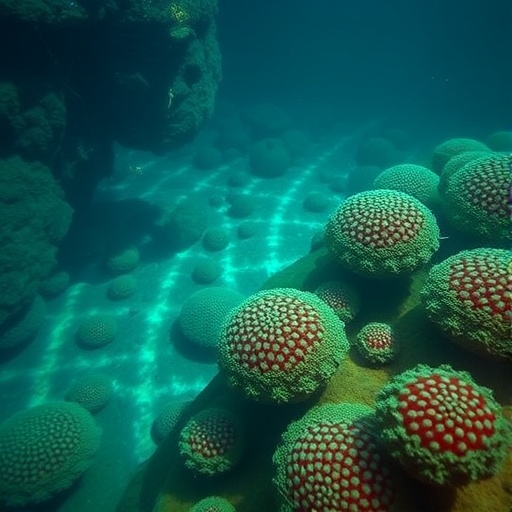
Image Credits: AI Generated

DOI: 10.1038/s43247-026-03814-3

Keywords: methane; hydrothermal activity; aerobic methanotrophs; microbial ecology; deep ocean; methane oxidation; greenhouse gas cycling

Tags: aerobic methanotroph enrichmentbiogeochemistry of hydrothermal systemsdeep-ocean methane oxidationenzymatic oxidation of methane in hydrothermal zoneshydrothermal vent methane dynamicsimpact of hydrothermal activity on methane fluxmethane biogeochemical cycling in deep-sea environmentsmicrobial ecosystem restructuring in hydrothermal plumesmicrobial methane consumption in deep watersoxygen availability and methane oxidation in deep oceanrapid methane oxidation in deep-serole of microbes in methane removal in hydrothermal plumes
Share26Tweet16
Previous Post

Simple Triage Protocol Reduces ER Wait Times Without Extra Beds or Staff

Next Post

Premature Infants Show Abnormal Eye Movements, New Study Finds

Related Posts

Mid-Holocene Thar Desert hydroclimate patterns reveal seasonal shifts in India
Earth Science

Mid-Holocene Thar Desert hydroclimate patterns reveal seasonal shifts in India

July 28, 2026
Mafic and Ultramafic Rocks Could Supply Reactive Phosphorus for Life Origins
Earth Science

Mafic and Ultramafic Rocks Could Supply Reactive Phosphorus for Life Origins

July 28, 2026
Atomic Structure of Rare Earths in Deep-Sea Sediments Boosts Extractability
Earth Science

Atomic Structure of Rare Earths in Deep-Sea Sediments Boosts Extractability

July 28, 2026
Mapping Deforestation Frontiers Across Central America’s Tropical Moist Forests
Earth Science

Mapping Deforestation Frontiers Across Central America’s Tropical Moist Forests

July 28, 2026
Physics-Guided Neural Network Tracks Uncertainty Evolution for Spatiotemporal Wind Forecasts
Earth Science

Physics-Guided Neural Network Tracks Uncertainty Evolution for Spatiotemporal Wind Forecasts

July 28, 2026
Global Tidal Wetland Soil Organic Carbon Patterns and Environmental Drivers Since 2009
Earth Science

Global Tidal Wetland Soil Organic Carbon Patterns and Environmental Drivers Since 2009

July 28, 2026
Next Post
Premature Infants Show Abnormal Eye Movements, New Study Finds

Premature Infants Show Abnormal Eye Movements, New Study Finds

  • Mothers who receive childcare support from maternal grandparents show more

    Mothers who receive childcare support from maternal grandparents show more parental warmth, finds NTU Singapore study

    27656 shares
    Share 11059 Tweet 6912
  • University of Seville Breaks 120-Year-Old Mystery, Revises a Key Einstein Concept

    1061 shares
    Share 424 Tweet 265
  • Bee body mass, pathogens and local climate influence heat tolerance

    682 shares
    Share 273 Tweet 171
  • Researchers record first-ever images and data of a shark experiencing a boat strike

    546 shares
    Share 218 Tweet 137
  • Groundbreaking Clinical Trial Reveals Lubiprostone Enhances Kidney Function

    531 shares
    Share 212 Tweet 133
Science

Embark on a thrilling journey of discovery with Scienmag.com—your ultimate source for cutting-edge breakthroughs. Immerse yourself in a world where curiosity knows no limits and tomorrow’s possibilities become today’s reality!

RECENT NEWS

  • Improved Antibody-Drug Conjugates for Gastrointestinal Cancers
  • Diet Quality Matters More Than Food Processing for Long-Term Health
  • LiBBY trial results show THC-CBD combo significantly reduces end-of-life dementia agitation
  • Queen Bee Pheromones Guide Daughters in Choosing to Stay or Leave

Categories

  • Agriculture
  • Anthropology
  • Archaeology
  • Athmospheric
  • Biology
  • Biotechnology
  • Blog
  • Bussines
  • Cancer
  • Chemistry
  • Climate
  • Earth Science
  • Editorial Policy
  • Marine
  • Mathematics
  • Medicine
  • Pediatry
  • Policy
  • Psychology & Psychiatry
  • Science Education
  • Social Science
  • Space
  • Technology and Engineering

Subscribe to Blog via Email

Enter your email address to subscribe to this blog and receive notifications of new posts by email.

Join 5,147 other subscribers

© 2025 Scienmag - Science Magazine

Welcome Back!

Login to your account below

Forgotten Password?

Retrieve your password

Please enter your username or email address to reset your password.

Log In
No Result
View All Result
  • HOME
  • SCIENCE NEWS
  • CONTACT US

© 2025 Scienmag - Science Magazine

Discover more from Science

Subscribe now to keep reading and get access to the full archive.

Continue reading
