

Wednesday, August 19, 2026
Science
No Result
View All Result
  • Login
  • HOME
  • SCIENCE NEWS
  • CONTACT US
  • HOME
  • SCIENCE NEWS
  • CONTACT US
No Result
View All Result
Scienmag
No Result
View All Result
Home Science News Technology and Engineering

Premature Infants Show Abnormal Eye Movements, New Study Finds

July 29, 2026
in Technology and Engineering
Reading Time: 2 mins read
0
Premature Infants Show Abnormal Eye Movements, New Study Finds

Premature Infants Show Abnormal Eye Movements, New Study Finds

65
SHARES
587
VIEWS
Share on FacebookShare on Twitter
ADVERTISEMENT

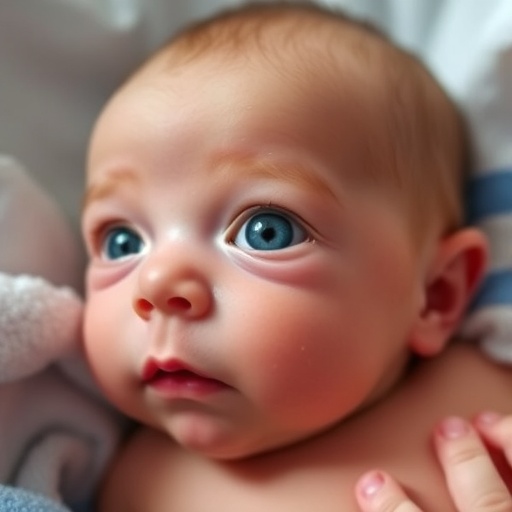
Premature birth can disrupt development in ways that extend far beyond breathing and feeding. A new report in Pediatric Research highlights an additional concern: the way premature infants move their eyes. Researchers report that eye movements in these babies can be markedly abnormal, suggesting early neurodevelopmental differences that may affect how infants process visual information.

The study draws attention to a foundational milestone—coordinated eye movement. In healthy development, infants’ visual behavior evolves as the brain learns to stabilize gaze, shift attention, and track patterns. When this system is altered, it can influence the infant’s ability to explore faces, objects, and environmental cues, potentially shaping downstream learning.

To characterize the abnormality, the team analyzed eye-movement behavior using observational and recording approaches appropriate for very young participants. By comparing patterns across groups of premature infants and reference infants, investigators identified differences consistent with disrupted control of visual tracking and gaze stabilization.

The findings are significant because eye movements are more than a reflex; they are a window into neural circuitry. Coordinating smooth pursuit, saccades, and fixation relies on networks spanning the brainstem and higher cortical regions. When those circuits mature under stress—such as premature birth—eye motor output may reveal the effects earlier than other clinical signs.

Importantly, the study positions visual behavior as a potential early biomarker. If reliable associations emerge between eye-movement irregularities and later developmental outcomes, clinicians could screen risk sooner and intervene earlier. Early support might include targeted vision monitoring, developmental follow-up, and guidance for caregivers.

While the research emphasizes abnormal eye movements, it also raises questions about mechanisms. Prematurity exposes the infant brain to a complex mixture of biological and environmental influences, including altered sensory experience and differences in brain maturation timing. These factors could affect how visual input is integrated and how motor commands are generated.

The authors also underscore the clinical urgency of integrating eye-movement assessment into routine neonatal follow-up for high-risk infants. Visual development is tightly linked to attention and perception, and subtle early disruptions may compound over time.

For families, the message is cautious but hopeful: abnormal eye movements may not be the end of a trajectory, but rather a signal that allows earlier detection. Future work will be needed to connect specific eye-movement patterns to long-term outcomes and to determine whether therapies can improve visual and developmental trajectories.

The research appears in Pediatric Research (2026) under DOI: 10.1038/s41390-026-05314-8.

DOI: https://doi.org/10.1038/s41390-026-05314-8
Image Credits: AI Generated
Article References: Good, W.V. “Premature infants face another serious problem: eye movements are abnormal.” Pediatr Res (2026). https://doi.org/10.1038/s41390-026-05314-8

Tags: abnormal eye movementsdevelopmental milestones in infant eye movementsearly detection of neurodevelopmental issues through eye movementsearly visual processing in premature babieseffects of prematurity on cortical and brainstem functioneye tracking and gaze stabilization in infantsimpact of premature birth on eye movement controlimplications of abnormal eye movements for neurodevelopmentneural circuitry of eye movements in infantsneurodevelopmental differences in preemiespremature infantsvisual behavior development in preterm infants
Share26Tweet16
Previous Post

Aerobic Methanotrophs Enrichments Accelerate Methane Consumption in Hydrothermal Deep Waters

Next Post

Gut Microbiome Signatures Enable Detection of Colorectal Lesions in FIT Screening

Related Posts

Wildlife Disease Increases with Urban Density, Habitat Connectivity and Climate Change
Technology and Engineering

Wildlife Disease Increases with Urban Density, Habitat Connectivity and Climate Change

August 19, 2026
Thermal justice could make urban heat adaptation fairer as cities grow hotter
Technology and Engineering

Thermal justice could make urban heat adaptation fairer as cities grow hotter

August 19, 2026
New AI Model Could Enhance Digital Coaching and Rehabilitation
Technology and Engineering

New AI Model Could Enhance Digital Coaching and Rehabilitation

August 19, 2026
DGIST radar receiver unifies communication and detection, easing autonomous vehicles’ computing load
Technology and Engineering

DGIST radar receiver unifies communication and detection, easing autonomous vehicles’ computing load

August 19, 2026
Sensor detects ammonia leaks at just one part per million
Technology and Engineering

Sensor detects ammonia leaks at just one part per million

August 19, 2026
Sandia Labs Partners to Develop Technologies Strengthening the Electric Grid
Technology and Engineering

Sandia Labs Partners to Develop Technologies Strengthening the Electric Grid

August 19, 2026
Next Post
Gut Microbiome Signatures Enable Detection of Colorectal Lesions in FIT Screening

Gut Microbiome Signatures Enable Detection of Colorectal Lesions in FIT Screening

  • Mothers who receive childcare support from maternal grandparents show more

    Mothers who receive childcare support from maternal grandparents show more parental warmth, finds NTU Singapore study

    27656 shares
    Share 11059 Tweet 6912
  • University of Seville Breaks 120-Year-Old Mystery, Revises a Key Einstein Concept

    1061 shares
    Share 424 Tweet 265
  • Bee body mass, pathogens and local climate influence heat tolerance

    682 shares
    Share 273 Tweet 171
  • Researchers record first-ever images and data of a shark experiencing a boat strike

    546 shares
    Share 218 Tweet 137
  • Groundbreaking Clinical Trial Reveals Lubiprostone Enhances Kidney Function

    531 shares
    Share 212 Tweet 133
Science

Embark on a thrilling journey of discovery with Scienmag.com—your ultimate source for cutting-edge breakthroughs. Immerse yourself in a world where curiosity knows no limits and tomorrow’s possibilities become today’s reality!

RECENT NEWS

  • Chronic Kidney Disease in Women: Global Burden and Metabolic-Cardiovascular Connections
  • Large Language Models Win Gold at International Astronomy and Astrophysics Olympiad
  • Molecular Self-Assembly Enables High-Throughput DNA Fragment Synthesis from Overlapping Oligonucleotides
  • Dynamic duo weaves hierarchical DNA materials using two classes of biomolecular nanomachines

Categories

  • Agriculture
  • Anthropology
  • Archaeology
  • Athmospheric
  • Biology
  • Biotechnology
  • Blog
  • Bussines
  • Cancer
  • Chemistry
  • Climate
  • Earth Science
  • Editorial Policy
  • Marine
  • Mathematics
  • Medicine
  • Pediatry
  • Policy
  • Psychology & Psychiatry
  • Science Education
  • Social Science
  • Space
  • Technology and Engineering

Subscribe to Blog via Email

Enter your email address to subscribe to this blog and receive notifications of new posts by email.

Join 5,150 other subscribers

© 2025 Scienmag - Science Magazine

Welcome Back!

Login to your account below

Forgotten Password?

Retrieve your password

Please enter your username or email address to reset your password.

Log In
No Result
View All Result
  • HOME
  • SCIENCE NEWS
  • CONTACT US

© 2025 Scienmag - Science Magazine

Discover more from Science

Subscribe now to keep reading and get access to the full archive.

Continue reading
