


When a patient is experiencing heart failure, a leading cause of death worldwide, they begin to lose healthy and functioning cardiac cells. Heart failure causes these once-flexible cells to develop into fibrotic cells that are no longer able to contract and relax. This stiffening of the cardiac cells compromises their ability to carry blood efficiently to the rest of the organs in the human system. Because humans cannot regenerate these cardiac cells, the patient faces a long road to recovery marked by preventative or symptomatic treatments.

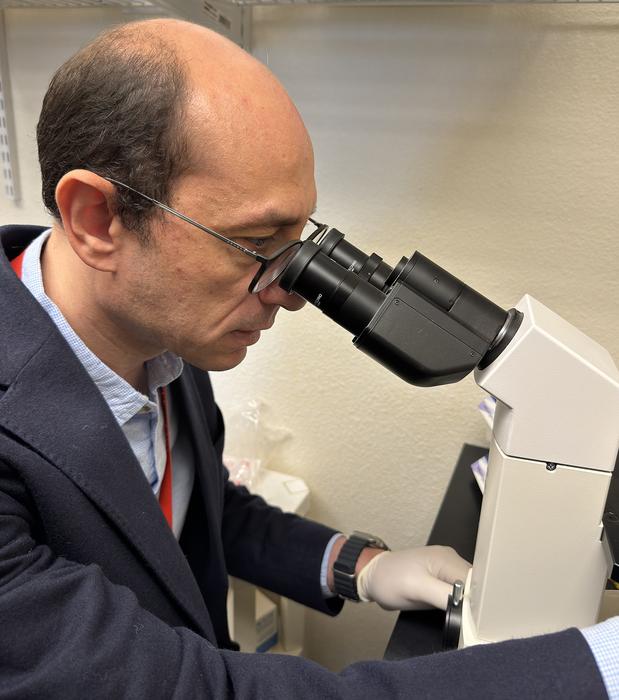
Credit: TTUHSC
When a patient is experiencing heart failure, a leading cause of death worldwide, they begin to lose healthy and functioning cardiac cells. Heart failure causes these once-flexible cells to develop into fibrotic cells that are no longer able to contract and relax. This stiffening of the cardiac cells compromises their ability to carry blood efficiently to the rest of the organs in the human system. Because humans cannot regenerate these cardiac cells, the patient faces a long road to recovery marked by preventative or symptomatic treatments.
However, some mammals do have the ability to regenerate cardiac cells, though generally for a specific amount of time immediately following birth. With that in mind, Mahmoud Salama Ahmed, Ph.D., and an international team of researchers have completed an investigation to uncover novel therapeutics or existing therapeutic regimens previously approved by the Food and Drug Administration (FDA) for cardiac regeneration. Their study (“Identification of FDA-approved drugs that induce heart regeneration in mammals”) was published in March in Nature Cardiovascular Research.
“This is a study for regenerative therapy more than symptomatic treatment,” Ahmed added.
Ahmed, a professor of pharmaceutical sciences at the Texas Tech University Health Sciences Center Jerry H. Hodge School of Pharmacy, worked on the study while at UT Southwestern Medical Center. He said the current research is based upon findings from a 2020 study (https://www.nature.com/articles/s41586-020-2228-6) from the UT Southwestern Medical Center laboratory of Hesham Sadek, M.D., Ph.D.
In that study, investigators demonstrated that mice can indeed regenerate cardiac cells upon genetic deletion of two transcription factors: Meis1 and Hoxb13. Armed with that information, Ahmed and his collaborators started their latest study in 2018 at UT Southwestern Medical Center. They began by targeting the transcription factors (Meis1 and Hoxb13) using paromomycin and neomycin, two antibiotics from the aminoglycoside class.
“We developed inhibitors to switch off the internal transcription and restore the regenerative capacity of cardiac cells,” Ahmed added.
Ahmed said the structure scaffold of paromomycin and neomycin indicated they had the potential to bind to and inhibit the Meis1 transcription factor. To understand how the binding might occur, the team first had to uncover the molecular mechanisms of paromomycin and neomycin and learn how they bind to Meis1 and Hoxb13 genes.
“We started testing in mice suffering from myocardial infarction or ischemia,” Ahmed explained. “We found that both of them (paromomycin and neomycin) work synergistically with each other to elevate the ejection fraction (the percentage of blood leaving the heart each time it pumps), so the contractility of the ventricles (heart chambers) is significantly improved. It enhanced the cardiac output and reduced the fibrotic scar that was getting down into the heart.”
The team collaborated with scientists from the University of Alabama at Birmingham to administer paromomycin and neomycin to pigs suffering from myocardial infarction. They discovered the pigs suffering from myocardial infarction had better contractility, ejection fractions and overall improved cardiac output when they were administered the paromomycin and neomycin.
In future research, Ahmed is interested in combining the binding profiles of paromomycin and neomycin into one molecule rather than two. If successful, he said the new molecule will be able to avoid any adverse or potentially adverse effects associated with antibiotic resistance.
“We want to have newly synthesized small molecules targeting Meis1 and Hoxb13,” Ahmed said. “We want to go forward for further investigation in pigs regarding toxicological studies. Later on, hopefully this will be an introduction for clinical trials in humans. The good thing about that is we are using a couple of FDA-approved drugs with established safety profiles and well-known side effects, so we are cutting out some milestones regarding gaining approval for the investigation of a new drug. This is the beauty of drug repurposing: We can go to the clinic earlier so we can begin to rescue some lives.”
###
Journal
Nature Cardiovascular Research
Method of Research
Experimental study
Subject of Research
Animals
Article Title
Identification of FDA-approved drugs that induce heart regeneration in mammals
Article Publication Date
11-Mar-2024
Cite Scienmag News
Ophelia Keating. (May 16, 2024). TTUHSC’s Ahmed investigating cardiac cell regeneration. Scienmag. https://scienmag.com/ttuhscs-ahmed-investigating-cardiac-cell-regeneration/
Ophelia Keating. "TTUHSC’s Ahmed investigating cardiac cell regeneration." Scienmag, 16 May 2024, https://scienmag.com/ttuhscs-ahmed-investigating-cardiac-cell-regeneration/. Accessed 4 September 2026.
Ophelia Keating. "TTUHSC’s Ahmed investigating cardiac cell regeneration." Scienmag. May 16, 2024. https://scienmag.com/ttuhscs-ahmed-investigating-cardiac-cell-regeneration/

