

Tuesday, October 27, 2026
Science
No Result
View All Result
  • Login
  • HOME
  • SCIENCE NEWS
  • CONTACT US
  • HOME
  • SCIENCE NEWS
  • CONTACT US
No Result
View All Result
Scienmag
No Result
View All Result
Home Science News Cancer

TIGIT receptor drives NKT-like cell exhaustion in high-HBV liver cancer patients

October 27, 2026
in Cancer
Nathaniel Bowman
By Nathaniel Bowman Scienmag Editorial Profile - Precision Oncology
Reading Time: 3 mins read
0
TIGIT receptor drives NKT-like cell exhaustion in high-HBV liver cancer patients

TIGIT receptor drives NKT-like cell exhaustion in high-HBV liver cancer patients

65
SHARES
587
VIEWS
Share on FacebookShare on Twitter
ADVERTISEMENT

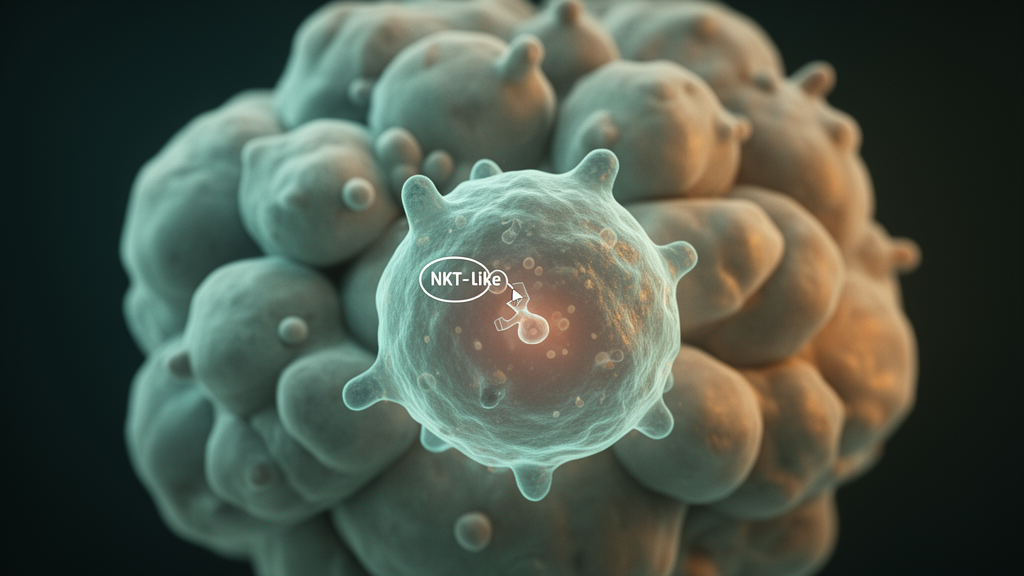
Patients with hepatocellular carcinoma who carry a high hepatitis B virus load show a distinctive form of immune dysfunction in a rare but important population of circulating immune cells, according to a new study published in Cancer Immunology, Immunotherapy. The research focuses on CD3-positive CD56-positive NKT-like cells, which bridge features of T cells and natural killer cells and contribute to both antiviral defense and tumor immune surveillance. In patients whose serum HBV DNA exceeded 10,000 IU per milliliter, these cells displayed clear signs of hypofunction, raising questions about how chronic viral replication shapes antitumor immunity in the liver.

The researchers found that TIGIT levels on peripheral blood NKT-like cells rose in parallel with HBV DNA concentration, so the higher a patient's viral load, the more TIGIT their NKT-like cells carried. Functionally, the high-HBV group's NKT-like cells secreted reduced amounts of antiviral effector cytokines, indicating that the cells were present but blunted in their ability to respond. To test whether TIGIT itself was responsible for the impaired activity rather than merely a marker of it, the team compared the behavior of TIGIT-positive and TIGIT-negative NKT-like cells within the same patients.

The TIGIT-positive subset showed significantly lower immune activity, supporting the idea that expression of this receptor tracks with a functionally exhausted state rather than simply accompanying it. A second layer of the mechanism involves plasmacytoid dendritic cells, or pDCs, which present the ligand CD155 that engages TIGIT. In patients with high HBV DNA, CD155 expression on pDCs was markedly upregulated compared with HCC patients whose viral loads were low.

The most direct evidence came from co-culture experiments in which NKT-like cells and pDCs from patients were grown together and stimulated with hepatitis B core antigen, the viral protein that NKT-like cells would normally recognize. When the investigators blocked the TIGIT pathway, the effector function of the patients' NKT-like cells was restored, demonstrating that the receptor-ligand interaction was actively suppressing the cells rather than simply correlating with their dysfunction. The new data provide a rationale for developing TIGIT-directed immunotherapy specifically for hepatocellular carcinoma patients with high HBV loads, a group whose disease is driven by both chronic viral infection and tumor progression.

The clinical context matters. Persistent HBV infection can lead to chronic hepatitis and cirrhosis, and high serum HBV DNA is recognized as a major risk factor for the development of hepatocellular carcinoma. The study's scope should be kept in mind.

The work examined peripheral blood cells rather than tumor-infiltrating lymphocytes, and the functional restoration was demonstrated in co-culture assays rather than in patients. Whether TIGIT blockade would improve clinical outcomes in high-HBV HCC patients remains an open question that would require clinical testing. Nevertheless, by linking viral load, receptor expression, ligand upregulation, and reversible dysfunction in a single mechanistic chain, the study offers a coherent account of how chronic HBV replication may undermine one arm of antitumor immunity and identifies a concrete molecular target for future intervention.

Subject of Research: TIGIT-mediated hypofunction of NKT-like cells in hepatocellular carcinoma patients with high HBV viral load

Article Title: TIGIT expression induces NKT-like cell hypofunction in hepatocellular carcinoma patients with high HBV load

Article References: Huang, R., Liu, X., Yu, X., Dai, X., Zheng, Y., Zheng, M., Xu, Y., & Zong, L. (2026). TIGIT expression induces NKT-like cell hypofunction in hepatocellular carcinoma patients with high HBV load. Cancer Immunology, Immunotherapy. https://doi.org/10.1007/s00262-026-04598-3

Image Credits: AI Generated

DOI: 10.1007/s00262-026-04598-3

Keywords: TIGIT, NKT-like cells, hepatocellular carcinoma, hepatitis B virus, immune checkpoint, plasmacytoid dendritic cells, CD155, HBV DNA, immune evasion, liver cancer immunotherapy, expression, induces

Cite Scienmag News

Nathaniel Bowman. (October 27, 2026). TIGIT receptor drives NKT-like cell exhaustion in high-HBV liver cancer patients. Scienmag. https://scienmag.com/tigit-receptor-drives-nkt-like-cell-exhaustion-in-high-hbv-liver-cancer-patients/


Nathaniel Bowman. "TIGIT receptor drives NKT-like cell exhaustion in high-HBV liver cancer patients." Scienmag, 27 October 2026, https://scienmag.com/tigit-receptor-drives-nkt-like-cell-exhaustion-in-high-hbv-liver-cancer-patients/. Accessed 27 October 2026.

Nathaniel Bowman. "TIGIT receptor drives NKT-like cell exhaustion in high-HBV liver cancer patients." Scienmag. October 27, 2026. https://scienmag.com/tigit-receptor-drives-nkt-like-cell-exhaustion-in-high-hbv-liver-cancer-patients/

Tags: CD155chronic viral replication and tumor immunitycytokine secretion impairment in high HBV patientsExpressionHBV DNAhepatitis B virushepatitis B virus load and immune dysfunctionhepatocellular carcinomahepatocellular carcinoma immune responseimmune checkpointimmune checkpoint regulation in HBV-related cancerimmune evasionimpact of viral load on NKT cellinducesliver cancer immunotherapynatural killer T cell hypofunction in liver cancerNKT-like cellsNKT-like cells role in antiviral defenseplasmacytoid dendritic cellsTIGITTIGIT as a biomarker for immune exhaustionTIGIT receptor in NKT-like cell exhaustiontumor immune surveillance in HBV high-load patients
Share26Tweet16
Previous Post

Understory Vegetation, Not Canopy, Drives Soil Protection in Degraded Forests

Next Post

Neonatal testicular torsion: Doppler flow and contralateral fixation need careful interpretation

Related Posts

Rising Cancer Stemness Drives Prostate Cancer Progression and Treatment Resistance
Cancer

Rising Cancer Stemness Drives Prostate Cancer Progression and Treatment Resistance

October 27, 2026
Ultrasound patterns may help tell IgG4-positive Hashimoto’s thyroiditis apart from thyroid lymphoma
Cancer

Ultrasound patterns may help tell IgG4-positive Hashimoto’s thyroiditis apart from thyroid lymphoma

October 27, 2026
Diabetes Drugs Linked to Sharply Lower Lymphedema Risk After Breast Cancer Surgery
Cancer

Diabetes Drugs Linked to Sharply Lower Lymphedema Risk After Breast Cancer Surgery

October 27, 2026
PD-L1 Levels Fail to Predict ALK Inhibitor Benefit in Lung Cancer Cohort
Cancer

PD-L1 Levels Fail to Predict ALK Inhibitor Benefit in Lung Cancer Cohort

October 27, 2026
Before Treatment Begins, Lung and Head and Neck Cancer Patients Know Little About Exercise
Cancer

Before Treatment Begins, Lung and Head and Neck Cancer Patients Know Little About Exercise

October 27, 2026
Machine Learning Study Links ENTPD5 to Radioresistance in Liver Cancer
Cancer

Machine Learning Study Links ENTPD5 to Radioresistance in Liver Cancer

October 27, 2026
Next Post
Neonatal testicular torsion: Doppler flow and contralateral fixation need careful interpretation

Neonatal testicular torsion: Doppler flow and contralateral fixation need careful interpretation

  • Mothers who receive childcare support from maternal grandparents show more optimized

    Mothers who receive childcare support from maternal grandparents show more parental warmth, finds NTU Singapore study

    27656 shares
    Share 11059 Tweet 6912
  • University of Seville Breaks 120-Year-Old Mystery, Revises a Key Einstein Concept

    1061 shares
    Share 424 Tweet 265
  • Bee body mass, pathogens and local climate influence heat tolerance

    682 shares
    Share 273 Tweet 171
  • Researchers record first-ever images and data of a shark experiencing a boat strike

    546 shares
    Share 218 Tweet 137
  • Groundbreaking Clinical Trial Reveals Lubiprostone Enhances Kidney Function

    531 shares
    Share 212 Tweet 133
Science

Embark on a thrilling journey of discovery with Scienmag.com—your ultimate source for cutting-edge breakthroughs. Immerse yourself in a world where curiosity knows no limits and tomorrow’s possibilities become today’s reality!

RECENT NEWS

  • Rural telestroke network in Germany handles far more than stroke, two-year study shows
  • Fatigue Reshapes Badminton Lunge Mechanics, With Backhand Steps Loading the Ankle Most
  • Drinking During Endurance Exercise Cools the Body but May Not Speed You Up
  • Neonatal testicular torsion: Doppler flow and contralateral fixation need careful interpretation

Categories

  • Agriculture
  • Anthropology
  • Archaeology
  • Athmospheric
  • Biology
  • Biotechnology
  • Blog
  • Bussines
  • Cancer
  • Chemistry
  • Climate
  • Earth Science
  • Editorial Policy
  • Marine
  • Mathematics
  • Medicine
  • Pediatry
  • Policy
  • Psychology & Psychiatry
  • Science Education
  • Science News
  • Social Science
  • Space
  • Technology and Engineering

Subscribe to Blog via Email

Enter your email address to subscribe to this blog and receive notifications of new posts by email.

Join 5,151 other subscribers

© 2025 Scienmag - Science Magazine

Welcome Back!

Login to your account below

Forgotten Password?

Retrieve your password

Please enter your username or email address to reset your password.

Log In
No Result
View All Result
  • HOME
  • SCIENCE NEWS
  • CONTACT US

© 2025 Scienmag - Science Magazine

Discover more from Science

Subscribe now to keep reading and get access to the full archive.

Continue reading