

Tuesday, October 27, 2026
Science
No Result
View All Result
  • Login
  • HOME
  • SCIENCE NEWS
  • CONTACT US
  • HOME
  • SCIENCE NEWS
  • CONTACT US
No Result
View All Result
Scienmag
No Result
View All Result
Home Science News Medicine

Liver Injury Affects One in Eight Patients on Immune Checkpoint Inhibitors in Real-World Study

October 27, 2026
in Medicine, Science News
Ophelia Keating
By Ophelia Keating Scienmag Editorial Profile - Health Services Research
Reading Time: 3 mins read
0
Liver Injury Affects One in Eight Patients on Immune Checkpoint Inhibitors in Real-World Study

Liver Injury Affects One in Eight Patients on Immune Checkpoint Inhibitors in Real-World Study

65
SHARES
587
VIEWS
Share on FacebookShare on Twitter
ADVERTISEMENT

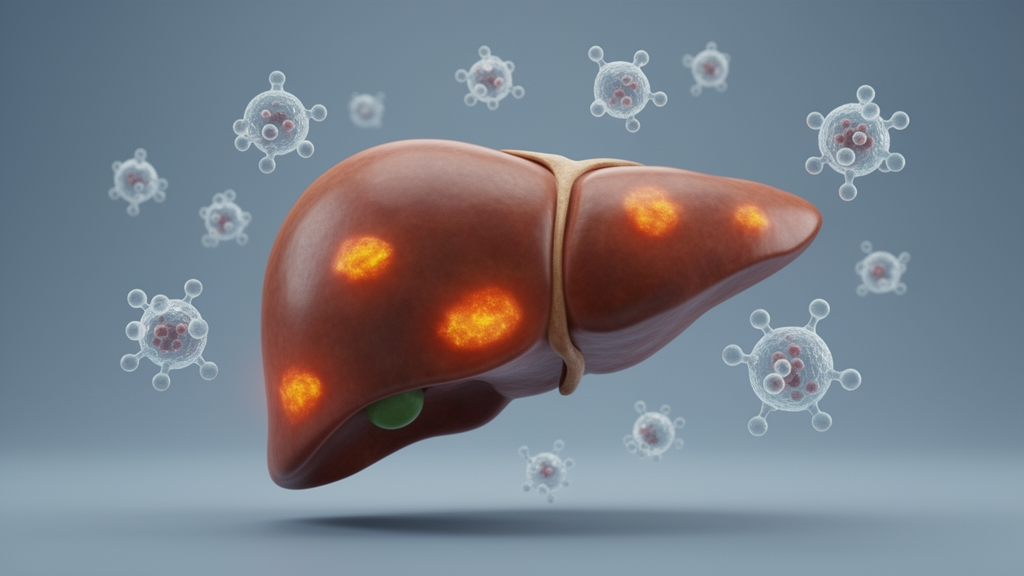
Patients treated with immune checkpoint inhibitors (ICIs) developed liver injury at a rate of 12.17 percent in a retrospective study of 682 people treated at Tianjin Union Medical Center between January 2020 and June 2024, according to a real-world analysis published in Frontiers in Pharmacology. Of the 83 patients who experienced ICI-related liver injury, the overwhelming majority — 73.49 percent — showed a cholestatic pattern, in which bile flow is disrupted, while 20.48 percent had mixed injury and only 6.02 percent had a purely hepatocellular pattern dominated by liver cell damage. The Tianjin team set out to map how this immune-related liver injury presents, how severe it becomes, and which patients recover their liver function within six months of the event.

The severity of liver injury tracked closely with routine blood tests. Patients with more severe injury had higher baseline levels of alkaline phosphatase (ALP), gamma-glutamyl transferase and total bilirubin, and reached higher peak values of alanine aminotransferase (ALT) and aspartate aminotransferase (AST), the enzymes that leak into the bloodstream when liver cells are damaged. The dynamics of injury also differed sharply by subtype. Hepatocellular injury produced rapid surges in ALT and AST, whereas cholestatic injury caused a marked but noticeably slower rise in ALP, and mixed injury combined features of both patterns. Cholestatic injury emerged as the dominant subtype in patients receiving PD-1/PD-L1 inhibitor-containing regimens, and the pattern of change in liver function tests varied systematically with the clinical subtype.

To identify who fails to recover within six months, the team examined a range of clinical variables. In univariate analysis, older age, higher peak ALT and a neutrophil-to-lymphocyte ratio (NLR) above 3 were each associated with poor recovery. When the variables were tested together in a multivariate model, only NLR above 3 remained independently associated with failure to recover liver function within six months, with an odds ratio of 10.917 (95 percent confidence interval 1.552 to 76.817, P = 0.016).

Receiver operating characteristic analysis supported the signal: the continuous NLR yielded an area under the curve of 0.702 with a cut-off of 2.955, rounded to 3, while the binary NLR greater than 3 yielded an AUC of 0.694. These are moderate discriminatory values, and the authors frame NLR as an exploratory candidate biomarker that warrants further investigation rather than a validated clinical tool.

The study’s design shapes how its findings should be read. It was a single-center retrospective cohort, so the patient mix, treatment protocols and monitoring practices at one hospital in Tianjin may not generalize everywhere. Follow-up was censored in December 2024 with a minimum of six months, which allowed recovery assessment but not longer-term outcomes. As an observational analysis, it identifies associations, not causal effects, and the wide confidence interval around the NLR odds ratio reflects the modest number of patients who failed to recover. Within those limits, the work documents that cholestatic injury predominated under PD-1/PD-L1 inhibitor-containing therapy, that liver function parameters changed in distinct patterns according to subtype, and that NLR above 3 merits further study as a potential exploratory marker of poor six-month recovery in ICI-related liver injury.

Subject of Research: Liver injury in patients receiving immune checkpoint inhibitor-based therapy

Article Title: Clinical characteristics and prognosis of liver injury in patients receiving immune checkpoint inhibitor-based therapy: a real-world retrospective study

Article References: Gao, L., Yang, X., Yang, F., Shi, G., Jiang, Y., Zhao, Z., Wang, M., Gao, Y., & Han, T. (2026). Clinical characteristics and prognosis of liver injury in patients receiving immune checkpoint inhibitor-based therapy: a real-world retrospective study. Frontiers in Pharmacology, 17, Article 1957181. https://doi.org/10.3389/fphar.2026.1957181

Image Credits: AI Generated

DOI: 10.3389/fphar.2026.1957181

Keywords: immune checkpoint inhibitors, liver injury, cholestatic injury, hepatotoxicity, PD-1, neutrophil-to-lymphocyte ratio, retrospective study, liver function tests, immunotherapy, prognosis, Clinical, characteristics

Cite Scienmag News

Ophelia Keating. (October 27, 2026). Liver Injury Affects One in Eight Patients on Immune Checkpoint Inhibitors in Real-World Study. Scienmag. https://scienmag.com/liver-injury-affects-one-in-eight-patients-on-immune-checkpoint-inhibitors-in-real-world-study/


Ophelia Keating. "Liver Injury Affects One in Eight Patients on Immune Checkpoint Inhibitors in Real-World Study." Scienmag, 27 October 2026, https://scienmag.com/liver-injury-affects-one-in-eight-patients-on-immune-checkpoint-inhibitors-in-real-world-study/. Accessed 27 October 2026.

Ophelia Keating. "Liver Injury Affects One in Eight Patients on Immune Checkpoint Inhibitors in Real-World Study." Scienmag. October 27, 2026. https://scienmag.com/liver-injury-affects-one-in-eight-patients-on-immune-checkpoint-inhibitors-in-real-world-study/

Tags: characteristicscholestatic injurycholestatic liver injuryclinicalhepatocellular liver injuryhepatotoxicityICI liver injury patternsICI-related liver toxicityimmune checkpoint inhibitor liver injuryimmune checkpoint inhibitorsimmune-related adverse eventsImmunotherapyliver function recovery after ICIliver function testsliver injuryliver injury biomarkersmanagement of immune checkpoint inhibitor hepatotoxicityneutrophil-to-lymphocyte ratioPD-1prognosisreal-world study on immune checkpoint inhibitorsretrospective analysis of liver toxicityretrospective studyseverity markers in ICI liver injury
Share26Tweet16
Previous Post

Post-Weaning Isolation Leaves Lasting, Sex-Specific Marks on Mouse Social Behavior

Next Post

AI Model Spots Tiny Power Line Insulator Defects From Drone Cameras in Real Time

Related Posts

Research report: Defining clinically meaningful pain reduction after spinal injections using an 11-point numerical rating scale and patient-reported relative reduction of pain
Science News

Research report: Defining clinically meaningful pain reduction after spinal injections using an 11-point numerical rating scale and patient-reported relative reduction of pain

October 27, 2026
Research report: Hydraulic performance of 14-G hemodialysis catheters versus an 8-Fr arterial cannula in a mock 3-kg small-dog cardiopulmonary bypass circuit
Science News

Research report: Hydraulic performance of 14-G hemodialysis catheters versus an 8-Fr arterial cannula in a mock 3-kg small-dog cardiopulmonary bypass circuit

October 27, 2026
MLP mixer blocks with channel attention sharpen medical image segmentation
Technology and Engineering

MLP mixer blocks with channel attention sharpen medical image segmentation

October 27, 2026
Defocus Lens Design Slows Myopia Progression in Spanish Children Over 18 Months
Science News

Defocus Lens Design Slows Myopia Progression in Spanish Children Over 18 Months

October 27, 2026
Mushroom Polysaccharide and Plant Phenolic Show Promise Against Steroid-Induced Bone Loss in Mice
Medicine

Mushroom Polysaccharide and Plant Phenolic Show Promise Against Steroid-Induced Bone Loss in Mice

October 27, 2026
AI Model Spots Tiny Power Line Insulator Defects From Drone Cameras in Real Time
Science News

AI Model Spots Tiny Power Line Insulator Defects From Drone Cameras in Real Time

October 27, 2026
Next Post
AI Model Spots Tiny Power Line Insulator Defects From Drone Cameras in Real Time

AI Model Spots Tiny Power Line Insulator Defects From Drone Cameras in Real Time

  • Mothers who receive childcare support from maternal grandparents show more optimized

    Mothers who receive childcare support from maternal grandparents show more parental warmth, finds NTU Singapore study

    27656 shares
    Share 11059 Tweet 6912
  • University of Seville Breaks 120-Year-Old Mystery, Revises a Key Einstein Concept

    1061 shares
    Share 424 Tweet 265
  • Bee body mass, pathogens and local climate influence heat tolerance

    682 shares
    Share 273 Tweet 171
  • Researchers record first-ever images and data of a shark experiencing a boat strike

    546 shares
    Share 218 Tweet 137
  • Groundbreaking Clinical Trial Reveals Lubiprostone Enhances Kidney Function

    531 shares
    Share 212 Tweet 133
Science

Embark on a thrilling journey of discovery with Scienmag.com—your ultimate source for cutting-edge breakthroughs. Immerse yourself in a world where curiosity knows no limits and tomorrow’s possibilities become today’s reality!

RECENT NEWS

  • Research report: Defining clinically meaningful pain reduction after spinal injections using an 11-point numerical rating scale and patient-reported relative reduction of pain
  • Research report: Hydraulic performance of 14-G hemodialysis catheters versus an 8-Fr arterial cannula in a mock 3-kg small-dog cardiopulmonary bypass circuit
  • MLP mixer blocks with channel attention sharpen medical image segmentation
  • Defocus Lens Design Slows Myopia Progression in Spanish Children Over 18 Months

Categories

  • Agriculture
  • Anthropology
  • Archaeology
  • Athmospheric
  • Biology
  • Biotechnology
  • Blog
  • Bussines
  • Cancer
  • Chemistry
  • Climate
  • Earth Science
  • Editorial Policy
  • Marine
  • Mathematics
  • Medicine
  • Pediatry
  • Policy
  • Psychology & Psychiatry
  • Science Education
  • Science News
  • Social Science
  • Space
  • Technology and Engineering

Subscribe to Blog via Email

Enter your email address to subscribe to this blog and receive notifications of new posts by email.

Join 5,151 other subscribers

© 2025 Scienmag - Science Magazine

Welcome Back!

Login to your account below

Forgotten Password?

Retrieve your password

Please enter your username or email address to reset your password.

Log In
No Result
View All Result
  • HOME
  • SCIENCE NEWS
  • CONTACT US

© 2025 Scienmag - Science Magazine

Discover more from Science

Subscribe now to keep reading and get access to the full archive.

Continue reading