

Monday, October 26, 2026
Science
No Result
View All Result
  • Login
  • HOME
  • SCIENCE NEWS
  • CONTACT US
  • HOME
  • SCIENCE NEWS
  • CONTACT US
No Result
View All Result
Scienmag
No Result
View All Result
Home Science News Cancer

Organoids and assembloids reshape how researchers model glioblastoma

October 26, 2026
in Cancer
Nathaniel Bowman
By Nathaniel Bowman Scienmag Editorial Profile - Precision Oncology
Reading Time: 3 mins read
0
Organoids and assembloids reshape how researchers model glioblastoma

Organoids and assembloids reshape how researchers model glioblastoma

65
SHARES
587
VIEWS
Share on FacebookShare on Twitter
ADVERTISEMENT

Glioblastoma remains the most common malignant tumour of the adult central nervous system, and even with the standard combination of surgery, radiotherapy and chemotherapy, mortality rates stay stubbornly high. A new review article, published in Medical Oncology, examines why progress against this disease has been so difficult and argues that the answer lies partly in the laboratory models researchers rely on. According to authors Büşra Yüksel, Ayşegül Doğan and Fikrettin Şahin, conventional two-dimensional cell cultures and simplified three-dimensional systems fail to capture the biological complexity that makes glioblastoma so lethal, and emerging organoid and assembloid technologies may close that gap.

The review identifies three features of glioblastoma that frustrate both biological understanding and therapy development. The tumour shows pronounced intratumoral heterogeneity, meaning that distinct cell populations with different molecular characteristics coexist within a single mass. It grows in a highly invasive manner, spreading into surrounding brain tissue. And it depends strongly on the tumour microenvironment, the surrounding non-tumour cells and structures that influence how the cancer behaves and how it responds to treatment. Flat dishes of cells, the authors note, simply cannot reproduce these intertwined properties.

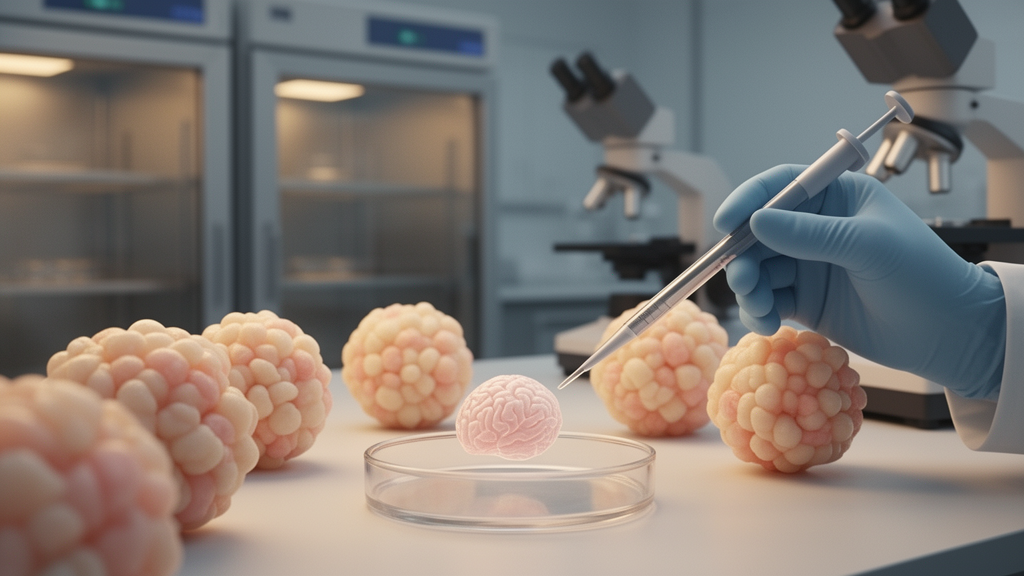
Organoid technologies offer a way forward. These three-dimensional cultures, grown from patient-derived cells, preserve patient-specific molecular profiles and a degree of spatial organization that conventional cultures lack. That means a model can retain the individual biological signature of the tumour it came from, an essential requirement for personalized therapeutic strategies. The review positions these platforms as physiologically relevant systems that bring laboratory experimentation closer to the reality of the disease in patients.

The most advanced of these systems, assembloids, go a step further by integrating multiple cellular components into a single construct. This integration allows researchers to investigate processes that simpler models cannot address, including glioblastoma invasion into surrounding tissue, cellular plasticity driven by the microenvironment, and the mechanisms underlying therapeutic resistance. Because resistance to standard-of-care treatment is a central reason mortality remains high, models that can recreate microenvironment-driven behaviour are of particular interest for translational research.

As a review, the article does not report new experimental findings of its own. Instead, it provides a critical overview of the current landscape of two- and three-dimensional in vitro models used in glioblastoma research, with a focus on emerging organoid and assembloid platforms. The authors weigh the strengths and limitations of each approach and highlight recent innovations in the field, assessing how far these tools have come and where challenges remain. The overall conclusion is cautiously optimistic: by preserving molecular profiles, spatial organization and tumour–microenvironment interactions in the laboratory, organoid and assembloid systems have the potential to advance translational research and support personalized therapeutic strategies for glioblastoma. The review makes clear, however, that these are opportunities rather than achieved outcomes, since the technologies are still developing and their limitations form part of the analysis. For a disease whose standard-of-care outcomes have barely shifted, better models are presented as a necessary foundation for the more effective therapies that clinical practice still lacks.

Subject of Research: Three-dimensional organoid and assembloid models for studying glioblastoma biology and therapy resistance

Article Title: Modelling glioblastoma with organoids and assembloids: Opportunities and challenges

Article References: Yüksel, B., Doğan, A., & Şahin, F. (2026). Modelling glioblastoma with organoids and assembloids: Opportunities and challenges. Medical Oncology, 43(11), Article 354. https://doi.org/10.1007/s12032-026-03472-7

Image Credits: AI Generated

DOI: 10.1007/s12032-026-03472-7

Keywords: glioblastoma, organoids, assembloids, tumour microenvironment, 3D cell culture, therapy resistance, intratumoral heterogeneity, personalized medicine, translational research, brain tumour models, Modelling, Opportunities

Cite Scienmag News

Nathaniel Bowman. (October 26, 2026). Organoids and assembloids reshape how researchers model glioblastoma. Scienmag. https://scienmag.com/organoids-and-assembloids-reshape-how-researchers-model-glioblastoma/

Nathaniel Bowman. "Organoids and assembloids reshape how researchers model glioblastoma." Scienmag, 26 October 2026, https://scienmag.com/organoids-and-assembloids-reshape-how-researchers-model-glioblastoma/. Accessed 26 October 2026.

Nathaniel Bowman. "Organoids and assembloids reshape how researchers model glioblastoma." Scienmag. October 26, 2026. https://scienmag.com/organoids-and-assembloids-reshape-how-researchers-model-glioblastoma/


Tags: 3D cell cultureadvanced laboratory models for brain tumorsassembloidsbiological complexity of glioblastomabrain tumour modelschallenges in glioblastoma therapy developmentGlioblastomaGlioblastoma modelingintratumoral heterogeneityinvasive glioblastoma growthlimitations of two-dimensional cell culturesmodellingopportunitiesorganoid and assembloid technologiesorganoidspatient-derived glioblastoma modelspersonalized cancer researchPersonalized Medicinetherapy resistancethree-dimensional tumor cultureTranslational Researchtumor microenvironment influencetumour microenvironment
Share26Tweet16
Previous Post

Doppler Pulsatility Index After Stroke Thrombectomy Flags Bleeding Risk

Next Post

Whole-Body Cryotherapy and Light Therapy Show Consistent Effects on Post-Exercise Soreness and Damage Markers

Related Posts

Orbital Mantle Cell Lymphoma Often Presents as Eyelid Swelling, 15-Year Study Finds
Cancer

Orbital Mantle Cell Lymphoma Often Presents as Eyelid Swelling, 15-Year Study Finds

October 26, 2026
International tumor board weighs personalized options for colon cancer with no measurable disease
Cancer

International tumor board weighs personalized options for colon cancer with no measurable disease

October 26, 2026
RNF152 Tags PD-L1 for Destruction and Curbs Immune Evasion in Kidney Cancer
Cancer

RNF152 Tags PD-L1 for Destruction and Curbs Immune Evasion in Kidney Cancer

October 26, 2026
Caregivers of Older Blood Cancer Patients Carry Heavier Cognitive Burden Than Patients
Cancer

Caregivers of Older Blood Cancer Patients Carry Heavier Cognitive Burden Than Patients

October 26, 2026
Mitochondrial transporter SLC25A39 emerges as a metabolic hub and candidate target in cancer
Cancer

Mitochondrial transporter SLC25A39 emerges as a metabolic hub and candidate target in cancer

October 26, 2026
MicroRNA miR-183-3p emerges as candidate regulator of ESR1 in colorectal cancer
Cancer

MicroRNA miR-183-3p emerges as candidate regulator of ESR1 in colorectal cancer

October 26, 2026
Next Post
Whole-Body Cryotherapy and Light Therapy Show Consistent Effects on Post-Exercise Soreness and Damage Markers

Whole-Body Cryotherapy and Light Therapy Show Consistent Effects on Post-Exercise Soreness and Damage Markers

  • Mothers who receive childcare support from maternal grandparents show more optimized

    Mothers who receive childcare support from maternal grandparents show more parental warmth, finds NTU Singapore study

    27656 shares
    Share 11059 Tweet 6912
  • University of Seville Breaks 120-Year-Old Mystery, Revises a Key Einstein Concept

    1061 shares
    Share 424 Tweet 265
  • Bee body mass, pathogens and local climate influence heat tolerance

    682 shares
    Share 273 Tweet 171
  • Researchers record first-ever images and data of a shark experiencing a boat strike

    546 shares
    Share 218 Tweet 137
  • Groundbreaking Clinical Trial Reveals Lubiprostone Enhances Kidney Function

    531 shares
    Share 212 Tweet 133
Science

Embark on a thrilling journey of discovery with Scienmag.com—your ultimate source for cutting-edge breakthroughs. Immerse yourself in a world where curiosity knows no limits and tomorrow’s possibilities become today’s reality!

RECENT NEWS

  • Whole-Body Cryotherapy and Light Therapy Show Consistent Effects on Post-Exercise Soreness and Damage Markers
  • Organoids and assembloids reshape how researchers model glioblastoma
  • Doppler Pulsatility Index After Stroke Thrombectomy Flags Bleeding Risk
  • PMS-PZT ceramic hits 1.13 m/s vibration with only 20 °C heating

Categories

  • Agriculture
  • Anthropology
  • Archaeology
  • Athmospheric
  • Biology
  • Biotechnology
  • Blog
  • Bussines
  • Cancer
  • Chemistry
  • Climate
  • Earth Science
  • Editorial Policy
  • Marine
  • Mathematics
  • Medicine
  • Pediatry
  • Policy
  • Psychology & Psychiatry
  • Science Education
  • Science News
  • Social Science
  • Space
  • Technology and Engineering

Subscribe to Blog via Email

Enter your email address to subscribe to this blog and receive notifications of new posts by email.

Join 5,151 other subscribers

© 2025 Scienmag - Science Magazine

Welcome Back!

Login to your account below

Forgotten Password?

Retrieve your password

Please enter your username or email address to reset your password.

Log In
No Result
View All Result
  • HOME
  • SCIENCE NEWS
  • CONTACT US

© 2025 Scienmag - Science Magazine

Discover more from Science

Subscribe now to keep reading and get access to the full archive.

Continue reading