


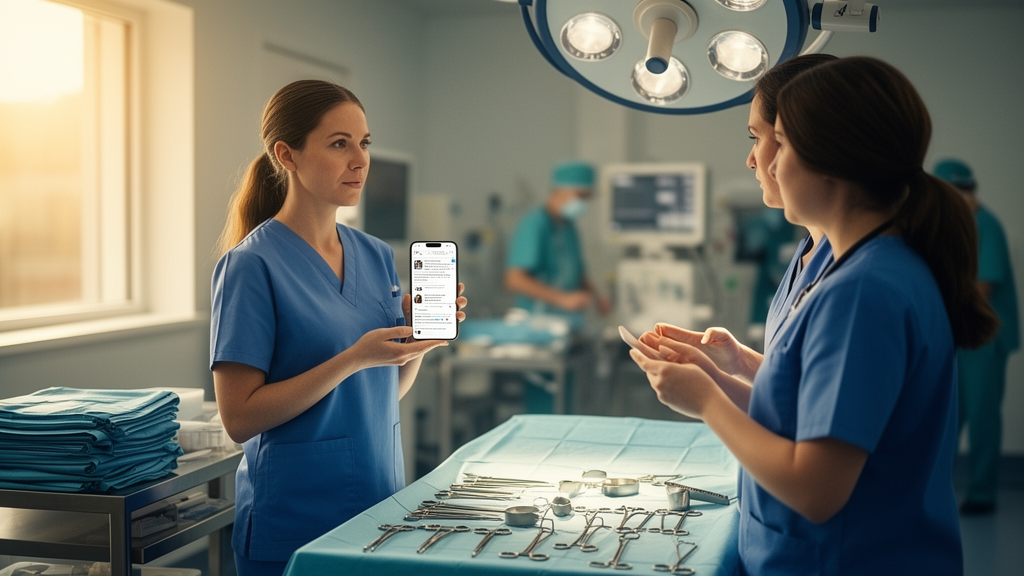
Physician associates working in UK surgical specialties expressed high confidence in supervised perioperative roles, but the results of an exploratory mixed-methods study also showed mild-to-moderate anxiety, uncertainty about their professional roles and exposure to online hostility. Among the 50 participants, 98% said they were comfortable undertaking surgical first-assist activity, while 86% were comfortable performing scrubbed operating department practitioner-related responsibilities.
Physician associates, or PAs, are increasingly embedded in UK surgical teams, although the study notes that they remain a small specialist group within the wider PA workforce. They often work in high-acuity, hierarchical environments in which clear roles, supervision and integration with the team are important for safe practice. The researchers examined whether the participants felt psychologically safe, how anxious they were, how they approached risk and what they hoped to achieve in their careers.
The study used structured interviews with 50 PAs recruited through a specialist register of 70 surgical PAs held by the College of Medical Associate Professionals. It was cross-sectional, so the findings describe conditions at one point rather than establishing changes over time or causal relationships. Psychological safety was measured with the Neuroception of Psychological Safety Scale, anxiety with the Generalised Anxiety Disorder-7 scale, and risk orientation with the Risk Propensity Scale. The researchers analysed the numerical data descriptively and through exploratory correlations, while open-ended responses were examined thematically.
Mean GAD-7 anxiety scores were 7.86, indicating mild-to-moderate anxiety across the group as a whole. Mean psychological safety scores were 100.80, with participants reporting stronger social engagement but weaker body-sensation scores. The authors interpreted this pattern as suggesting that interpersonal support may coexist with physiological vigilance or unease. Risk propensity, meanwhile, had negligible associations with anxiety, job satisfaction or the amount of procedural exposure reported by participants. Because the study was exploratory and cross-sectional, these correlations do not demonstrate that risk orientation produces any of those outcomes.
Online hostility was also reported. Twenty per cent of participants said they had experienced doxing or targeted online harassment, identifying digital safety as a distinct occupational concern alongside psychological safety and role clarity. Their career aspirations centred mainly on supervised perioperative contribution, education, leadership, development of procedural skills within scope and closer integration with multidisciplinary teams. Rather than emphasising independent operating, the responses pointed to continued value in collaborative and team-based roles.
The findings indicate that assigning PAs tasks alone may not be sufficient for their sustainable integration into surgical teams. The authors identified structured training pathways, explicit role boundaries, named supervision, pastoral support and digital safety processes as likely elements of workforce integration. These are conclusions about the kinds of support suggested by the study’s results, not evidence that a particular intervention has already been shown to improve outcomes. The small, specialist sample and exploratory design also limit how widely the results can be generalised across the wider UK PA workforce.
Subject of Research: Psychological safety, anxiety, online hostility and professional identity among UK surgical physician associates
Article Title: Psychological safety, anxiety and professional identity among UK surgical physician associates
Article References: Saia, L., & Okocha, M. (2026). Psychological safety, anxiety and professional identity among UK surgical physician associates. BMC Psychology. https://doi.org/10.1186/s40359-026-05470-w
Image Credits: AI Generated
DOI: 10.1186/s40359-026-05470-w
Keywords: physician associates, surgical workforce, psychological safety, occupational anxiety, online harassment, professional identity, perioperative care, UK healthcare, Psychological, safety, anxiety, professional
Cite Scienmag News
Glenn Wilkins. (October 26, 2026). UK surgical physician associates report confidence amid anxiety and online harassment. Scienmag. https://scienmag.com/uk-surgical-physician-associates-report-confidence-amid-anxiety-and-online-harassment/
Glenn Wilkins. "UK surgical physician associates report confidence amid anxiety and online harassment." Scienmag, 26 October 2026, https://scienmag.com/uk-surgical-physician-associates-report-confidence-amid-anxiety-and-online-harassment/. Accessed 26 October 2026.
Glenn Wilkins. "UK surgical physician associates report confidence amid anxiety and online harassment." Scienmag. October 26, 2026. https://scienmag.com/uk-surgical-physician-associates-report-confidence-amid-anxiety-and-online-harassment/


