

Sunday, October 25, 2026
Science
No Result
View All Result
  • Login
  • HOME
  • SCIENCE NEWS
  • CONTACT US
  • HOME
  • SCIENCE NEWS
  • CONTACT US
No Result
View All Result
Scienmag
No Result
View All Result
Home Science News Agriculture

Ligusticum organs show distinct flavonoid and phenolic acid profiles

October 25, 2026
in Agriculture
Alan Morgan
By Alan Morgan Scienmag Editorial Profile - Precision Agriculture
Reading Time: 3 mins read
0
Ligusticum organs show distinct flavonoid and phenolic acid profiles

Ligusticum organs show distinct flavonoid and phenolic acid profiles

65
SHARES
587
VIEWS
Share on FacebookShare on Twitter
ADVERTISEMENT

A comparative metabolomic study of Ligusticum jeholense found that its roots, stems and leaves contain markedly different mixtures of flavonoids and phenolic acids. Leaves had the highest total flavonoid content and the strongest measured antioxidant capacity, while roots had the highest total phenolic acid content. The results indicate that the plant’s tissues are chemically distinct, with the aerial and underground organs accumulating different classes of compounds.

Researchers examined roots, stems and leaves using widely targeted metabolomics based on ultra-performance liquid chromatography coupled with tandem mass spectrometry, or UPLC-MS/MS. The analysis detected and putatively annotated 2,871 metabolites, including 303 flavonoids and 339 phenolic acids. The investigators used comparative screening to identify 2,330 differentially accumulated metabolites across the three tissues and then highlighted 17 candidates as key tissue-specific metabolites.

Among those candidates, 12 were flavonoids and five were phenolic acids. Leaves were characterized by flavonoids, including derivatives of kaempferol, luteolin and quercetin. The study specifically identified kaempferol-O-acetyl-hexoside, luteolin O-acetyl-hexoside and quercetin O-acetyl-hexoside as characteristic leaf-associated metabolites. Roots were instead characterized by phenolic acids, including hydroxy-methoxy cinnamic acid, ferulic acid, isoferulic acid and acetylmethoxybenzoic acid. These compound assignments were reported as tentative tissue-specific metabolites within the metabolomic analysis.

Relative quantitative measurements supported the broader division between the organs: total flavonoid content was highest in leaves, whereas total phenolic acid content peaked in roots. The results therefore associate leaves with a flavonoid-dominant pattern and roots with a phenolic-acid-dominant pattern. The supplied findings do not report the corresponding total levels for stems relative to those two organs, so they do not support characterizing stems as having an intermediate chemical profile.

Antioxidant capacity was positively correlated with total flavonoid and total phenolic acid contents, and leaves showed the strongest activity in the antioxidant assessment. This was an association between each organ’s measured composition and its assay result; it does not establish that any single flavonoid or phenolic acid caused the effect. The work was conducted on plant tissues and included no human clinical outcomes, so its findings cannot be interpreted as evidence of health benefits in people.

The study provides a chemical map of how selected compounds accumulate in the roots, stems and leaves of L. jeholense. That distinction may inform evaluations of the plant for functional foods and pharmaceutical uses, both of which were proposed by the researchers as potential areas of application. The conclusion was that the contents of flavonoids and phenolic acids vary among the plant’s organs and that the different tissues accumulate characteristic metabolite profiles. The plant metabolomics and antioxidant comparison nevertheless remains a laboratory study, and the reported results do not by themselves establish efficacy, safety or clinical recommendations.

Subject of Research: Organ-specific flavonoid and phenolic acid profiles in Ligusticum jeholense

Article Title: Comparative analysis of flavonoids and phenolic acids metabolites from different parts of Ligusticum jeholense

Article References: Fan, Y., Yu, C., Liu, K., Wang, H., Lu, Y., Li, Y., Yang, Z., & Sun, W. (2026). Comparative analysis of flavonoids and phenolic acids metabolites from different parts of Ligusticum jeholense. BMC Plant Biology. https://doi.org/10.1186/s12870-026-09902-y

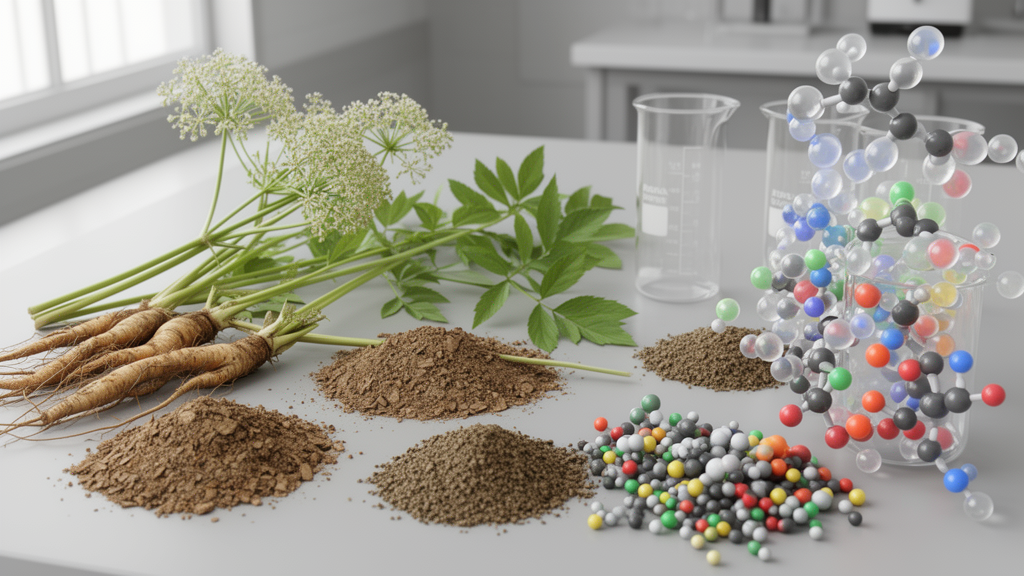
Image Credits: AI Generated

DOI: 10.1186/s12870-026-09902-y

Keywords: Ligusticum jeholense, plant metabolomics, flavonoids, phenolic acids, UPLC-MS/MS, plant organs, antioxidant capacity, tissue-specific metabolites, Comparative, analysis, phenolic, acids

Cite Scienmag News

Alan Morgan. (October 25, 2026). Ligusticum organs show distinct flavonoid and phenolic acid profiles. Scienmag. https://scienmag.com/ligusticum-organs-show-distinct-flavonoid-and-phenolic-acid-profiles/

Alan Morgan. "Ligusticum organs show distinct flavonoid and phenolic acid profiles." Scienmag, 25 October 2026, https://scienmag.com/ligusticum-organs-show-distinct-flavonoid-and-phenolic-acid-profiles/. Accessed 25 October 2026.

Alan Morgan. "Ligusticum organs show distinct flavonoid and phenolic acid profiles." Scienmag. October 25, 2026. https://scienmag.com/ligusticum-organs-show-distinct-flavonoid-and-phenolic-acid-profiles/


Tags: acidsanalysisantioxidant capacityantioxidant capacity of plant tissuescomparativecomparative metabolite profilingflavonoid and phenolic acid distributionflavonoid and phenolic acid profilesflavonoid derivatives in plant leavesflavonoidsLigusticum jeholenseLigusticum jeholense metabolomicsphenolicphenolic acidsphenolic acids in plant rootsplant metabolomicsplant organsplant tissue chemical compositiontargeted metabolomics in herbal plantstissue-specific metabolitestissue-specific phytochemicalstissue-specific secondary metabolitesUPLC-MS/MSUPLC-MS/MS plant analysis
Share26Tweet16
Previous Post

Crowded prisons and thin medical staffing linked to untreated chronic care in Mexico

Next Post

STTARRS protocol plans telehealth prehabilitation trial before major cancer surgery

Related Posts

Machine Learning Finds Modest Diet Signals in Psoriasis-Anxiety Comorbidity
Agriculture

Machine Learning Finds Modest Diet Signals in Psoriasis-Anxiety Comorbidity

October 25, 2026
Computational Survey Identifies 35 WRKY Transcription Factor Genes in Chia
Agriculture

Computational Survey Identifies 35 WRKY Transcription Factor Genes in Chia

October 25, 2026
H2A.Z reduction reshapes H3K27me3 at specific Arabidopsis loci
Agriculture

H2A.Z reduction reshapes H3K27me3 at specific Arabidopsis loci

October 25, 2026
Turmeric-Pueraria-Coix Seed Formula Points to Coumestrol Targets in Rheumatoid Arthritis
Agriculture

Turmeric-Pueraria-Coix Seed Formula Points to Coumestrol Targets in Rheumatoid Arthritis

October 25, 2026
Chloroplast genomes reveal unexpected diversity within four Actinidia species
Agriculture

Chloroplast genomes reveal unexpected diversity within four Actinidia species

October 25, 2026
Selenium and β-Carotene Drive the Antioxidant Diet–Stroke Link in NHANES Analysis
Agriculture

Selenium and β-Carotene Drive the Antioxidant Diet–Stroke Link in NHANES Analysis

October 25, 2026
Next Post
STTARRS protocol plans telehealth prehabilitation trial before major cancer surgery

STTARRS protocol plans telehealth prehabilitation trial before major cancer surgery

  • Mothers who receive childcare support from maternal grandparents show more optimized

    Mothers who receive childcare support from maternal grandparents show more parental warmth, finds NTU Singapore study

    27656 shares
    Share 11059 Tweet 6912
  • University of Seville Breaks 120-Year-Old Mystery, Revises a Key Einstein Concept

    1061 shares
    Share 424 Tweet 265
  • Bee body mass, pathogens and local climate influence heat tolerance

    682 shares
    Share 273 Tweet 171
  • Researchers record first-ever images and data of a shark experiencing a boat strike

    546 shares
    Share 218 Tweet 137
  • Groundbreaking Clinical Trial Reveals Lubiprostone Enhances Kidney Function

    531 shares
    Share 212 Tweet 133
Science

Embark on a thrilling journey of discovery with Scienmag.com—your ultimate source for cutting-edge breakthroughs. Immerse yourself in a world where curiosity knows no limits and tomorrow’s possibilities become today’s reality!

RECENT NEWS

  • HDAC Inhibitor Plus Cisplatin Stabilizes Advanced Adenoid Cystic Carcinoma
  • STTARRS protocol plans telehealth prehabilitation trial before major cancer surgery
  • Ligusticum organs show distinct flavonoid and phenolic acid profiles
  • Crowded prisons and thin medical staffing linked to untreated chronic care in Mexico

Categories

  • Agriculture
  • Anthropology
  • Archaeology
  • Athmospheric
  • Biology
  • Biotechnology
  • Blog
  • Bussines
  • Cancer
  • Chemistry
  • Climate
  • Earth Science
  • Editorial Policy
  • Marine
  • Mathematics
  • Medicine
  • Pediatry
  • Policy
  • Psychology & Psychiatry
  • Science Education
  • Science News
  • Social Science
  • Space
  • Technology and Engineering

Subscribe to Blog via Email

Enter your email address to subscribe to this blog and receive notifications of new posts by email.

Join 5,151 other subscribers

© 2025 Scienmag - Science Magazine

Welcome Back!

Login to your account below

Forgotten Password?

Retrieve your password

Please enter your username or email address to reset your password.

Log In
No Result
View All Result
  • HOME
  • SCIENCE NEWS
  • CONTACT US

© 2025 Scienmag - Science Magazine

Discover more from Science

Subscribe now to keep reading and get access to the full archive.

Continue reading