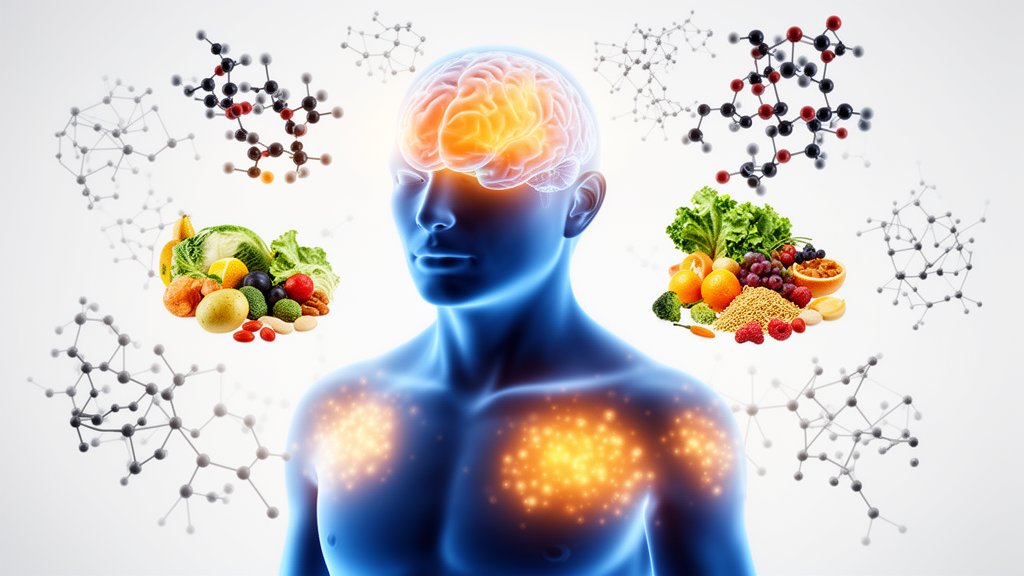
An explainable machine-learning analysis of United States national survey data has tested whether diet carries measurable signatures of psoriasis comorbidity among adults with anxiety disorder, and the results are both intriguing and sobering. Across three parallel dietary representations built at the nutrient, food-group, and food-item levels, the models produced only modest predictive signals, and finer dietary granularity did not improve out-of-sample performance. A nutrient-level logistic regression model anchored by niacin emerged as the strongest, though still imprecise, lead for future research.
The study drew on the National Health and Nutrition Examination Survey (NHANES), using the 2005–2006 and 2009–2014 cycles linked to two United States Department of Agriculture dietary databases: the MyPyramid Equivalents Database (MPED), which converts foods eaten into food-group servings, and What We Eat in America (WWEIA), which codes individual foods and beverages in fine detail. Anxiety disorder status was defined by prescription medication use, specifically any drug indicated for anxiety disorder (ICD F41.9) taken in the past 30 days, while psoriasis was identified by self-report of a physician diagnosis. Participants carrying both conditions were classified as having the comorbidity of interest.
After stringent exclusions for missing anxiety, psoriasis, dietary, or covariate information, the analytic samples were small by comorbidity standards: 1,016 adults with anxiety in the nutrient-level dataset, including 37 with psoriasis comorbidity; 1,215 in the MPED food-group dataset with 46 comorbid cases; and 1,257 in the WWEIA food-item dataset, also with 46 comorbid cases. Mean ages clustered near 50 years, and roughly 63 to 64 percent of participants were women. Simple between-group comparisons showed numerically lower intakes of protein, beta-carotene, and beta-cryptoxanthin in the comorbid group of the nutrient dataset, lower citrus, melon, and berry and total fruit intakes in the food-group dataset, and lower fruit drink and other diet drink intakes in the food-item dataset, but none of these differences reached statistical significance.
The modeling workflow was deliberately designed to prevent information leakage, a common pitfall in biomedical machine learning. Each dataset was split 70/30 into training and locked validation sets using stratified random sampling with a fixed seed, leaving 11 comorbidity cases in the nutrient validation set and 14 each in the MPED and WWEIA validation sets. Within each five-fold training resampling iteration, the researchers refitted pairwise correlation filtering at a threshold of |r| greater than 0.90, shadow-feature random-forest feature selection based on the Boruta principle, standardization, and class-imbalance handling that combined moderate downsampling of the majority class with SMOTE or SMOTENC oversampling of the minority class, applied only inside the training fold. The final feature sets retained 28 nutrient variables, 29 food-group variables, and 32 food-item variables, alongside ten participant-level covariates including age, sex, race/ethnicity, education, income-to-poverty ratio, body mass index, smoking and drinking status, hypertension, and diabetes.
Seven candidate models competed within each dietary representation: random forest, LightGBM, XGBoost, k-nearest neighbors, naive Bayes, support vector machine, and conventional multivariable logistic regression. Hyperparameters were tuned by five-fold stratified cross-validation on the training set using mean AUC-ROC as the selection criterion, and classification thresholds were fixed from training out-of-fold predictions using Youden’s index. Crucially, the locked validation sets were touched only once, at the end, for final performance evaluation, with 95 percent confidence intervals estimated by 1,000-sample bootstrap resampling.
The validation results told a clear and somewhat deflating story. For the nutrient-level representation, logistic regression achieved the highest mean cross-validation AUC-ROC (0.587) and, in the locked validation set of 305 participants with 11 comorbidity cases, delivered an AUC-ROC of 0.645 (95 percent confidence interval 0.464 to 0.811), an AUC-PR of just 0.063, and a Brier score of 0.176. The wide interval, which includes 0.5, reflects the tiny number of outcome events. For the MPED food-group representation, logistic regression was again selected on cross-validation but fell to an AUC-ROC of 0.396 (95 percent CI 0.256 to 0.539) in validation, indicating limited and unstable held-out discrimination. The WWEIA food-item representation fared similarly: XGBoost, selected with a mean cross-validation AUC-ROC of 0.560, managed only 0.401 (95 percent CI 0.273 to 0.537) on the locked set. Greater dietary granularity, in other words, bought no predictive advantage.
Just as telling was the comparison between algorithms. Logistic regression won the selection contest for two of the three representations, and no machine-learning method demonstrated a consistent performance edge over conventional multivariable modeling. The leakage-controlled rerun did not reproduce the high validation AUCs reported in an earlier version of the analysis, a transparency point that carries a broader lesson for high-dimensional dietary modeling: apparent gains must be validated independently rather than inferred from training or cross-validation performance alone. Model complexity, it turns out, cannot compensate for limited independent outcome information in a low-event dataset.
To open the black box, the team applied SHAP (SHapley Additive exPlanations), which quantifies each feature’s contribution to individual predictions, with positive values pushing toward a higher predicted probability of comorbidity and negative values toward a lower one. In the nutrient-level logistic regression model, niacin showed the largest dietary contribution, with higher intake contributing toward a lower predicted probability of psoriasis comorbidity. Carbohydrate intake, beta-cryptoxanthin, caffeine, and beta-carotene contributed in the same direction, while alpha-tocopherol, total fat, total sugars, and folate pushed predictions the other way; hypertension was the strongest non-dietary contributor. In the food-group model, the leading contributors included income-to-poverty ratio, added sugars, body mass index, alcoholic drinks, total vegetables, and eggs, while the food-item XGBoost model highlighted margarine, hypertension, tap water, mayonnaise, body mass index, coffee, selected grain categories, and soft drinks.
The researchers are careful to frame these rankings correctly. Because the MPED and WWEIA models discriminated the outcome poorly out of sample, their SHAP profiles are exploratory descriptions of fitted model behavior, not evidence of biological causation or reliable dietary risk factors. Even the more encouraging niacin signal, which the authors note is biologically plausible given niacin’s role in NAD+ metabolism and sirtuin-mediated regulation of cellular energy and inflammatory signaling, and the possible relevance of carotenoids to redox balance and immune homeostasis, must not be translated into supplementation advice. The feature directions also differed from the earlier analysis, underscoring how sensitive such signals are to model specification and validation strategy when outcome events are scarce. Coffee illustrates the caution: it ranked among influential food-item features, but a model that cannot reliably discriminate the outcome cannot license claims about coffee’s protective or harmful role, especially given the heterogeneous existing evidence on coffee, inflammation, anxiety, and psoriasis.
The study’s limitations are substantial and honestly stated. Anxiety was captured through prescription-medication indications, which may miss untreated individuals and does not equal a formally confirmed psychiatric diagnosis; psoriasis was self-reported and subject to misclassification; dietary exposure came from a single 24-hour recall, vulnerable to recall and reporting error; and the cross-sectional design cannot establish temporal ordering. Most importantly, the validation sets contained only 11 to 14 comorbidity cases each, and synthetic oversampling, however carefully confined to training folds, cannot manufacture independent outcome information and may amplify unstable decision boundaries. The absence of external validation further limits transportability. The authors conclude that the current models are not ready for screening or treatment decisions, and that their real value lies in prioritizing candidate exposures, with nutrient-level information the most promising starting point, for larger prospective cohorts with repeated dietary assessment, richer psoriasis outcome counts, and integration of inflammatory markers and treatment data. Until such event-rich, independently validated studies arrive, the psoriasis-anxiety dietary signature remains a hypothesis-generating map rather than a clinical tool.
Subject of Research: Dietary signatures of psoriasis comorbidity among adults with anxiety disorder assessed by explainable machine learning on NHANES data
Article Title: Nutrient‐, Food‐Group‐, and Food‐Item‐Level Dietary Signatures of Psoriasis Comorbidity Among Adults With Anxiety Disorder: An Explainable Machine Learning Study
Article References: Gao, C., Duan, X., Luan, M., Huang, W., Wang, G., & Xu, Z. (2026). Nutrient‐, Food‐Group‐, and Food‐Item‐Level Dietary Signatures of Psoriasis Comorbidity Among Adults With Anxiety Disorder: An Explainable Machine Learning Study. Food Science & Nutrition, 14(10), Article e72482. https://doi.org/10.1002/fsn3.72482
Image Credits: AI Generated
DOI: 10.1002/fsn3.72482
Keywords: psoriasis, anxiety disorder, comorbidity, NHANES, machine learning, SHAP, niacin, dietary assessment, nutritional epidemiology, cross-sectional study, logistic regression, psychodermatology
Cite Scienmag News
Daisy Hatcher. (October 25, 2026). Machine Learning Finds Modest Diet Signals in Psoriasis-Anxiety Comorbidity. Scienmag. https://scienmag.com/machine-learning-finds-modest-diet-signals-in-psoriasis-anxiety-comorbidity/
Daisy Hatcher. "Machine Learning Finds Modest Diet Signals in Psoriasis-Anxiety Comorbidity." Scienmag, 25 October 2026, https://scienmag.com/machine-learning-finds-modest-diet-signals-in-psoriasis-anxiety-comorbidity/. Accessed 25 October 2026.
Daisy Hatcher. "Machine Learning Finds Modest Diet Signals in Psoriasis-Anxiety Comorbidity." Scienmag. October 25, 2026. https://scienmag.com/machine-learning-finds-modest-diet-signals-in-psoriasis-anxiety-comorbidity/