

Sunday, October 25, 2026
Science
No Result
View All Result
  • Login
  • HOME
  • SCIENCE NEWS
  • CONTACT US
  • HOME
  • SCIENCE NEWS
  • CONTACT US
No Result
View All Result
Scienmag
No Result
View All Result
Home Science News Biology

The interplay between chronobiology, neuroinflammation, and the glymphatic system in neurodegenerative diseases

October 25, 2026
in Biology
Cassandra Pierce
By Cassandra Pierce Scienmag Editorial Profile - Systems Neuroscience
Reading Time: 3 mins read
0
The interplay between chronobiology, neuroinflammation, and the glymphatic system in neurodegenerative diseases

The interplay between chronobiology, neuroinflammation, and the glymphatic system in neurodegenerative diseases

65
SHARES
587
VIEWS
Share on FacebookShare on Twitter
ADVERTISEMENT

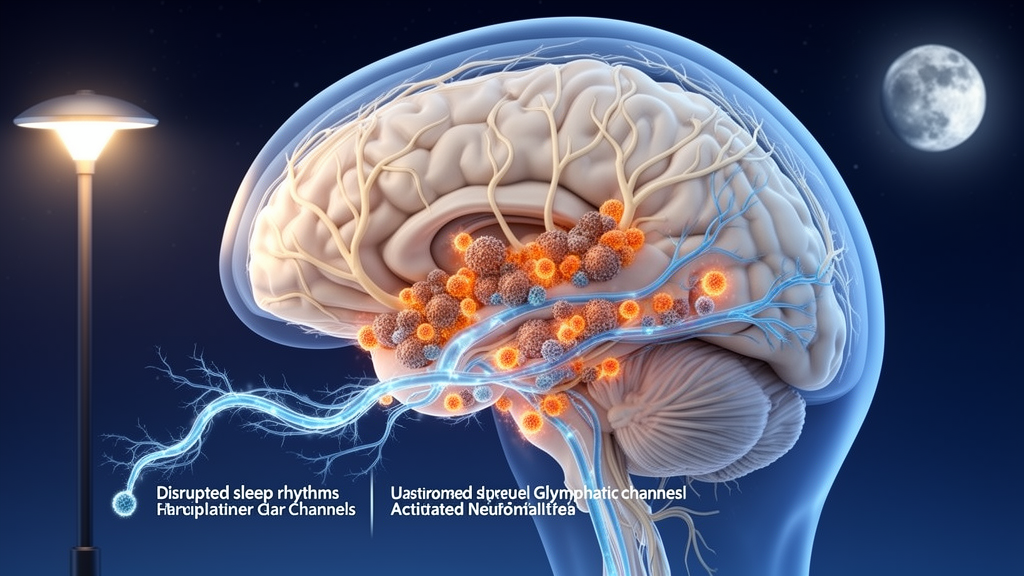
A conceptual review proposes that neurodegenerative disease may involve a collapse of biological timing across the brain, linking disruption of the molecular circadian clock with persistent neuroinflammation and impaired glymphatic clearance. The review, published in Molecular Biology Reports , synthesizes translational and in-vivo studies to describe a bidirectional relationship among these systems. It is not a new clinical study or an intervention trial, and the proposed feedback cycle is presented as a framework for further investigation rather than as a demonstrated mechanism in patients.

Under physiological conditions, the review says intrinsic circadian machinery helps maintain microglia in a relatively quiescent, surveillant state. In this model, molecular timing influences immune-cell behavior and the movement of cerebrospinal fluid and interstitial fluid, while the glymphatic system participates in clearing substances from neural tissue. The proposed connection is therefore broader than a single pathway: clock activity helps coordinate neuroimmunity and fluid clearance, and pathological changes in either system may feed back into the other.

The authors focus on what may happen when this temporal coordination is lost through aging or sleep fragmentation. Loss of circadian gating may promote a hyper-reactive microglial phenotype and sustained release of pro-inflammatory cytokines. Those inflammatory mediators may disrupt astrocytic anchoring complexes and contribute to depolarization of aquaporin-4 channels.

Reduced polarization could, in turn, impair cerebrospinal fluid–interstitial fluid exchange, potentially contributing to the accumulation of neurotoxic aggregates such as amyloid-beta and tau. The review frames this sequence as a possible self-reinforcing process rather than a conclusively established causal chain. Accumulated proteins and inflammatory mediators may also feed back to suppress core clock-gene expression across neural networks, weakening the timing signals that normally help regulate immune reactivity and glymphatic function.

This network perspective shifts attention from localized cellular damage toward the collapse of timing across interacting systems. Circadian dysfunction can influence glial behavior and glymphatic dynamics, while inflammation and protein accumulation may alter clock activity in return. The concept does not establish that disrupted timing is the sole cause of neurodegeneration, nor does it demonstrate that restoring sleep timing alone would prevent disease.

Rather, it identifies a set of reciprocal relationships that may connect molecular clock failure, chronic neuroinflammation, reduced clearance and the accumulation of pathological proteins. The review highlights melatonin as a possible multi-target “resynchronizer” and argues for chronotherapeutic interventions in neurodegenerative disease. Melatonin is proposed as a compound that might modulate molecular clocks, reduce microglial reactivity and support sleep-dependent glymphatic clearance.

The supplied evidence does not show that melatonin slows neurodegenerative progression in patients, and the review does not establish it as a clinical treatment. As a conceptual synthesis, the review’s main contribution is to connect chronobiology, neuroimmunity and glymphatic biology into a testable model of neurodegeneration as a network-wide disruption of biological timing.

Subject of Research: A conceptual review of circadian timing, neuroinflammation and glymphatic dysfunction in neurodegenerative disease

Article Title: The interplay between chronobiology, neuroinflammation, and the glymphatic system in neurodegenerative diseases

Article References: Akar, A., Erbil, G., Aykora, D., & Uzun, M. (2026). The interplay between chronobiology, neuroinflammation, and the glymphatic system in neurodegenerative diseases. Molecular Biology Reports, 53(1), Article 1481. https://doi.org/10.1007/s11033-026-12670-5

Image Credits: AI Generated

DOI: 10.1007/s11033-026-12670-5

Keywords: chronobiology, circadian rhythms, neuroinflammation, glymphatic system, neurodegeneration, microglia, aquaporin-4, molecular clock, sleep fragmentation, melatonin, interplay, between

Cite Scienmag News

Cassandra Pierce. (October 25, 2026). The interplay between chronobiology, neuroinflammation, and the glymphatic system in neurodegenerative diseases. Scienmag. https://scienmag.com/the-interplay-between-chronobiology-neuroinflammation-and-the-glymphatic-system-in-neurodegenerative-diseases/


Cassandra Pierce. "The interplay between chronobiology, neuroinflammation, and the glymphatic system in neurodegenerative diseases." Scienmag, 25 October 2026, https://scienmag.com/the-interplay-between-chronobiology-neuroinflammation-and-the-glymphatic-system-in-neurodegenerative-diseases/. Accessed 25 October 2026.

Cassandra Pierce. "The interplay between chronobiology, neuroinflammation, and the glymphatic system in neurodegenerative diseases." Scienmag. October 25, 2026. https://scienmag.com/the-interplay-between-chronobiology-neuroinflammation-and-the-glymphatic-system-in-neurodegenerative-diseases/

Tags: aging effects on brain circadian rhythmsaquaporin-4betweenbidirectional relationship between neuroinflammation and glymphatic functionbrain biological timing collapsecerebrospinal fluid movement and neural waste clearancechronobiologycircadian rhythmsglymphatic systemglymphatic system impairmentinterplaymelatoninmicrogliamicroglia activation and neuroinflammationmolecular circadian clock in neurodegenerationmolecular clockneurodegenerationneurodegenerative disease mechanismsneuroimmune system and glymphatic clearanceneuroinflammationneuroinflammation and circadian disruptionsleep fragmentationsleep fragmentation impact on brain health
Share26Tweet16
Previous Post

Checkpoint inhibitors linked to longer unadjusted progression-free survival in advanced thoracic tumors

Next Post

Correlated Phosphorus–Sulfur Sites Supercharge Solar Hydrogen Peroxide Production

Related Posts

The Hidden RNA Layer That Controls Meat, Milk and Fertility in Livestock
Biology

The Hidden RNA Layer That Controls Meat, Milk and Fertility in Livestock

October 25, 2026
Threatened Finch Picks Protein-Rich, Short Seeds Over Abundant Grasses
Biology

Threatened Finch Picks Protein-Rich, Short Seeds Over Abundant Grasses

October 25, 2026
Prenatal paracetamol linked to smaller ovaries and altered hormone markers in infant girls
Biology

Prenatal paracetamol linked to smaller ovaries and altered hormone markers in infant girls

October 25, 2026
Rare Gene Variants May Explain Diabetes in One Chinese Family
Biology

Rare Gene Variants May Explain Diabetes in One Chinese Family

October 25, 2026
Senescent Lung Fibroblasts in Pulmonary Fibrosis Mount a Broken Antiviral Response
Biology

Senescent Lung Fibroblasts in Pulmonary Fibrosis Mount a Broken Antiviral Response

October 25, 2026
Study confirms two novel alternatively spliced human RAB8B transcripts
Biology

Study confirms two novel alternatively spliced human RAB8B transcripts

October 25, 2026
Next Post
Correlated Phosphorus–Sulfur Sites Supercharge Solar Hydrogen Peroxide Production

Correlated Phosphorus–Sulfur Sites Supercharge Solar Hydrogen Peroxide Production

  • Mothers who receive childcare support from maternal grandparents show more optimized

    Mothers who receive childcare support from maternal grandparents show more parental warmth, finds NTU Singapore study

    27656 shares
    Share 11059 Tweet 6912
  • University of Seville Breaks 120-Year-Old Mystery, Revises a Key Einstein Concept

    1061 shares
    Share 424 Tweet 265
  • Bee body mass, pathogens and local climate influence heat tolerance

    682 shares
    Share 273 Tweet 171
  • Researchers record first-ever images and data of a shark experiencing a boat strike

    546 shares
    Share 218 Tweet 137
  • Groundbreaking Clinical Trial Reveals Lubiprostone Enhances Kidney Function

    531 shares
    Share 212 Tweet 133
Science

Embark on a thrilling journey of discovery with Scienmag.com—your ultimate source for cutting-edge breakthroughs. Immerse yourself in a world where curiosity knows no limits and tomorrow’s possibilities become today’s reality!

RECENT NEWS

  • Correlated Phosphorus–Sulfur Sites Supercharge Solar Hydrogen Peroxide Production
  • The interplay between chronobiology, neuroinflammation, and the glymphatic system in neurodegenerative diseases
  • Checkpoint inhibitors linked to longer unadjusted progression-free survival in advanced thoracic tumors
  • H2A.Z reduction reshapes H3K27me3 at specific Arabidopsis loci

Categories

  • Agriculture
  • Anthropology
  • Archaeology
  • Athmospheric
  • Biology
  • Biotechnology
  • Blog
  • Bussines
  • Cancer
  • Chemistry
  • Climate
  • Earth Science
  • Editorial Policy
  • Marine
  • Mathematics
  • Medicine
  • Pediatry
  • Policy
  • Psychology & Psychiatry
  • Science Education
  • Science News
  • Social Science
  • Space
  • Technology and Engineering

Subscribe to Blog via Email

Enter your email address to subscribe to this blog and receive notifications of new posts by email.

Join 5,151 other subscribers

© 2025 Scienmag - Science Magazine

Welcome Back!

Login to your account below

Forgotten Password?

Retrieve your password

Please enter your username or email address to reset your password.

Log In
No Result
View All Result
  • HOME
  • SCIENCE NEWS
  • CONTACT US

© 2025 Scienmag - Science Magazine

Discover more from Science

Subscribe now to keep reading and get access to the full archive.

Continue reading