


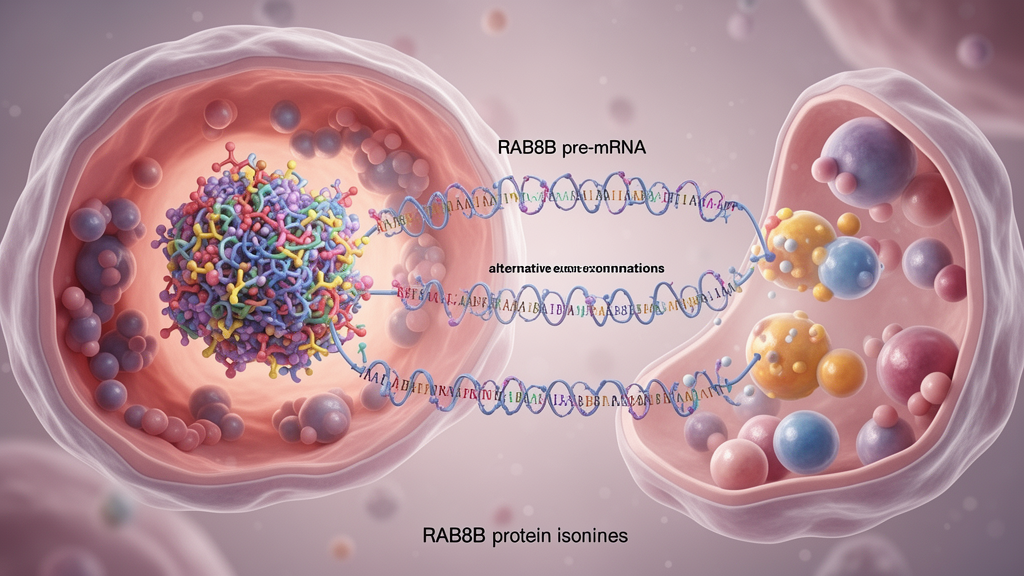
A molecular biology study identified and experimentally confirmed two previously unreported transcript isoforms of the human RAB8B gene. The researchers combined bioinformatic analysis with RT-PCR, semi-nested PCR and DNA sequencing, finding two new exons in the intronic region between the gene’s first and second exons. Their computational analysis predicted that these exons could form distinct transcripts with altered 5′ architectures, while the laboratory results confirmed that the proposed transcripts were expressed.
The work addresses alternative splicing, a mechanism that expands transcriptomic and proteomic diversity but whose contribution to the functional complexity of many genes remains incompletely understood. RAB8B belongs to the Rab family of small GTPases, which the researchers describe as having important roles in intracellular vesicle trafficking and membrane dynamics. Bioinformatics provided the initial map of the variation.
Analysis of the intron separating exons E1 and E2 revealed two exons that had not previously been reported. Predictions based on the sequence indicated that the candidate exons could participate in alternative transcripts with modified 5′ regions. The researchers then tested this prediction at the RNA level.
RT-PCR and semi-nested PCR detected the predicted transcripts, and DNA sequencing supported the identity of their sequences. This combination of computational screening, targeted amplification and sequencing established the presence of two novel RAB8B transcript isoforms without relying on sequence prediction alone. The investigators subsequently used conceptual translation and comparative in silico analysis to estimate how the predicted protein products might differ from the canonical Rab8b protein.
The predicted isoforms differed in amino acid length and in physicochemical properties. Structural modeling and molecular dynamics simulations were also used to examine possible differences in stability, flexibility and conformational behavior, including comparisons between active and inactive states. These are model-based estimates rather than direct observations of molecular behavior in cells.
The findings therefore extend the known transcript repertoire of human RAB8B and provide a computational framework for further characterization. The authors present the biological roles of the isoforms and any possible connections to disease as subjects for future investigation.
Subject of Research: Discovery and computational characterization of two alternatively spliced human RAB8B transcript isoforms
Article Title: Identification and characterization of novel alternatively spliced isoforms of the human RAB8B gene
Article References: Sultan, I., Rathi, A., & Rehman, S. U. (2026). Identification and characterization of novel alternatively spliced isoforms of the human RAB8B gene. Molecular Biology Reports, 53(1), Article 1487. https://doi.org/10.1007/s11033-026-12668-z
Image Credits: AI Generated
DOI: 10.1007/s11033-026-12668-z
Keywords: RAB8B, alternative splicing, transcript isoforms, intronic exons, small GTPases, RT-PCR, DNA sequencing, protein structure, molecular dynamics, Identification, characterization, novel
Cite Scienmag News
Juliet Wilcox. (October 25, 2026). Study confirms two novel alternatively spliced human RAB8B transcripts. Scienmag. https://scienmag.com/study-confirms-two-novel-alternatively-spliced-human-rab8b-transcripts/
Juliet Wilcox. "Study confirms two novel alternatively spliced human RAB8B transcripts." Scienmag, 25 October 2026, https://scienmag.com/study-confirms-two-novel-alternatively-spliced-human-rab8b-transcripts/. Accessed 25 October 2026.
Juliet Wilcox. "Study confirms two novel alternatively spliced human RAB8B transcripts." Scienmag. October 25, 2026. https://scienmag.com/study-confirms-two-novel-alternatively-spliced-human-rab8b-transcripts/


