


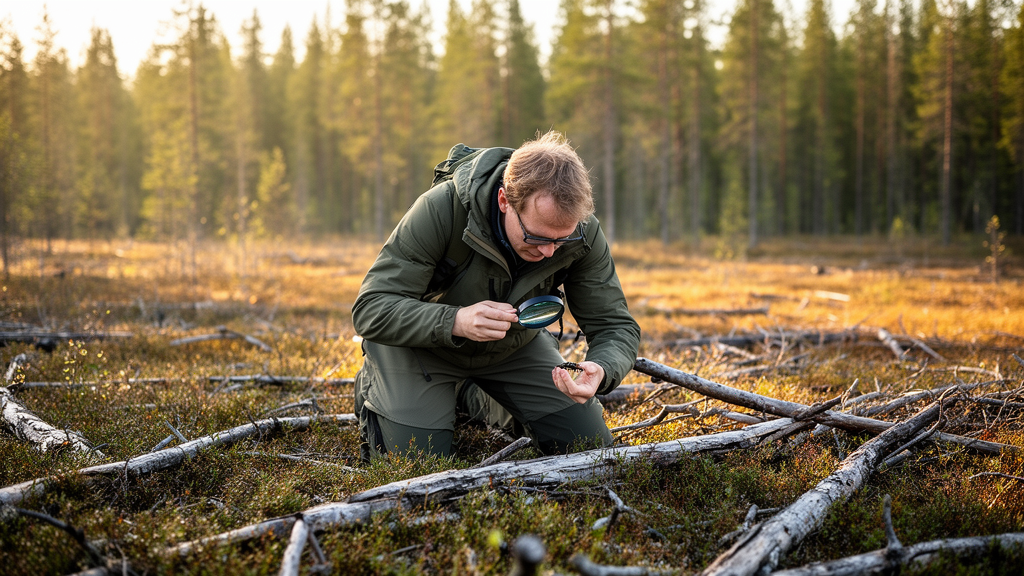
Habitat composition explains the occurrence and abundance of most animal groups in Finland better than climate does, according to a study published in Nature Communications by researchers at the University of Helsinki. The finding runs counter to the researchers’ own expectations and suggests that habitat degradation threatens Finnish biodiversity more than public discourse centred on climate change might indicate. The conclusion points to land-use planning as a central tool for safeguarding the country’s species.
The study covered 503 terrestrial animal species and tracked changes in their occurrence over 20 years, drawing on data from the whole of Finland and all of its climatic zones. Analysing more than three million observations required advanced statistical methods. The researchers set out to determine which factor dominates species occurrence and abundance: climate, or habitat-related variables such as the natural state of an area and the share of land shaped by human activity. Because solutions to mitigate biodiversity loss depend on the answer, the stakes of the comparison are high.
The results split along spatial and temporal scales. Climate was the best explanation for variation in species communities from year to year and between extensive geographical areas such as Southern and Northern Finland, meaning that tackling climate change remains essential for retaining the distinctive characteristics of northern and southern fauna. In contrast, the importance of habitats increased when biodiversity was examined locally and regionally. Forested areas accommodate different species communities than agricultural environments or wetlands, and species are lost when their habitats are altered, so land-use decisions strongly shape where species communities occur.
The balance also differed among taxonomic groups. Habitat proved especially important for butterflies, birds and small mammals, while for large mammals and moths the relative importance of habitat and climate was equal, according to lead author Emy Guilbault, a Humboldt Foundation Research Fellow. The team additionally examined how species’ functional traits, such as body size, reproductive cycle rate and degree of specialisation, influenced the results. In almost all taxonomic groups, species with slow reproductive cycles were more sensitive to climatic conditions than faster-reproducing species. Small mammals that prefer a specific habitat or food depended on the climate, whereas habitat mattered more for larger, less specialised mammalian species. For birds, butterflies and moths, body size and degree of specialisation had no effect on which factor dominated.
The researchers conclude that biodiversity loss in Finland cannot be attributed to climate change alone. “In many cases, land use can have an even more decisive impact on species, especially locally and regionally. At the same time, climate change and habitats cannot be completely separated from each other, because it is together that they will determine the state of our species communities in the coming decades,” Guilbault said. Climate and habitats also have significant combined effects, as species must simultaneously adapt to a changing climate and to habitat degradation.
Professor Jarno Vanhatalo of the University of Helsinki argued that conservation should put greater effort into protecting and restoring remaining habitats. Maintaining habitat diversity, he noted, is an action that also helps species cope with climate change, and conservation efforts should take species characteristics, regional differences and temporal variation into account. The researchers draw some comfort from the fact that land use and habitat protection can be addressed more effectively locally than climate change can be tackled globally. In their view, the means to protect Finland’s species exist, and the most effective of them are in the country’s own hands.
Subject of Research: Animals
Article Title: Habitat quality accounts for shifts in Finnish species more than the climate
Article References: Habitat quality accounts for shifts in Finnish species more than the climate. Original publication (Bibliographic details unavailable.)
Image Credits: AI Generated
DOI: Not provided
Keywords: biodiversity, habitat quality, climate change, Finland, land use, species communities, Nature Communications, conservation, functional traits, terrestrial animals, Habitat, quality
Cite Scienmag News
Margaret Porter. (October 24, 2026). Habitat Quality Outweighs Climate in Shifting Finnish Species Communities. Scienmag. https://scienmag.com/habitat-quality-outweighs-climate-in-shifting-finnish-species-communities/
Margaret Porter. "Habitat Quality Outweighs Climate in Shifting Finnish Species Communities." Scienmag, 24 October 2026, https://scienmag.com/habitat-quality-outweighs-climate-in-shifting-finnish-species-communities/. Accessed 24 October 2026.
Margaret Porter. "Habitat Quality Outweighs Climate in Shifting Finnish Species Communities." Scienmag. October 24, 2026. https://scienmag.com/habitat-quality-outweighs-climate-in-shifting-finnish-species-communities/


