

Thursday, October 22, 2026
Science
No Result
View All Result
  • Login
  • HOME
  • SCIENCE NEWS
  • CONTACT US
  • HOME
  • SCIENCE NEWS
  • CONTACT US
No Result
View All Result
Scienmag
No Result
View All Result
Home Science News Earth Science

China drought study maps water-use efficiency across response phases

October 22, 2026
in Earth Science
Violet Maxwell
By Violet Maxwell Scienmag Editorial Profile - Natural Hazards
Reading Time: 3 mins read
0
China drought study maps water-use efficiency across response phases

China drought study maps water-use efficiency across response phases

65
SHARES
587
VIEWS
Share on FacebookShare on Twitter
ADVERTISEMENT

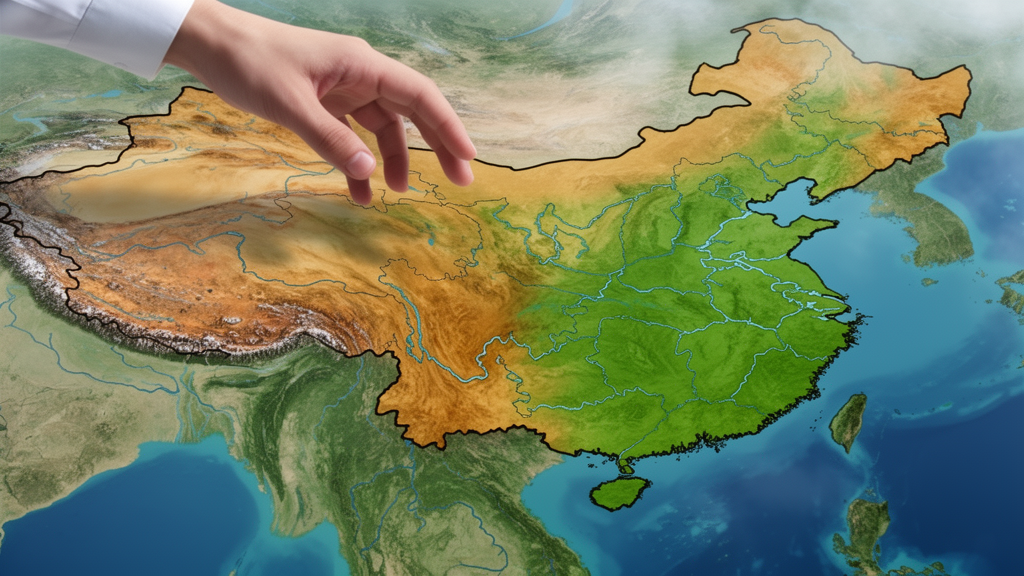
An observational analysis across China found that growing-season vegetation water-use efficiency responded differently to drought, resistance and recovery phases, with patterns varying by drought timescale, vegetation type and location. The study examined anomalies from 1982 to 2018 at 1-, 3- and 12-month drought timescales, comparing water-use efficiency, or WUE, across China’s major vegetation types. WUE is an integrated indicator of ecosystem carbon–water coupling and is used to evaluate how ecosystems respond to drought.

The researchers separated the analysis into three phases: the drought period itself, a resistance period and a recovery period. Their goal was to characterize both the spatial distribution of WUE anomalies and the relative contributions associated with climatic and vegetation factors. During the drought period, the spatial proportion of areas with negative WUE anomalies decreased as the drought timescale increased, while the proportion with positive anomalies increased.

This shift in the share of affected areas did not imply that every location experienced improved efficiency. Instead, the national pattern combined increases in some places with decreases in others, and the responses differed among vegetation types. The normalized difference vegetation index, NDVI, accounted for the greatest proportion of high-contribution areas across China.

Its relative contribution exceeded 30% in croplands. In contrast, the relative contribution associated with vapour pressure deficit, VPD, increased with longer drought timescales and reached 30.7% in grasslands at the 12-month timescale. The analysis quantified these as associated contributions to WUE variation; it did not establish either factor as an independent cause of the observed anomalies.

Exceptions appeared in southwestern China at the 12-month timescale, where positive anomalies were approximately 0.4 g C m−2 mm−1. Precipitation had relatively high contributions to positive WUE anomalies in forests, with reported relative contributions ranging from 33.1% to 35.3%. The recovery period also showed marked geographic variation.

Positive WUE anomalies were more pronounced in southwestern China, whereas persistent negative anomalies remained in the western Qinghai–Tibet Plateau. Values in that latter region reached approximately −0.4 g C m−2 mm−1. The coexistence of positive and negative anomalies demonstrates that the recovery phase did not represent a uniform return to a common efficiency level across the country.

At the 1-month drought timescale, precipitation and temperature were the dominant contributing factors across 52% of China, with precipitation showing the greatest relative contribution in croplands and forests. Together, these results identify climate variables and vegetation-related factors whose contributions varied among ecosystems, drought timescales and response phases, rather than pointing to one driver or a single nationwide pathway. The findings are based on a retrospective observational analysis of growing-season data covering 1982–2018, with drought conditions represented at three timescales and WUE responses separated into resistance and recovery periods.

Because the results are spatial anomaly and relative-contribution estimates, they characterize broad associations across China rather than experimental causal effects. The study nevertheless shows that drought responses were context-dependent: the distribution of increased and decreased WUE shifted among phases, ecosystems and regions, with NDVI, VPD, precipitation and temperature all associated with portions of the observed pattern.

Subject of Research: Spatial variation in vegetation water-use efficiency during drought response phases across China

Article Title: Growing-season vegetation water use efficiency in response to drought events: resistance and recovery periods and underlying drivers

Article References: Tan, Z., Liu, W., Gui, X., Wu, G., Li, Q., Xu, X., & Jiang, L. (2026). Growing-season vegetation water use efficiency in response to drought events: resistance and recovery periods and underlying drivers. Theoretical and Applied Climatology, 157(11), 743. https://doi.org/10.1007/s00704-026-06673-2

Image Credits: AI Generated

DOI: 10.1007/s00704-026-06673-2

Keywords: vegetation water-use efficiency, drought response, ecosystem resilience, NDVI, vapour pressure deficit, carbon–water coupling, China, precipitation, grasslands, croplands, Qinghai–Tibet Plateau, Growing-season

Cite Scienmag News

Violet Maxwell. (October 22, 2026). China drought study maps water-use efficiency across response phases. Scienmag. https://scienmag.com/china-drought-study-maps-water-use-efficiency-across-response-phases/

Violet Maxwell. "China drought study maps water-use efficiency across response phases." Scienmag, 22 October 2026, https://scienmag.com/china-drought-study-maps-water-use-efficiency-across-response-phases/. Accessed 22 October 2026.

Violet Maxwell. "China drought study maps water-use efficiency across response phases." Scienmag. October 22, 2026. https://scienmag.com/china-drought-study-maps-water-use-efficiency-across-response-phases/


Tags: carbon-water couplingChinaChina drought responseclimate and vegetation factors influencing water-use efficiencycroplandsdrought resistance and recovery phases in ecosystemsdrought responsedrought timescale impacts on ecosystem water useecosystem carbon-water coupling during droughtEcosystem Resilienceeffects of drought on cropland water-use efficiencygrasslandsgrowing seasonlong-term drought impact on China’s ecosystemsNDVIprecipitationQinghai-Tibet Plateauregional variability in drought resilience across Chinarole of NDVI in water-use efficiency during droughtspatial distribution of WUE anomalies in Chinavapour pressure deficitvegetation type-specific drought responsevegetation water-use efficiencyvegetation water-use efficiency analysis
Share26Tweet16
Previous Post

Epinephrine boosts thioredoxin expression and strengthens chlorpromazine liver protection in mice

Next Post

Chilean Editors Mediate Audience Feedback, Interview Study Finds

Related Posts

Study reconstructs five decades of groundwater loss in California’s Tulare Basin
Earth Science

Study reconstructs five decades of groundwater loss in California’s Tulare Basin

October 22, 2026
GIS Survey Maps 649 Springs in Two South Kashmir Districts
Earth Science

GIS Survey Maps 649 Springs in Two South Kashmir Districts

October 22, 2026
Grassroots innovation supports resilience in conflict-affected Nablus, qualitative study finds
Earth Science

Grassroots innovation supports resilience in conflict-affected Nablus, qualitative study finds

October 22, 2026
Polish farmland maps reveal soil’s hidden regulatory network
Earth Science

Polish farmland maps reveal soil’s hidden regulatory network

October 22, 2026
Fractional damping study finds no universal seismic performance advantage
Earth Science

Fractional damping study finds no universal seismic performance advantage

October 22, 2026
Research report: Can extreme rainfall associated with landslides affect air quality? A case study in a coastal city (São Sebastião, São Paulo State, Brazil)
Earth Science

Research report: Can extreme rainfall associated with landslides affect air quality? A case study in a coastal city (São Sebastião, São Paulo State, Brazil)

October 22, 2026
Next Post
Chilean Editors Mediate Audience Feedback, Interview Study Finds

Chilean Editors Mediate Audience Feedback, Interview Study Finds

  • Mothers who receive childcare support from maternal grandparents show more optimized

    Mothers who receive childcare support from maternal grandparents show more parental warmth, finds NTU Singapore study

    27656 shares
    Share 11059 Tweet 6912
  • University of Seville Breaks 120-Year-Old Mystery, Revises a Key Einstein Concept

    1061 shares
    Share 424 Tweet 265
  • Bee body mass, pathogens and local climate influence heat tolerance

    682 shares
    Share 273 Tweet 171
  • Researchers record first-ever images and data of a shark experiencing a boat strike

    546 shares
    Share 218 Tweet 137
  • Groundbreaking Clinical Trial Reveals Lubiprostone Enhances Kidney Function

    531 shares
    Share 212 Tweet 133
Science

Embark on a thrilling journey of discovery with Scienmag.com—your ultimate source for cutting-edge breakthroughs. Immerse yourself in a world where curiosity knows no limits and tomorrow’s possibilities become today’s reality!

RECENT NEWS

  • Chilean Editors Mediate Audience Feedback, Interview Study Finds
  • China drought study maps water-use efficiency across response phases
  • Epinephrine boosts thioredoxin expression and strengthens chlorpromazine liver protection in mice
  • LSD Extends Lifespan in C. elegans in a Context-Dependent, Serotonin-Associated Response

Categories

  • Agriculture
  • Anthropology
  • Archaeology
  • Athmospheric
  • Biology
  • Biotechnology
  • Blog
  • Bussines
  • Cancer
  • Chemistry
  • Climate
  • Earth Science
  • Editorial Policy
  • Marine
  • Mathematics
  • Medicine
  • Pediatry
  • Policy
  • Psychology & Psychiatry
  • Science Education
  • Science News
  • Social Science
  • Space
  • Technology and Engineering

Subscribe to Blog via Email

Enter your email address to subscribe to this blog and receive notifications of new posts by email.

Join 5,151 other subscribers

© 2025 Scienmag - Science Magazine

Welcome Back!

Login to your account below

Forgotten Password?

Retrieve your password

Please enter your username or email address to reset your password.

Log In
No Result
View All Result
  • HOME
  • SCIENCE NEWS
  • CONTACT US

© 2025 Scienmag - Science Magazine

Discover more from Science

Subscribe now to keep reading and get access to the full archive.

Continue reading