

Tuesday, October 20, 2026
Science
No Result
View All Result
  • Login
  • HOME
  • SCIENCE NEWS
  • CONTACT US
  • HOME
  • SCIENCE NEWS
  • CONTACT US
No Result
View All Result
Scienmag
No Result
View All Result
Home Science News Biology

Cell studies link TONSL recognition of histone H3.1 to DNA repair

October 20, 2026
in Biology
Drew Townsend
By Drew Townsend Scienmag Editorial Profile - Cell Biology
Reading Time: 2 mins read
0
Cell studies link TONSL recognition of histone H3.1 to DNA repair

Cell studies link TONSL recognition of histone H3.1 to DNA repair

65
SHARES
587
VIEWS
Share on FacebookShare on Twitter
ADVERTISEMENT

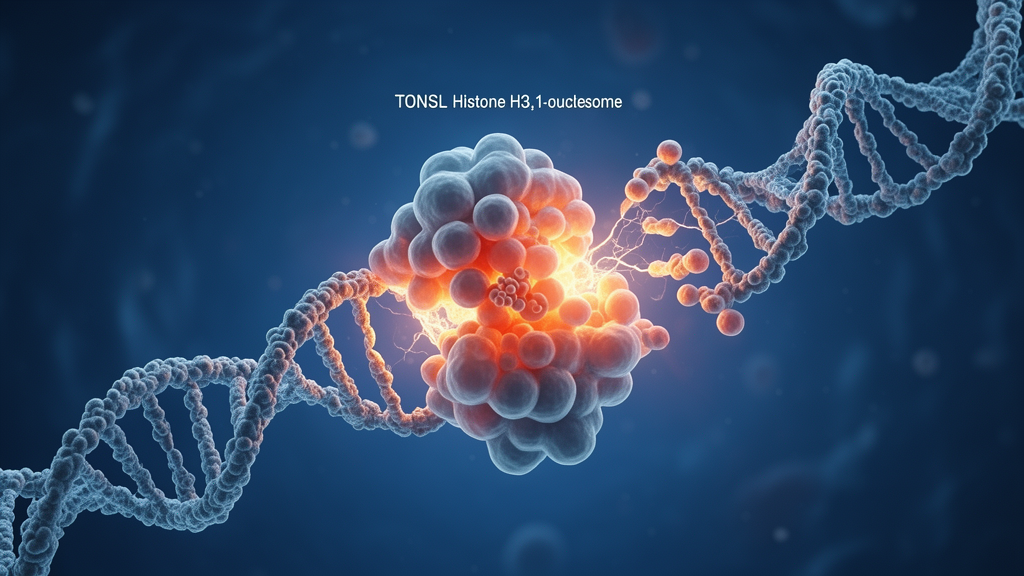
A University of Ottawa-led study reports that the TONSL protein recognizes several chemical modifications on the histone variant H3.1, helping coordinate DNA repair as cells prepare to divide. The peer-reviewed research, published in Science Advances, also found that mutations in a disease-associated region of TONSL weakened H3.1 recognition and failed to restore normal DNA repair function in human cells. The results offer a molecular explanation for how mutations in TONSL may contribute to sponastrime dysplasia, an ultra-rare inherited skeletal disorder, while remaining a cell-based finding rather than evidence of a clinical treatment.

DNA repair requires proteins both to carry out repairs and to recognize molecular signals associated with when and where repair is needed. Dr. Jean-François Couture, a full professor in the University of Ottawa Faculty of Medicine’s Department of Biochemistry, Microbiology and Immunology and the study’s co-corresponding author, said the work shows how changes that interfere with this recognition can compromise repair, threaten genome stability and ultimately contribute to disease. TONSL, a protein involved in maintaining genome integrity, emerged from the study as a central coordinator in this process.

The researchers found that TONSL interacts with H3.1 through several molecular binding pockets rather than through a single point of contact. Two pockets recognized specific modifications on the histone: methylation at one position and acetylation at another. These chemical marks are associated with DNA regions involved in regulating genes. Their results therefore indicate that DNA-repair recognition depends partly on the modification state of surrounding chromatin, including histone variants that can carry distinct molecular features recognized by other proteins. The binding pockets collectively allowed TONSL to interpret multiple signals associated with H3.1.

Human-cell experiments provided a disease-related test of this recognition mechanism. Mutations in a region of TONSL associated with sponastrime dysplasia weakened the protein’s ability to recognize H3.1, and the altered proteins failed to restore normal DNA repair function. Couture described this as evidence that the mutations disrupt the ability to coordinate repair machinery as cells prepare for division, allowing DNA damage to accumulate. The findings support a possible contribution of defective TONSL recognition to sponastrime dysplasia; they do not establish that the entire spectrum of the inherited skeletal disorder can be explained by this molecular defect.

The study builds on the team’s earlier work published in Science in 2022. Since then, new collaborations enabled the researchers to extend their analysis from isolated proteins to interactions involving living human and mammalian cells, providing a broader view of how TONSL and H3.1 behave in cellular systems. Dr. Hossein Davarinejad, the first author and a postdoctoral fellow in Couture’s laboratory, said the team next plans to investigate other proteins involved in DNA repair pathways and conduct structural studies of larger parts of the repair machinery. Overall, the experiments show that protecting genetic information involves more than executing repair: the repair system must also interpret the chemical features of chromatin to coordinate the response appropriately.

Subject of Research: Molecular recognition of histone H3.1 modifications by TONSL in DNA repair and genome stability

Article Title: Unravelling DNA repair: uOttawa-led team shows how cells protect their genetic blueprint

Article References: Unravelling DNA repair: uOttawa-led team shows how cells protect their genetic blueprint. Original publication (Bibliographic details unavailable.)

Image Credits: AI Generated

DOI: Not provided

Keywords: TONSL, DNA repair, histone H3.1, genome stability, chromatin, protein recognition, sponastrime dysplasia, cell division, University of Ottawa, Unravelling, repair, uOttawa-led

Cite Scienmag News

Drew Townsend. (October 20, 2026). Cell studies link TONSL recognition of histone H3.1 to DNA repair. Scienmag. https://scienmag.com/cell-studies-link-tonsl-recognition-of-histone-h3-1-to-dna-repair/

Drew Townsend. "Cell studies link TONSL recognition of histone H3.1 to DNA repair." Scienmag, 20 October 2026, https://scienmag.com/cell-studies-link-tonsl-recognition-of-histone-h3-1-to-dna-repair/. Accessed 20 October 2026.

Drew Townsend. "Cell studies link TONSL recognition of histone H3.1 to DNA repair." Scienmag. October 20, 2026. https://scienmag.com/cell-studies-link-tonsl-recognition-of-histone-h3-1-to-dna-repair/


Tags: cell divisioncell-based studies on DNA repair processeschromatinDNA repairDNA repair mechanismsgenome stabilitygenome stability and integrityhistone H3.1histone H3.1 modificationshistone recognition in cell divisionimplications of TONSL mutationsmolecular basis of DNA repairmolecular recognition of histonesmutations linked to sponastrime dysplasiaprotein interactions in DNA repairprotein recognitionrepairrole of histone modifications in genome maintenancesponastrime dysplasiaTONSLTONSL protein functionUniversity of OttawaUnravellinguOttawa-led
Share26Tweet16
Previous Post

Ghana ICU nurses report mentorship gaps, qualitative interview study finds

Next Post

Single case links deep intronic MFSD8 variant to CLN7 disease

Related Posts

Single case links deep intronic MFSD8 variant to CLN7 disease
Biology

Single case links deep intronic MFSD8 variant to CLN7 disease

October 20, 2026
Integrative study reveals eight new endemic freshwater shrimp species on Hainan
Biology

Integrative study reveals eight new endemic freshwater shrimp species on Hainan

October 20, 2026
Aflatoxin M1 in Milk and Aflatoxin B1 in Animal Feed in Bangladesh: A Systematic Review, Meta-Analysis and Literature-Based Dietary Risk Assessment
Biology

Aflatoxin M1 in Milk and Aflatoxin B1 in Animal Feed in Bangladesh: A Systematic Review, Meta-Analysis and Literature-Based Dietary Risk Assessment

October 20, 2026
DNA taxonomy reveals high species diversity in African Metastenasellus
Biology

DNA taxonomy reveals high species diversity in African Metastenasellus

October 20, 2026
SWAP70 promotes liver cancer growth through CPT1A-dependent fatty acid oxidation
Biology

SWAP70 promotes liver cancer growth through CPT1A-dependent fatty acid oxidation

October 20, 2026
First female Achalinus sheni identified through DNA and scale analysis
Biology

First female Achalinus sheni identified through DNA and scale analysis

October 20, 2026
Next Post
Single case links deep intronic MFSD8 variant to CLN7 disease

Single case links deep intronic MFSD8 variant to CLN7 disease

  • Mothers who receive childcare support from maternal grandparents show more optimized

    Mothers who receive childcare support from maternal grandparents show more parental warmth, finds NTU Singapore study

    27656 shares
    Share 11059 Tweet 6912
  • University of Seville Breaks 120-Year-Old Mystery, Revises a Key Einstein Concept

    1061 shares
    Share 424 Tweet 265
  • Bee body mass, pathogens and local climate influence heat tolerance

    682 shares
    Share 273 Tweet 171
  • Researchers record first-ever images and data of a shark experiencing a boat strike

    546 shares
    Share 218 Tweet 137
  • Groundbreaking Clinical Trial Reveals Lubiprostone Enhances Kidney Function

    531 shares
    Share 212 Tweet 133
Science

Embark on a thrilling journey of discovery with Scienmag.com—your ultimate source for cutting-edge breakthroughs. Immerse yourself in a world where curiosity knows no limits and tomorrow’s possibilities become today’s reality!

RECENT NEWS

  • Single case links deep intronic MFSD8 variant to CLN7 disease
  • Cell studies link TONSL recognition of histone H3.1 to DNA repair
  • Ghana ICU nurses report mentorship gaps, qualitative interview study finds
  • Three UCLA Faculty Members Join National Academy of Medicine

Categories

  • Agriculture
  • Anthropology
  • Archaeology
  • Athmospheric
  • Biology
  • Biotechnology
  • Blog
  • Bussines
  • Cancer
  • Chemistry
  • Climate
  • Earth Science
  • Editorial Policy
  • Marine
  • Mathematics
  • Medicine
  • Pediatry
  • Policy
  • Psychology & Psychiatry
  • Science Education
  • Science News
  • Social Science
  • Space
  • Technology and Engineering

Subscribe to Blog via Email

Enter your email address to subscribe to this blog and receive notifications of new posts by email.

Join 5,149 other subscribers

© 2025 Scienmag - Science Magazine

Welcome Back!

Login to your account below

Forgotten Password?

Retrieve your password

Please enter your username or email address to reset your password.

Log In
No Result
View All Result
  • HOME
  • SCIENCE NEWS
  • CONTACT US

© 2025 Scienmag - Science Magazine

Discover more from Science

Subscribe now to keep reading and get access to the full archive.

Continue reading