


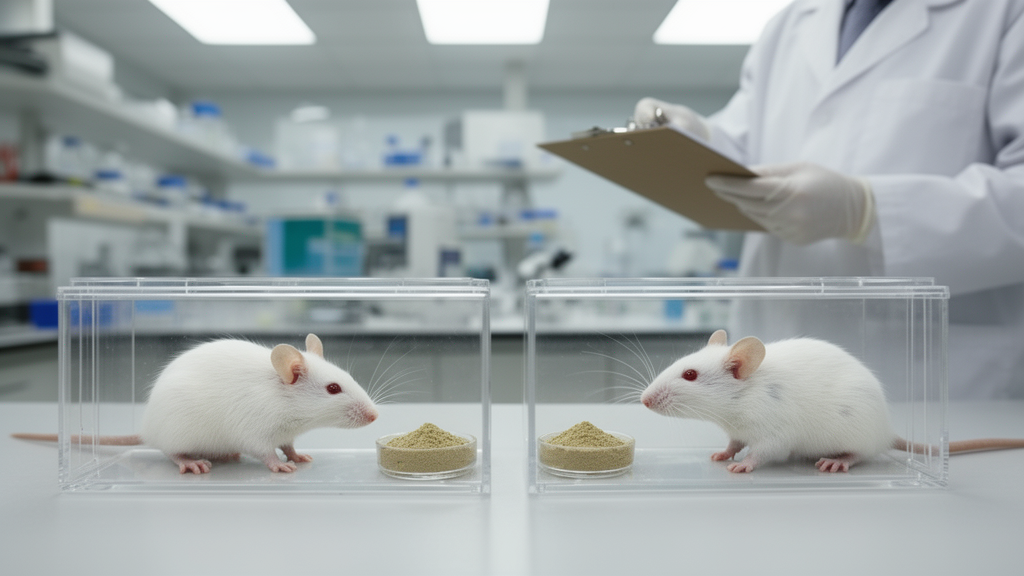
A dietary form of a naturally occurring metabolic molecule has produced one of the most strikingly sex-dependent results yet reported in lung cancer research. In a study led by investigators at the UCLA Health Jonsson Comprehensive Cancer Center and published in the journal Cell Reports, calcium alpha-ketoglutarate, commonly abbreviated Ca-αKG, significantly slowed lung tumor growth in female mice while producing the opposite effect in males, where the same supplement was associated with larger tumors and greater tumor-cell proliferation. The findings suggest that a single metabolic intervention can push cancer biology in opposite directions depending on biological sex and the genetic makeup of the tumor.
Alpha-ketoglutarate is a central player in cellular chemistry. It sits inside the tricarboxylic acid cycle, the series of reactions that cells use to extract energy from nutrients, and it also serves as an essential cofactor for a family of enzymes that remodel the epigenome, the layer of chemical marks that determines which genes are switched on or off. Among these are enzymes that strip methyl groups from histones, the protein spools around which DNA is wound. Because αKG participates in both energy metabolism and gene regulation, researchers have long suspected that raising its levels could influence cancer, but how supplementation would affect lung tumor growth in living organisms remained poorly understood.
To find out, the UCLA team turned to mice genetically engineered to develop lung adenocarcinoma driven by a mutation in KRAS, one of the most frequently mutated cancer-driving genes in this disease. The animals received either a control diet or a diet containing 2 percent Ca-αKG for 16 weeks. The results were unambiguous and sharply divided by sex. Female mice on the supplemented diet developed significantly smaller tumors with lower levels of tumor-cell proliferation than their control-fed counterparts. Male mice given the identical supplement developed larger tumors and showed higher proliferation. Notably, the number of tumors did not change significantly in either sex, indicating that Ca-αKG primarily altered how fast existing tumors grew rather than how many tumors formed in the first place.
When the researchers examined the molecular fingerprints of the treated tumors, the explanation for the divergence began to emerge. In female tumors, the supplement reduced two repressive histone modifications, H3K27me3 and H3K9me3, chemical marks that normally dampen the activity of certain genes. In male tumors, Ca-αKG instead increased H3K27me3. The same molecule, delivered in the same dose, therefore produced opposing epigenetic effects in the two sexes, rewiring gene regulation in opposite directions rather than simply feeding or starving the cancer cells energetically.
Gene-expression analysis reinforced this picture. In female tumors, Ca-αKG activated a suite of genes associated with myogenesis, the biological program that builds cardiac and skeletal muscle. Such genes are rarely expressed in epithelial tumors, making their appearance in lung adenocarcinoma particularly striking. In male tumors, that same muscle-development program was suppressed. A potential conductor of this response was TBX5, a transcription factor that governs cell identity and development. Ca-αKG raised TBX5 protein levels in female tumors, and laboratory experiments showed that an alpha-ketoglutarate derivative also increased TBX5 expression in human lung cancer cells derived from female patients, hinting that the mechanism could extend beyond the mouse model.
To probe the clinical relevance of TBX5, the team analyzed data from The Cancer Genome Atlas, a large public repository of human tumor profiles. TBX5 expression was higher in tumors from women, and among female patients, higher TBX5 levels were associated with better five-year overall survival. Elevated TBX5 also correlated with lower expression of genes driving tumor-cell proliferation and higher expression of genes marking a more differentiated, less aggressive tumor state. The researchers were careful to stress, however, that this human analysis was purely observational. The patients in the dataset were never treated with Ca-αKG, so the data cannot demonstrate that the supplement raises TBX5 or improves survival in people.
The study also revealed that the tumor’s own genetics can override the supplement’s effects entirely. When the researchers tested Ca-αKG in mice whose KRAS-driven lung cancer additionally lacked the tumor-suppressor gene TP53, the supplement no longer significantly reduced tumor growth. In human lung adenocarcinoma, tumors carrying mutated TP53 also showed lower TBX5 expression. Together, these results suggest that tumor genotype helps determine whether the Ca-αKG–TBX5 axis can be engaged at all, adding a second layer of complexity to an already sex-dependent response.
One question remains open: why did Ca-αKG accelerate tumor growth in male mice? The researchers do not yet know. Intriguingly, when they repeated the experiment in a different mouse genetic background, Ca-αKG no longer increased tumor burden in males, indicating that the harmful response in males may itself depend on the strain’s genetic background. The finding adds yet another variable, sex, tumor genotype and now host genetics, to the list of factors that can shape how a metabolic intervention plays out in cancer.
Senior author Dr. Claudio Scafoglio, associate professor of pulmonary and critical care medicine at UCLA, framed the work as a window into a tangled biological relationship. These findings, he noted, offer a glimpse into the complicated interplay among metabolism, cancer and biological sex, and the opposite responses observed in male and female mice underscore how sex and tumor genetics shape the outcome of metabolic interventions. He added that the study highlights how a metabolic intervention can have broad effects on the cancer genome, not only by changing the energetic state of cancer cells but also by directly affecting gene regulation, and that cellular metabolism is tightly linked to epigenetic state through a complex network of interdependent pathways.
Lung cancer remains the leading cause of cancer-related death worldwide, and lung adenocarcinoma accounts for a large share of cases. Although targeted therapies and immunotherapies have improved outcomes for some patients, the search for approaches to prevent or slow the disease continues, and metabolism has become one of the most actively explored frontiers. The UCLA results, with first author Martin Alcaraz Jr., a postdoctoral scientist at the Jonsson Comprehensive Cancer Center, leading the work, are an early step toward fully characterizing the metabolic and epigenetic changes induced by nutritional interventions. Future studies will need to determine why the response differs by sex and tumor genotype, and whether these findings could eventually inform prevention strategies tailored to a patient’s biology rather than applied uniformly. For now, the message is one of caution and curiosity: a supplement that is safe, natural and seemingly benign can act as a double-edged sword in cancer, and understanding who benefits and who is harmed may matter far more than the molecule itself.
Subject of Research: Sex-dependent effects of dietary calcium alpha-ketoglutarate on KRAS-driven lung adenocarcinoma growth and epigenetic gene regulation
Article Title: Dietary supplement may influence lung tumor growth differently in females and males, UCLA study finds
Article References: Dietary supplement may influence lung tumor growth differently in females and males, UCLA study finds. (n.d.). Original publication
Image Credits: AI Generated
DOI: Not provided
Keywords: lung cancer, calcium alpha-ketoglutarate, alpha-ketoglutarate, epigenetics, KRAS, TBX5, TP53, lung adenocarcinoma, sex differences, tumor metabolism, histone modifications, UCLA
Cite Scienmag News
Daisy Hatcher. (October 18, 2026). Dietary supplement Ca-αKG slows lung tumors in female mice but speeds growth in males, UCLA study finds. Scienmag. https://scienmag.com/dietary-supplement-ca-%ce%b1kg-slows-lung-tumors-in-female-mice-but-speeds-growth-in-males-ucla-study-finds/
Daisy Hatcher. "Dietary supplement Ca-αKG slows lung tumors in female mice but speeds growth in males, UCLA study finds." Scienmag, 18 October 2026, https://scienmag.com/dietary-supplement-ca-%ce%b1kg-slows-lung-tumors-in-female-mice-but-speeds-growth-in-males-ucla-study-finds/. Accessed 18 October 2026.
Daisy Hatcher. "Dietary supplement Ca-αKG slows lung tumors in female mice but speeds growth in males, UCLA study finds." Scienmag. October 18, 2026. https://scienmag.com/dietary-supplement-ca-%ce%b1kg-slows-lung-tumors-in-female-mice-but-speeds-growth-in-males-ucla-study-finds/


