


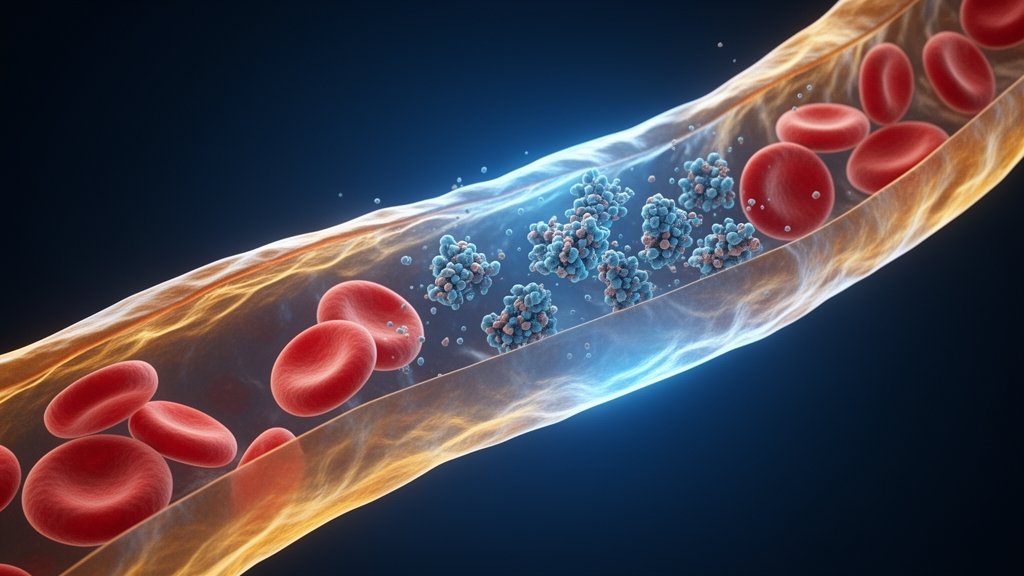
Alzheimer’s disease has long been framed as a problem confined to the brain: plaques of amyloid-beta accumulate between neurons, tau tangles spread through memory circuits, and drug developers have spent decades trying to dissolve or block the damage inside the skull. A new review published in Frontiers in Aging argues that this brain-centric view is too narrow. Drawing together evidence from neurology, hepatology, nephrology and immunology, the authors reframe Alzheimer’s as a systemic disorder of whole-body amyloid-beta homeostasis, in which the traffic of a small peptide between the brain and peripheral organs determines whether toxic deposits form at all.
Amyloid-beta is not simply a waste product. The peptide is produced continuously in the brain, circulates in blood and cerebrospinal fluid, and is constantly exported, degraded and recycled by organs far from the site of plaque formation. The review’s central contribution is to trace this full trafficking cascade in one integrated picture, from intracerebral drainage routes to hepatic and renal elimination. The authors emphasize that cerebral amyloid-beta transport and peripheral amyloid-beta clearance have typically been investigated as independent processes, and that the coordinated interplay between the two remains insufficiently characterized. It is precisely this interplay, they argue, that holds the key to understanding why amyloid accumulates in some aging brains and not others.
Inside the cranium, the review identifies four major clearance pathways. The first is the blood-brain barrier, the specialized endothelial lining of cerebral capillaries that expresses transporters capable of shuttling amyloid-beta out of brain interstitial fluid and into the bloodstream. Receptors such as LRP1 mediate efflux of the peptide across this barrier, while receptors like RAGE can transport it in the opposite direction, and the balance between these opposing fluxes shifts with age and disease. When barrier transport falters, amyloid-beta that should leave the brain lingers and aggregates instead.
The second route runs through the blood-cerebrospinal fluid barrier, at the choroid plexus and arachnoid membranes, where amyloid-beta can be cleared into the cerebrospinal fluid that bathes and cushions the brain. The third pathway is venous: arachnoid granulations and associated outflow structures allow cerebrospinal fluid and its dissolved cargo to drain into the venous sinuses of the dura mater, carrying amyloid-beta back toward the systemic circulation. The fourth and most actively researched system combines the meningeal lymphatic vessels with the glymphatic system, the network of perivascular channels through which cerebrospinal fluid flushes interstitial solutes from brain tissue, particularly during sleep. Disruption of these lymphatic and glymphatic routes, whether through aging, poor sleep or impaired meningeal drainage, is increasingly linked to amyloid accumulation in animal models and human imaging studies.
Once amyloid-beta exits the brain, the peripheral organs take over. The review systematically illustrates how circulating amyloid-beta is handled by the blood, the liver, the kidneys and the gastrointestinal tract. The liver emerges as the dominant peripheral eliminator: hepatocytes and Kupffer cells take up the peptide from the portal and systemic circulation and degrade it, and the organ’s capacity to sequester circulating amyloid-beta is thought to substantially influence how much of the peptide recirculates to the brain. The kidneys filter and catabolize amyloid-beta as well, and the gastrointestinal tract contributes both through direct degradation and through modulation of the gut microbiome, which in turn affects systemic inflammation and amyloid metabolism.
Comparative analysis of central and peripheral clearance, as summarized in the review, indicates that the liver appears to dominate peripheral elimination of amyloid-beta. But the authors’ most consequential conclusion concerns synergy rather than supremacy. The real driver of cerebral amyloid deposition, they argue, is not the failure of any single route, but the loss of coordination among multiple pathways. A modest decline in blood-brain barrier efflux can be compensated by robust hepatic uptake; a sluggish glymphatic system can be offset by efficient renal clearance. Disease emerges when several routes degrade simultaneously, tipping the whole-body balance toward deposition. This mechanistic framework explains a persistent puzzle in Alzheimer’s drug development: why therapies aimed solely at the brain have struggled to produce durable benefits.
The therapeutic implications are substantial. The review surveys a broad spectrum of emerging strategies that target amyloid-beta transport and clearance rather than plaque formation alone. Specific pathway modulators aim to enhance transporter-mediated efflux at the blood-brain barrier or stimulate meningeal lymphatic drainage. Microglia regulators seek to restore the brain’s resident immune cells to a state where they efficiently phagocytose amyloid rather than fueling inflammatory cycles. Amyloid aggregation inhibitors attack the chemistry of plaque nucleation, preventing soluble monomers from assembling into the oligomers and fibrils that damage synapses.
Beyond these targeted approaches, the review highlights natural multi-target compounds, many derived from traditional medicinal plants, that simultaneously modulate inflammation, oxidative stress and amyloid clearance across several organs. Ultrasound-mediated blood-brain barrier opening, demonstrated in both preclinical models and early clinical trials, transiently increases barrier permeability so that amyloid-beta can be drained more readily and therapeutics can reach brain tissue. Exosome-based interventions, using engineered extracellular vesicles to deliver amyloid-degrading enzymes or modulatory cargo across biological barriers, represent another frontier. Each of these approaches, the authors note, could be paired with strategies that bolster peripheral organ function, such as supporting hepatic amyloid uptake or protecting renal clearance capacity.
This systemic perspective reframes the search for disease-modifying therapies. If Alzheimer’s reflects a breakdown of whole-body amyloid-beta homeostasis, then purely brain-centric therapeutics are unlikely to correct the underlying imbalance, no matter how effectively they target a single molecular pathway. The review argues that future translational efforts should give higher priority to combination regimens that simultaneously facilitate intracerebral drainage and bolster peripheral organ clearance. Such regimens might pair a glymphatic enhancer with a hepatic clearance booster, or combine barrier-opening ultrasound with systemic amyloid sequestration, addressing the trafficking cascade at multiple points rather than one.
The authors also confront current hurdles in systemic Alzheimer’s drug discovery. Measuring amyloid-beta kinetics across the brain-blood-organs axis in living patients remains technically difficult, and clinical trials designed around peripheral clearance endpoints are still scarce. Yet the opportunities are growing: advances in neuroimaging, liquid biopsy and organ-on-chip models are making whole-body amyloid dynamics increasingly tractable to study. By offering a unified conceptual framework, one that treats the brain and periphery as a single homeostatic system, the review aims to guide the exploration of novel therapeutic paradigms for a disease that has resisted decades of single-target approaches. For a field long focused on what happens inside the skull, the message is clear: the answer to Alzheimer’s may lie partly in the liver, the kidneys and the lymphatic vessels that connect them.
Subject of Research: Systemic amyloid-beta transport and clearance pathways in Alzheimer's disease
Article Title: New insight into Alzheimer’s disease: small molecule-Aβ in the brain transport and peripheral organ clearance
Article References: Ma, T., Li, Y., Ding, Y., Liu, S., Gao, C., Li, X., Tong, Z., & Lv, Y. (2026). New insight into Alzheimer’s disease: small molecule-Aβ in the brain transport and peripheral organ clearance. Frontiers in Aging, 7, Article 1921485. https://doi.org/10.3389/fragi.2026.1921485
Image Credits: AI Generated
DOI: 10.3389/fragi.2026.1921485
Keywords: Alzheimer's disease, amyloid-beta, blood-brain barrier, glymphatic system, liver clearance, meningeal lymphatics, peripheral clearance, drug development, insight, Alzheimer, disease, small
Cite Scienmag News
Cassandra Pierce. (October 17, 2026). Alzheimer’s May Begin Outside the Brain: How Amyloid-Beta Travels and Where the Body Clears It. Scienmag. https://scienmag.com/alzheimers-may-begin-outside-the-brain-how-amyloid-beta-travels-and-where-the-body-clears-it/
Cassandra Pierce. "Alzheimer’s May Begin Outside the Brain: How Amyloid-Beta Travels and Where the Body Clears It." Scienmag, 17 October 2026, https://scienmag.com/alzheimers-may-begin-outside-the-brain-how-amyloid-beta-travels-and-where-the-body-clears-it/. Accessed 17 October 2026.
Cassandra Pierce. "Alzheimer’s May Begin Outside the Brain: How Amyloid-Beta Travels and Where the Body Clears It." Scienmag. October 17, 2026. https://scienmag.com/alzheimers-may-begin-outside-the-brain-how-amyloid-beta-travels-and-where-the-body-clears-it/


