


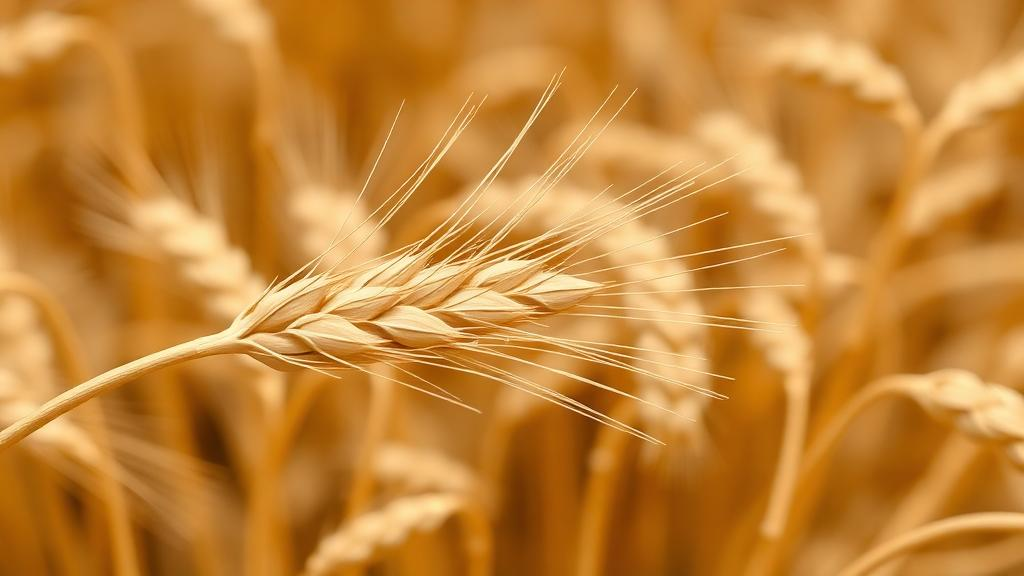
Bread wheat feeds billions, but its future depends on how it copes with a drier, hotter world. A new study from the University of York, published in BMC Plant Biology, suggests that part of the answer may lie not in the wheat genes themselves but in a chemical layer that sits on top of them. Researchers Isaac J. Reynolds, Liam J. Barratt and Andrea L. Harper mapped DNA methylation and gene activity in wheat landraces before and after drought exposure, and uncovered evidence that ancient transposable elements may act as mobile regulatory switches that help the plant fine-tune its response to water stress.
DNA methylation is the addition of small chemical tags, typically methyl groups on cytosine bases, that can silence stretches of DNA without altering the underlying sequence. In plants, methylation patterns are central to genome defence, locking down transposons and other repetitive elements that would otherwise jump around and damage the genome. But methylation also touches genes, and its role in shaping how plants respond to environmental stress has remained murky, particularly in wheat, whose enormous and highly repetitive genome has long frustrated epigenomic analysis.
The York team turned to wheat landraces, traditional farmer-maintained varieties that carry a wealth of genetic diversity accumulated over thousands of years of adaptation to local conditions. Unlike elite modern cultivars, landraces preserve a broad repertoire of stress-response variation, making them a powerful resource for dissecting the mechanisms behind drought tolerance. By pooling DNA from a small panel of landraces, the researchers captured population-level methylation patterns that reflect this shared history of environmental adaptation rather than the idiosyncrasies of any single line.
Using single-base resolution methylome profiling alongside transcriptomics in wheat seedlings, the team compared methylation and gene expression before and after drought treatment. The analysis revealed a striking pattern: gene body methylation, the methylation found within the coding regions of genes, was significantly positively associated with high and stable gene expression under stress. In other words, genes that carried methylation in their bodies tended not only to be more active but also to maintain steadier transcription when water became scarce.
This finding hints at a possible stabilising role for DNA methylation in the drought response. Many genes associated with differential methylation maintained stable transcription across the drought exposure, suggesting that methylation changes may help buffer gene activity against environmental fluctuation rather than simply switching genes on or off. Genic differentially methylated regions were also enriched near stress-associated genes, reinforcing the idea that the epigenome is not a passive bystander but an active participant in the plant’s response to drought.
Perhaps the most intriguing discovery came from outside the genes altogether. Differential methylation was heavily concentrated in intergenic regions and transposable elements, the mobile DNA sequences that make up the bulk of the wheat genome. One ancient retrotransposon family, RLX_famc9, emerged as a particularly prominent methylation target under drought. This retrotransposon family shares sequence similarity with drought-responsive genes, was enriched for differential methylation, and was itself downregulated when the plants experienced water stress.
These observations led the researchers to propose a speculative but compelling model. Under drought, hypermethylation of RLX_famc9 and related elements may suppress transposon-derived trans-regulatory activity, meaning the mobile elements no longer produce regulatory molecules that act on genes elsewhere in the genome. By silencing these transposon-derived regulators, the plant could moderate the expression of drought-related target genes, adding a layer of indirect control that operates in trans, across the genome, rather than at individual gene loci.
The study also implicates ROS1a glycosylases, enzymes known to actively remove methylation marks from DNA, in demethylation under drought. This suggests that the epigenomic response to water stress is dynamic, with some regions gaining methylation while others are actively stripped of it. The balance between methylation and demethylation may therefore be a key determinant of how wheat genes behave when drought strikes, and manipulating this balance could offer a route to more resilient crops.
The researchers emphasise that these shared epigenomic signatures do more than illuminate regulatory mechanisms; they also point toward potential epimarkers, methylation patterns that could be used to identify or breed drought-resilient wheat without needing to alter the genetic sequence itself. Because methylation states can be influenced by environment and can persist across generations in some cases, epigenetic breeding represents an intriguing complement to conventional genetic approaches, particularly for a crop as genomically complex as wheat.
As droughts grow more frequent and severe, understanding the full repertoire of wheat’s stress responses becomes ever more urgent. This study adds a crucial piece to that puzzle, showing that the epigenome, and the ancient transposable elements embedded within it, may play a far more active role in drought adaptation than previously appreciated. If the speculative model holds up under further scrutiny, the mobile DNA that once seemed like genomic junk may turn out to be one of wheat’s most valuable allies in the fight for survival on a drying planet.
Subject of Research: Epigenetic regulation of drought response in wheat landraces
Article Title: DNA methylation is associated with transcriptional variability and transposon-driven trans-regulation under drought in wheat landraces
Article References: DNA methylation is associated with transcriptional variability and transposon-driven trans-regulation under drought in wheat landraces. (n.d.). https://doi.org/10.1186/s12870-026-10064-0
Image Credits: AI Generated
DOI: 10.1186/s12870-026-10064-0
Keywords: DNA methylation, wheat, landraces, drought, transposable elements, epigenomics, gene regulation, transcriptomics, polyploid, epigenetic regulation, methylation, associated
Cite Scienmag News
Juliet Wilcox. (October 16, 2026). Ancient Jumping Genes May Help Wheat Survive Drought Through Epigenetic Control. Scienmag. https://scienmag.com/ancient-jumping-genes-may-help-wheat-survive-drought-through-epigenetic-control/
Juliet Wilcox. "Ancient Jumping Genes May Help Wheat Survive Drought Through Epigenetic Control." Scienmag, 16 October 2026, https://scienmag.com/ancient-jumping-genes-may-help-wheat-survive-drought-through-epigenetic-control/. Accessed 16 October 2026.
Juliet Wilcox. "Ancient Jumping Genes May Help Wheat Survive Drought Through Epigenetic Control." Scienmag. October 16, 2026. https://scienmag.com/ancient-jumping-genes-may-help-wheat-survive-drought-through-epigenetic-control/


