


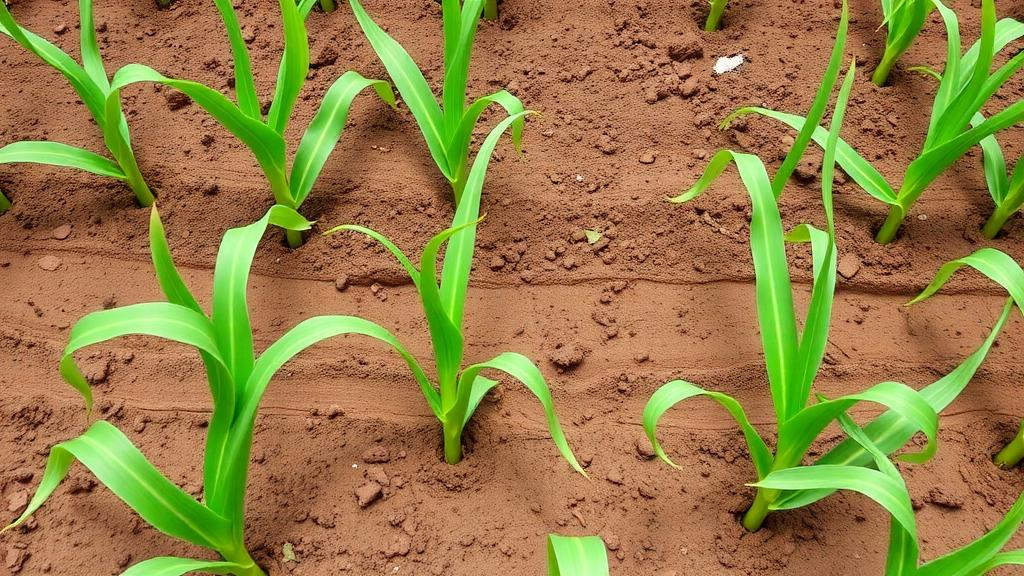
Every biogas plant faces the same awkward byproduct problem: for each unit of methane-rich gas produced from manure and crop residues, a large volume of liquid digestate is left behind. This slurry, the residue of anaerobic digestion, is loaded with plant nutrients, yet many operations struggle to find safe, economical ways to return it to farmland. A new two-year field experiment from Turkish researchers, published in Environmental Geochemistry and Health, offers one of the most complete assessments to date of what happens when liquid digestates from different feedstock combinations are spread on irrigated maize, tracking everything from grain yield and soil enzymes to pathogen counts, pesticide residues and farm economics.
The research team, led by Gamze Depel and Zeynep Demir of the Soil, Fertilizer and Water Resources Central Research Institute in Ankara, together with colleagues from the Field Crops Central Research Institute, Ankara University and Tübitak Marmara Research Center, tested three distinct liquid digestates. Digestate A was derived from a mixture of poultry manure and poppy plant residues, digestate B from cattle manure blended with plant residues, and digestate C from a combination of poultry and cattle manures. Each digestate was applied at four rates, 10, 30, 50 and 70 tonnes per hectare on a fresh matter basis, across the 2022 and 2023 growing seasons under real field conditions rather than in pots or greenhouses, a distinction the authors emphasize because digestate performance often shifts dramatically once it meets variable weather, soil biology and irrigation schedules.
The headline result is encouraging for the circular bioeconomy. Liquid digestate applications significantly increased maize grain yield, thousand kernel weight, cob weight and kernel yield per cob. These are the metrics that translate directly into harvestable output, and their response suggests that the nutrients in digested slurries, particularly the readily mineralizable nitrogen and abundant phosphorus and potassium documented in earlier digestate studies, were genuinely available to the crop rather than locked in recalcitrant organic matter. Interestingly, several other agronomic traits, including plant height, cob diameter, cob length, harvest index and crude protein content of the grain, did not change significantly. That pattern implies the digestates acted primarily as a yield driver through improved ear filling and kernel weight rather than by altering the overall architecture or protein concentration of the plant, a nuance that matters for farmers growing maize for both grain and feed markets.
Beneath the surface, the soil told an equally important story. The treated plots showed significant increases in electrical conductivity, available phosphorus pentoxide and potassium oxide, and in extractable calcium, magnesium, iron, manganese and boron. Cation exchange capacity, a measure of the soil’s ability to hold and exchange nutrients, also rose. More striking still were the biological indicators: microbial biomass carbon, microbial respiration, urease activity and phosphatase activity all increased significantly in digestate-amended soils. Enzyme assays like these are sensitive barometers of soil functioning, because urease governs the conversion of organic nitrogen into plant-available ammonium while phosphatases liberate phosphate from organic pools. Their simultaneous elevation, alongside a larger and more active microbial community, indicates that the digestates were not merely dumping nutrients but actively stimulating the soil food web that regulates nutrient cycling over the long term.
The digestates also changed the nutritional profile of the harvested grain. Total nitrogen, phosphorus, potassium, calcium, manganese, zinc and boron concentrations in the maize kernels increased significantly, while magnesium, iron, copper and chromium remained unaffected. For livestock feed producers, the boost in grain zinc and manganese is particularly relevant, since trace mineral density in feed maize is a persistent concern. The authors interpret this as evidence that the liquid fraction of digestate can improve kernel quality as well as quantity, though the unchanged protein content suggests the nitrogen supply, while sufficient for yield, did not push grain protein beyond the levels seen in control plots.
Water metrics added another dimension to the evaluation. Water productivity and irrigation water productivity, which express yield per unit of water consumed or irrigated, varied numerically among treatments, with the highest values observed under digestate C, the poultry and cattle manure blend. However, these differences did not reach statistical significance. In a semi-arid country like Türkiye, where maize is almost entirely irrigated and water scarcity is an escalating constraint, even numerical trends toward better water productivity are noteworthy, but the authors are careful not to overclaim: the digestates did not demonstrably stretch irrigation water further during this two-year window.
The safety findings are where the study becomes genuinely cautionary. On the positive side, none of the most feared foodborne pathogens, Salmonella species, Listeria monocytogenes or E. coli O157, were detected in the digestates. Yet elevated counts of Clostridium species signaled a potential microbiological risk, since Clostridia form resilient spores that survive standard anaerobic digestion and can persist in soils and on crops. The researchers conclude that appropriate hygienization, such as thermal pasteurization, should precede agricultural use, a recommendation aligned with European regulations on animal by-products that require controlled heat treatment before digestate from certain feedstocks can be spread on land.
Chemical contaminants raised parallel concerns. Certain pesticide residues, notably permethrin, were found in the digestates, and digestate A, the poultry and poppy residue blend, exhibited high electrical conductivity, pointing to salt load as a real constraint at high application rates. On the reassuring side, two years of field application produced no significant increases in exchangeable sodium or potentially toxic metals in the soil, meaning the salinity and heavy metal fears that often shadow organic waste recycling did not materialize within the study period. The authors nonetheless stress that the long-term environmental fate of pesticide residues and trace metals remains uncertain, and that repeated digestate applications demand continuous chemical and microbiological monitoring to safeguard environmental and food safety.
The economic analysis rounds out the picture, evaluating whether the yield gains justify the costs of handling, transporting and spreading bulky liquid digestate at rates of up to 70 tonnes per hectare. By coupling yield and quality data with input costs, the study addresses a gap that laboratory and greenhouse work cannot fill, since the logistics of moving liquid waste from biogas plants to fields often determine whether recycling is economically viable at all. The overall conclusion is that liquid digestates can serve as an effective organic amendment for sustainable maize production, enhancing crop productivity, soil health and resource efficiency while closing nutrient loops between livestock operations, biogas plants and cropland.
What emerges from this work is a balanced verdict rather than a green light. Liquid digestate is neither a flawless fertilizer nor a hidden hazard; it is a nutrient-dense, biologically active material whose benefits, bigger yields, richer soil life, improved grain mineral content, come bundled with manageable risks, spore-forming bacteria, pesticide traces and salt loads that vary with feedstock. The Turkish team’s prescription is an integrated management strategy: optimize application rates to match crop demand and salt tolerance, hygienize the material before field use, and monitor chemistry and microbiology continuously as applications accumulate. As biogas capacity expands worldwide and agriculture searches for alternatives to synthetic fertilizers, studies like this one, grounded in multi-season field data and unflinching about the caveats, provide the evidence base farmers and regulators need to recycle organic waste without trading soil fertility for new contamination problems.
Subject of Research: Field evaluation of biogas-derived liquid digestates from different feedstocks applied to maize, assessing soil properties, water productivity, yield, safety and economic performance
Article Title: Field evaluation of liquid fraction of digestates from different feedstocks on soil properties, water productivity, maize yield and economic performance
Article References: Field evaluation of liquid fraction of digestates from different feedstocks on soil properties, water productivity, maize yield and economic performance. (n.d.). https://doi.org/10.1007/s10653-026-03528-7
Image Credits: AI Generated
DOI: 10.1007/s10653-026-03528-7
Keywords: biogas, liquid digestate, anaerobic digestion, maize, soil health, circular bioeconomy, water productivity, soil enzymes, food safety, pesticide residues, organic fertilizer, nutrient cycling
Cite Scienmag News
Alan Morgan. (October 13, 2026). Liquid Digestate From Biogas Waste Boosts Maize Yields and Soil Health in Two-Year Field Trial. Scienmag. https://scienmag.com/liquid-digestate-from-biogas-waste-boosts-maize-yields-and-soil-health-in-two-year-field-trial/
Alan Morgan. "Liquid Digestate From Biogas Waste Boosts Maize Yields and Soil Health in Two-Year Field Trial." Scienmag, 13 October 2026, https://scienmag.com/liquid-digestate-from-biogas-waste-boosts-maize-yields-and-soil-health-in-two-year-field-trial/. Accessed 13 October 2026.
Alan Morgan. "Liquid Digestate From Biogas Waste Boosts Maize Yields and Soil Health in Two-Year Field Trial." Scienmag. October 13, 2026. https://scienmag.com/liquid-digestate-from-biogas-waste-boosts-maize-yields-and-soil-health-in-two-year-field-trial/


