

Review maps livestock-waste biogas pathways and performance gaps
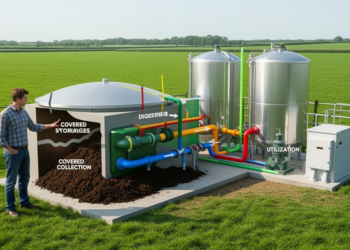
A systematic review found that livestock-waste biogas performance depends strongly on feedstock chemistry, pretreatment, co-digestion, reactor conditions and scale.
A systematic review found that livestock-waste biogas performance depends strongly on feedstock chemistry, pretreatment, co-digestion, reactor conditions and scale.

A 40-day batch study in Jordan found that co-digesting hot-pressed olive pomace with municipal wastewater increased net methane yield to ...
A Shiraz factory-scale simulation found that power-to-hydrogen reduced unused renewable electricity from 37.1% to 9.36% while producing 3,869 kilograms of ...
Every year, farms, landfills and wastewater plants belch out millions of tonnes of biogas, a methane-rich mixture that is often ...
A systematic review of 116 studies reveals that coffee-industry residues can be converted into biogas, biochar, and biofuels through pyrolysis ...
Ghent University researchers show that Methylomonas methanica co-cultured with Komagataella phaffii can outgrow the industrial standard Methylococcus capsulatus and reach ...
A two-year Turkish field trial shows that liquid digestates from poultry, cattle and plant residues significantly boost maize yields, soil ...
A new European energy system model shows that combining stronger EU carbon pricing with a temporary bonus-malus subsidy is the ...
A combined nano zero-valent iron and sodium percarbonate pretreatment boosted methane yields from sewage sludge and food waste co-digestion by ...
New research shows that prolonged storage of sugarcane bagasse lowers methane yields, shifts optimal food-to-microorganism ratios downward, and raises the ...

Embark on a thrilling journey of discovery with Scienmag.com—your ultimate source for cutting-edge breakthroughs. Immerse yourself in a world where curiosity knows no limits and tomorrow’s possibilities become today’s reality!