


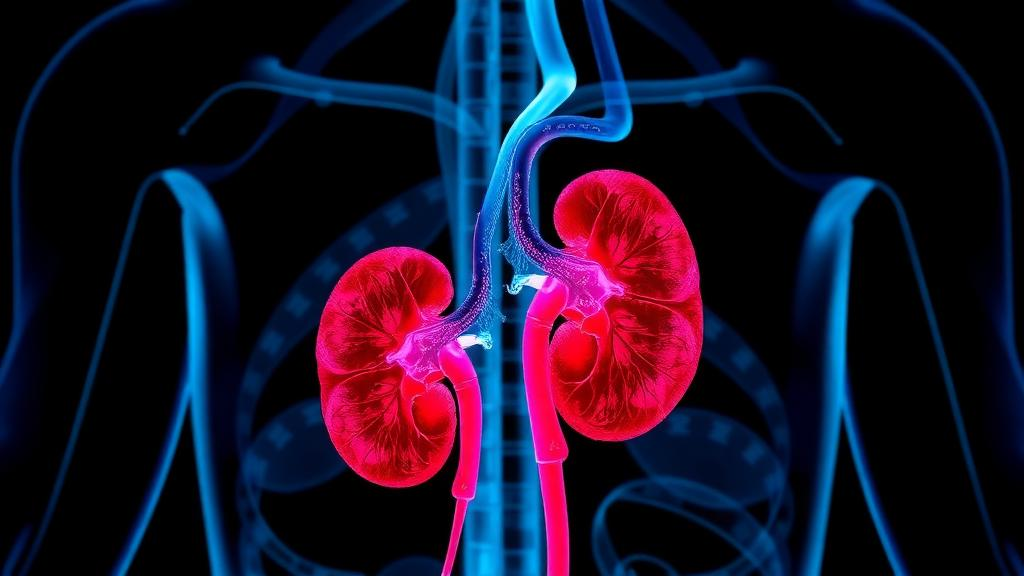
For decades, lactate has been the unglamorous footnote of operating room blood gas panels, a molecule clinicians glance at to confirm that tissues are getting enough oxygen. A new study published in iScience argues that this view is badly incomplete. In patients undergoing open-heart surgery on a cardiopulmonary bypass machine, the researchers found that lactate is not merely a passive indicator of stress but an active participant in the cascade that damages the kidneys, one of the most feared complications of cardiac surgery. By combining artificial intelligence on thousands of intensive care records with mechanistic experiments in rats and human kidney cells, the team built a case that lactate deserves a second look, both as an early warning system and as a target for drugs that could protect the kidneys before injury takes hold.
The clinical problem is substantial. Cardiopulmonary bypass, the heart-lung machine that keeps blood oxygenated and circulating while surgeons work on a still, bloodless field, exposes the body to a barrage of insults: altered blood flow, inflammatory activation, hemolysis, and uneven perfusion of organs like the kidneys. Acute kidney injury strikes between roughly 20 and 40 percent of bypass patients in the broader literature, and it is linked to longer hospital stays, higher in-hospital mortality, and progression toward chronic kidney disease. Yet clinicians still lack reliable tools to predict who will develop the injury, and the underlying biology remains only partially understood, which is precisely the gap the new study set out to close.
The research team, led by investigators affiliated with Beijing Tongren Hospital, took what they describe as a clinical-to-bench approach. First, they mined two large, publicly available critical care databases, MIMIC-IV and MIMIC-III, drawing on a combined 6,558 patients who underwent cardiovascular surgery on bypass. Strikingly, the observed incidence of bypass-associated acute kidney injury in these intensive care cohorts was far higher than typical surgical series, reaching 74.2 percent in the MIMIC-IV cohort and 91.8 percent in MIMIC-III, a reflection of how sick these ICU populations are and how common the complication truly is in the critically ill.
From dozens of candidate variables, the researchers used two independent statistical filters, the Boruta algorithm and LASSO regression, to converge on nine consensus predictors: age, body mass index, lactate, the SAPS II severity score, potassium, serum creatinine, surgery type, blood urea nitrogen, and heart failure. They then trained eight different machine learning models and compared them head to head. A gradient boosting machine came out on top, achieving an area under the receiver operating characteristic curve of 0.898 in internal testing, with an accuracy of 0.834 and a precision of 0.956. When the model was exported to the entirely separate MIMIC-III cohort, it held up with an area under the curve of 0.798, evidence that the predictions were not an artifact of one dataset.
The crucial insight came from an interpretability technique called SHAP analysis, which quantifies how much each variable pushes an individual prediction up or down. Among the top contributors were body mass index, lactate, potassium, blood urea nitrogen, and surgery type, and the dependence plots showed a steady, non-linear rise in predicted kidney injury risk as blood lactate climbed. For a single representative patient, a lactate of 2.1 millimoles per liter added a measurable increment of risk, while a body mass index of 34.9 added nearly 0.19 to the predicted probability. Lactate, long treated as a bystander, had emerged as one of the model’s most powerful clinical signals.
That finding raised the question the researchers really wanted to answer: is lactate simply a messenger, or does it actively harm the kidney? To find out, they turned to a rat model of cardiopulmonary bypass, complete with a miniature membrane oxygenator and roller pump running for two hours at carefully monitored flow rates. Bypassed rats showed the expected rise in blood and kidney tissue lactate, along with elevated creatinine and blood urea nitrogen, disrupted tubular architecture on histology, increased cell death by TUNEL staining, and upregulated injury markers NGAL and KIM-1. Crucially, western blotting and immunofluorescence revealed a surge in pan-lysine lactylation, a recently discovered epigenetic modification in which lactate itself donates a chemical group to proteins, concentrated precisely in the renal tubular epithelial cells where injury was worst.
RNA sequencing of the injured kidneys pointed to the engine behind the lactate flood. The transcriptomes of bypassed and sham-operated rats segregated completely, with 2,446 genes upregulated and 2,327 downregulated, and pathway analysis lit up pyruvate metabolism, glycolysis, and the HIF-1 signaling pathway, the signature of a metabolic shift toward glycolysis under hypoxic and inflammatory stress. Among four overlapping genes from these pathways, lactate dehydrogenase A, the enzyme that converts pyruvate to lactate, stood out as markedly upregulated, a result the team confirmed at both the messenger RNA and protein levels. Inflammatory genes, including CCL2, IL-1 beta, and TNF-alpha, rose in parallel, sketching a picture in which metabolic reprogramming and inflammation advance together.
The causal test came next. When rats received oxamate, an inhibitor of lactate dehydrogenase A, or 2-deoxy-D-glucose, a glycolysis blocker, before bypass, the lactate surge was blunted and the kidneys fared measurably better: creatinine and blood urea nitrogen fell, tubular damage on histology eased, apoptosis declined, the oxidative stress marker iNOS dimmed, and global protein lactylation dropped. In human HK-2 kidney tubular cells subjected to oxygen-glucose deprivation and reoxygenation, a laboratory mimic of bypass injury, silencing LDHA with small interfering RNA reduced lactate accumulation, reactive oxygen species, apoptosis, inflammatory cytokine output, and protein lactylation, while leaving healthy cells unharmed. The convergence of pharmacological and genetic results strengthens the argument that the lactate-lactylation axis is a genuine mechanistic participant rather than a statistical coincidence.
The authors are careful about what they have and have not shown. The lactate reduction achieved by the inhibitors was modest, and the protective effects, while consistent across multiple measures, were partial. They also note a striking complication in the literature: a separate recent study found that deleting LDHA from proximal tubules actually worsens cisplatin-induced kidney injury, a reminder that lactate metabolism is context-dependent and that basal glycolytic flux is essential for cellular redox balance and stress adaptation. Complete enzyme deletion, in other words, is not the goal; precisely timed, partial inhibition during an excessive lactate surge may be. The retrospective nature of the MIMIC databases, the absence of detailed intraoperative data such as bypass duration and cross-clamp time, and the lack of direct proof that lactylation itself causes the injury all remain open questions that future work with kidney-specific knockout models, exogenous lactate rescue experiments, and mass spectrometry will need to resolve.
Even with those caveats, the study marks a conceptual shift with real clinical implications. If lactate is both a forecast and a fuel of kidney injury after bypass surgery, then a routine preoperative blood value already measured in every cardiac surgical patient could feed an interpretable machine learning model that flags high-risk individuals before the incision is made, giving anesthesiologists and surgeons a window to intervene. And the mechanistic half of the study suggests that the same molecule driving the risk could be drugged. The authors conclude that targeting lactate production and lactylation represents a promising therapeutic strategy, one that now awaits prospective validation in multicenter cohorts. For the hundreds of thousands of patients who go on bypass each year, a humble metabolite long dismissed as metabolic exhaust may turn out to be the key to keeping their kidneys safe.
Subject of Research: The role of lactate and protein lactylation as biomarker and therapeutic target in cardiopulmonary bypass-associated acute kidney injury
Article Title: Lactate as a predictive biomarker and therapeutic target in cardiopulmonary bypass-associated acute kidney injury
Article References: Xue, D., Zhang, M., Chang, X., Wang, T., Ji, B., Xi, C., & Wang, G. (2026). Lactate as a predictive biomarker and therapeutic target in cardiopulmonary bypass-associated acute kidney injury. iScience, 29(11), Article 117643. https://doi.org/10.1016/j.isci.2026.117643
Image Credits: AI Generated
DOI: 10.1016/j.isci.2026.117643
Keywords: lactate, acute kidney injury, cardiopulmonary bypass, machine learning, lactylation, LDHA, biomarker, cardiac surgery, glycolysis, MIMIC database, inflammation, HK-2 cells
Cite Scienmag News
Ophelia Keating. (October 11, 2026). Lactate emerges as both warning sign and driver of kidney injury after heart surgery. Scienmag. https://scienmag.com/lactate-emerges-as-both-warning-sign-and-driver-of-kidney-injury-after-heart-surgery/
Ophelia Keating. "Lactate emerges as both warning sign and driver of kidney injury after heart surgery." Scienmag, 11 October 2026, https://scienmag.com/lactate-emerges-as-both-warning-sign-and-driver-of-kidney-injury-after-heart-surgery/. Accessed 11 October 2026.
Ophelia Keating. "Lactate emerges as both warning sign and driver of kidney injury after heart surgery." Scienmag. October 11, 2026. https://scienmag.com/lactate-emerges-as-both-warning-sign-and-driver-of-kidney-injury-after-heart-surgery/


