


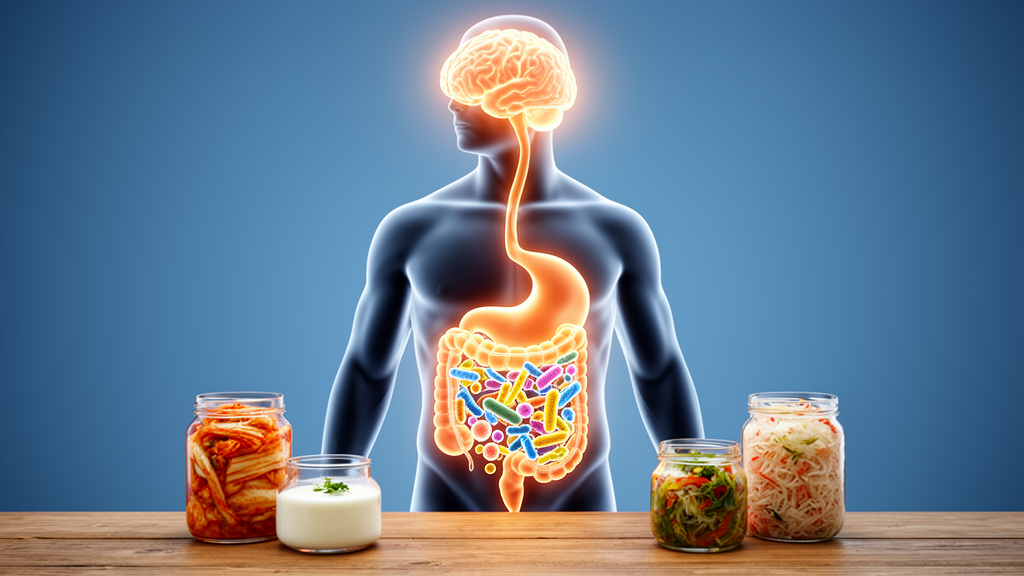
A jar of kefir or a slice of sourdough has long been treated as comfort food, but a sweeping new review argues that fermented foods deserve a far more ambitious scientific identity. Writing in npj Science of Food, an international team led by Djilali Benabdelmoumene of Abdelhamid Ibn Badis University in Algeria, with collaborators spanning Thailand, Malaysia, China and beyond, maps out what they call psychobiotic food systems: integrated combinations of live microbes, fermented food matrices, prebiotic substrates and neuroactive metabolites that may communicate with the brain through the microbiota–gut–brain axis. The review, published on 25 September 2026, reframes psychobiotics as something much broader than a probiotic capsule, positioning everyday fermented foods as potential delivery vehicles for compounds that influence mood, stress resilience, sleep and cognition.
The term psychobiotic was originally coined to describe specific probiotic strains that, when ingested in adequate amounts, might yield mental health benefits. The new review argues that this framing is too narrow. Fermentation is not merely a way to package live bacteria; it is a biotechnological process that transforms the entire chemical composition of a food. As lactic acid bacteria, yeasts and other fermenters break down sugars, proteins and phenolic compounds, they generate an arsenal of small molecules that can act on the nervous system indirectly, through the gut and the immune system, or in some cases by reaching the central nervous system itself. The authors therefore treat each fermented food as a strain–matrix–metabolite–host system, in which the microbe, the food background, the chemistry it produces and the physiology of the eater all interact.
The catalogue of candidate bioactives is strikingly diverse. Fermented dairy products, kefir, sourdough bread, fermented cereals, legumes, vegetables, fruits, tea, cocoa and coffee can all supply psychobiotic-relevant compounds. Among the most studied are gamma-aminobutyric acid, or GABA, the principal inhibitory neurotransmitter in the mammalian brain, which certain lactic acid bacteria can produce in food matrices; short-chain fatty acids such as butyrate, propionate and acetate, which are generated when gut microbes ferment dietary fibre and which influence immune signaling, barrier function and even gene expression in the brain; and tryptophan derivatives, which sit at the crossroads of serotonin and kynurenine metabolism, two pathways with well-established links to mood regulation.
Beyond these headline molecules, the review highlights a second tier of fermentation products with plausible neuroactive roles. Bioactive peptides released during the proteolysis of milk, cereal and legume proteins may exert opioid-like or antihypertensive effects and can modulate enteroendocrine signaling. Exopolysaccharides, the sugar polymers secreted by starter cultures in yogurt and kefir, can act as prebiotic-like substrates that reshape the gut ecosystem while also interacting with the immune system. Organic acids, B vitamins and phenolic metabolites converted by microbial enzymes add further layers, altering oxidative stress and the availability of compounds that the brain itself depends on. The point the authors emphasize is that no single molecule is likely to be responsible for an effect; rather, the whole fermented matrix delivers a coordinated mixture.
How might these compounds actually reach or influence the brain? The review organizes the mechanisms into several converging pathways. The vagus nerve provides a direct neural line from the gut lining to the brainstem, and it is known to be sensitive to both microbial metabolites and enteroendocrine hormones. The hypothalamic–pituitary–adrenal axis, the body’s central stress circuitry, can be tuned by gut-derived signals, offering a route by which fermented foods might modulate cortisol responses and stress resilience. Immune modulation is another major channel: gut microbes and their metabolites shape inflammatory tone throughout the body, and chronic low-grade inflammation is increasingly implicated in depression and other psychiatric conditions.
Barrier integrity adds a further dimension of technical interest. The intestinal epithelium and the blood–brain barrier are both selective gates that control what passes from the outside world, or from the bloodstream, into neural tissue. Short-chain fatty acids, for example, are known to strengthen tight junctions in the gut lining, potentially reducing the translocation of inflammatory molecules, while some microbial products may influence the permeability and transport properties of the blood–brain barrier itself. Oxidative-stress control and enteroendocrine pathways, in which gut hormones such as peptide YY and glucagon-like peptide-1 respond to microbial metabolites, round out the mechanistic picture. In principle, a fermented food could act simultaneously on several of these channels, which is precisely why the authors insist on studying foods as systems rather than as single strains.
The evidence base, however, is uneven, and the review is refreshingly candid about this. Across human and animal studies, the strongest support exists for an effect of psychobiotic interventions on depressive symptoms. For anxiety, sleep quality, cognition and other psychiatric or neurological outcomes, the findings are more heterogeneous, with smaller studies, mixed populations and inconsistent endpoints making it difficult to draw firm conclusions. Much of the mechanistic work remains at the level of cell cultures, simulated digestion experiments and rodent models, which do not always translate to humans eating real diets. The authors stress that well-powered, controlled human trials linking specific food compositions to validated mental-health-related endpoints are the critical missing piece.
Translating the science into safe, effective products also demands a rigorous manufacturing pipeline, and the review sets out what that should look like. Candidate strains must be authenticated, meaning their identity confirmed with modern taxonomic methods rather than assumed from old culture collections. Genome-based safety screening is needed to exclude strains carrying virulence factors or antibiotic resistance genes before they are used in food. Fermentation itself should be controlled and standardized, since the metabolite profile of a kefir or a sourdough can vary dramatically with starter composition, temperature and time. Metabolomics, the comprehensive chemical fingerprinting of fermented products, is presented as an essential quality tool, allowing manufacturers to verify that a product actually contains the GABA, peptides or phenolics claimed on its label.
The pipeline extends beyond the factory. Simulated digestion models can reveal which compounds survive the journey through stomach acid and intestinal enzymes, and which are released or transformed along the way. Equally important is the monitoring of undesirable metabolites: fermentation is a double-edged process, and depending on the substrate and the microbes involved it can also generate biogenic amines such as histamine and tyramine, or other compounds that certain individuals must limit. A psychobiotic food, the authors argue, should be characterized as much for what it does not contain as for what it does. This systems-level quality control is what would separate evidence-based functional foods from the loosely defined fermented products currently marketed with vague wellness claims.
The broader significance of the review lies in its reframing of where brain-relevant nutrition might come from. Rather than isolating a single miracle strain and packing it into a supplement, the psychobiotic food systems concept suggests that traditional fermented foods, refined with modern microbiology and metabolomics, could become a sustainable and culturally embedded platform for supporting mental health. The authors are careful not to overclaim: the evidence for benefits beyond depressive symptoms is still emerging, and the field needs standardized strains, standardized foods and standardized outcome measures before clinicians can prescribe a kefir regimen with confidence. But the direction of travel is clear. Fermentation, one of humanity’s oldest food technologies, is being re-examined with twenty-first-century tools as a way to shape the chemical conversation between the gut and the brain, and the coming decade of controlled trials will determine whether the promise survives contact with rigorous evidence.
Subject of Research: Psychobiotic fermented foods and their effects on the microbiota–gut–brain axis
Article Title: Psychobiotic food systems: fermentation-derived microbes and metabolites modulating the microbiota–gut–brain axis
Article References: Benabdelmoumene, D., Dahmouni, S., Bengharbi, Z., Bouhalla, A. W., Waqar, M., Qadi, W. S. M., Tong, X., Han, R., Sarian, M. N., Mediani, A., Jam, F. A., & Hamezah, H. S. (2026). Psychobiotic food systems: fermentation-derived microbes and metabolites modulating the microbiota–gut–brain axis. npj Science of Food. https://doi.org/10.1038/s41538-026-01169-9
Image Credits: AI Generated
DOI: 10.1038/s41538-026-01169-9
Keywords: psychobiotics, fermented foods, microbiota–gut–brain axis, GABA, short-chain fatty acids, kefir, sourdough, probiotics, mental health, metabolomics, depression, vagus nerve
Cite Scienmag News
Cassandra Pierce. (October 9, 2026). Fermented Foods May Talk to the Brain: The Science of Psychobiotics Goes Beyond Probiotic Pills. Scienmag. https://scienmag.com/fermented-foods-may-talk-to-the-brain-the-science-of-psychobiotics-goes-beyond-probiotic-pills/
Cassandra Pierce. "Fermented Foods May Talk to the Brain: The Science of Psychobiotics Goes Beyond Probiotic Pills." Scienmag, 9 October 2026, https://scienmag.com/fermented-foods-may-talk-to-the-brain-the-science-of-psychobiotics-goes-beyond-probiotic-pills/. Accessed 9 October 2026.
Cassandra Pierce. "Fermented Foods May Talk to the Brain: The Science of Psychobiotics Goes Beyond Probiotic Pills." Scienmag. October 9, 2026. https://scienmag.com/fermented-foods-may-talk-to-the-brain-the-science-of-psychobiotics-goes-beyond-probiotic-pills/


