


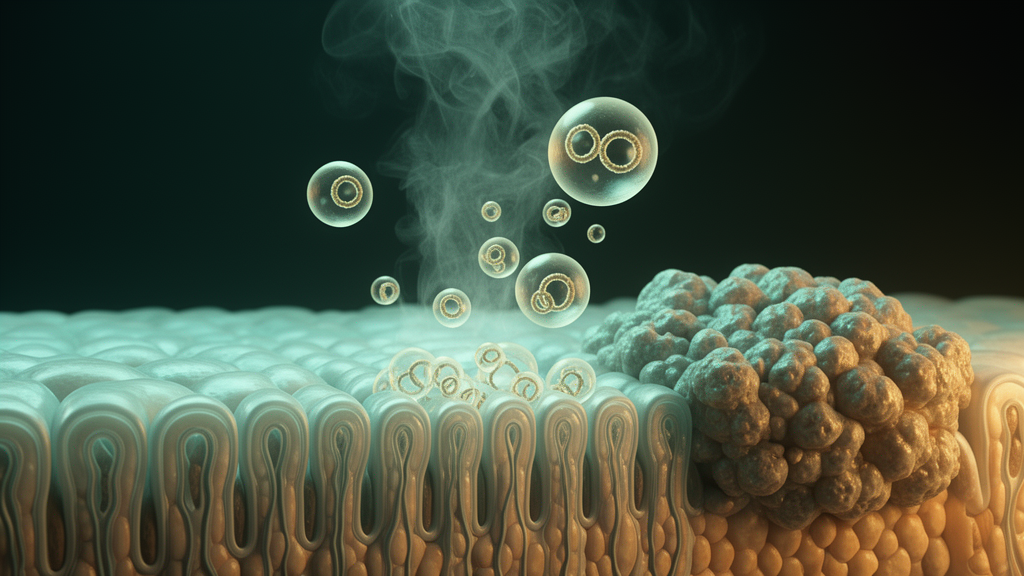
Cigarette smoke has long been established as the leading risk factor for bladder cancer, but the molecular chain of events that transforms smoke exposure into aggressive tumor behavior has remained only partially mapped. A new study published in Medical Oncology by Hao Geng, Yu Wu, Tao Zhang and colleagues at the Second Affiliated Hospital of Anhui Medical University, working with Zhaofeng Liang of Jiangsu University, now adds a striking link to that chain: a circular RNA molecule called circ55033, packaged inside tiny membrane-bound vesicles known as exosomes, appears to orchestrate how cigarette smoke pushes bladder cancer cells toward a more invasive, stem-like state.
Circular RNAs, or circRNAs, are a peculiar class of non-coding molecules. Unlike ordinary linear RNAs, their ends are covalently joined into a closed loop, which makes them extraordinarily stable and resistant to the exonucleases that rapidly degrade most RNA in cells and body fluids. That stability, combined with their frequent dysregulation in tumors, has made circRNAs a focus of intense cancer research over the past decade. The new work extends this interest into a specific and clinically important niche: bladder cancers driven by tobacco exposure.
The research team began by examining clinical samples from bladder cancer patients and found that circ55033 was highly expressed in tumors from patients who smoked, compared with matched adjacent non-cancerous tissue. This smoking-associated enrichment was the first clue that the molecule might not simply be a bystander in the disease but an active participant in smoke-related tumor biology. The finding builds on the group’s earlier studies, which showed that cigarette smoke extract can trigger epithelial-mesenchymal transition, or EMT, in bladder cells through signaling pathways such as ERK1/2, ERK5 and MAPK, and can also support cancer stem cell properties through Sonic Hedgehog signaling.
EMT is a developmental program that cancer cells hijack: epithelial cells, normally tightly anchored to their neighbors, lose their polarity and acquire the motile, spindle-shaped characteristics of mesenchymal cells. In tumors, this shift is strongly associated with invasion, metastasis and resistance to therapy. Closely intertwined with EMT is the acquisition of cancer stemness, the capacity of a subset of tumor cells to self-renew, seed new tumors and survive chemotherapy. The new study demonstrates that cigarette smoke induces both of these malignant programs in bladder cancer cells, and that exosome-transported circ55033 is a critical mediator of the effect.
Exosomes are nanoscale vesicles, typically 30 to 150 nanometers in diameter, released by virtually all cell types into the extracellular space. Far from being cellular refuse, they act as intercellular couriers, ferrying proteins, lipids and RNA cargo between cells, including between tumor cells and their microenvironment. In the experiments reported, bladder cancer cells treated with cigarette smoke extract released exosomes enriched in circ55033, and these smoke-conditioned vesicles, designated CSE-Ex, could transfer the molecule to recipient bladder cancer cells. Once delivered, the cargo promoted EMT and stem-like behavior in the receiving cells, effectively spreading the smoke-induced malignant phenotype through the tumor cell population.
To confirm that circ55033 was the functional ingredient rather than a passenger, the researchers used small interfering RNAs to knock down the molecule and observed that the smoke-driven enhancement of EMT markers and stemness traits was blunted. Conversely, elevating circ55033 reproduced the oncogenic effects. This gain- and loss-of-function logic, combined with the exosome transfer experiments, places circ55033 squarely in the causal pathway between smoke exposure and tumor aggressiveness.
The mechanistic centerpiece of the study is the identification of how circ55033 exerts its influence. Using complementary approaches, including wild-type and mutant binding constructs, the team showed that circ55033 acts as a molecular sponge for miR-1286, a microRNA. MicroRNAs are short regulatory RNAs that normally bind target messenger RNAs and suppress their translation or promote their degradation, often restraining tumor-promoting genes. By sequestering miR-1286, circ55033 relieves this restraint, allowing oncogenic programs downstream of the microRNA to proceed. This competing endogenous RNA mechanism, in which a circular RNA titrates away a suppressive microRNA, is a recurring theme in circRNA biology and has now been pinned down in the context of smoking-related bladder cancer.
Perhaps the most clinically tantalizing result concerns diagnosis. Because circRNAs are stable and exosomes protect their cargo from degradation in the bloodstream, circulating exosomal circRNAs are attractive candidates for liquid biopsy, the growing effort to detect and monitor cancer through a simple blood draw rather than invasive tissue sampling. The researchers found that exosomal circ55033 in patient serum exhibited preliminary diagnostic capacity, evaluated with receiver operating characteristic analysis, suggesting that the molecule could eventually serve as a non-invasive biomarker for identifying smoking-related bladder cancer. The authors are careful to frame this as a preliminary candidate; larger validation cohorts will be needed before such a test could approach clinical use, particularly given that bladder cancer surveillance already relies on urine-based markers and cystoscopy.
The therapeutic implications are equally noteworthy. If exosomal circ55033 is a genuine driver of smoke-induced EMT and stemness, then intercepting it, whether by blocking exosome uptake, silencing the circRNA with RNA-based therapeutics, or restoring miR-1286 activity, could in principle deprive smoke-exposed tumors of an important aggressiveness mechanism. Exosome-mediated delivery is itself being explored as a gene therapy platform for bladder cancer, which hints at a future in which the same vesicles that carry oncogenic signals could be engineered to carry therapeutic ones. Such strategies remain firmly preclinical, but the study provides a concrete molecular target around which they could be designed.
The work also fits into a broader re-evaluation of how environmental carcinogens act. Rather than merely damaging DNA directly, cigarette smoke appears to reshape the regulatory RNA landscape of urothelial cells and to weaponize the vesicular communication network between them, spreading pro-malignant instructions through the tissue. With bladder cancer carrying high morbidity and mortality worldwide, and smoking remaining its dominant modifiable cause, dissecting these RNA-mediated circuits offers both mechanistic insight and a pipeline of candidate biomarkers. For now, circ55033 joins a growing roster of exosomal circular RNAs implicated in urological malignancies, and its journey from laboratory observation to validated diagnostic and therapeutic tool will depend on the validation studies that must follow.
Subject of Research: The role of exosomal circular RNA circ55033 in cigarette smoke-induced bladder cancer progression via EMT and cancer stemness regulation
Article Title: Exosomal circ55033 promotes cigarette smoke-induced bladder cancer by modulating EMT and stem cell properties
Article References: Geng, H., Wu, Y., Ma, J., Zhang, W., Liang, Z., & Zhang, T. (2026). Exosomal circ55033 promotes cigarette smoke-induced bladder cancer by modulating EMT and stem cell properties. Medical Oncology, 43(11), Article 326. https://doi.org/10.1007/s12032-026-03444-x
Image Credits: AI Generated
DOI: 10.1007/s12032-026-03444-x
Keywords: bladder cancer, cigarette smoke, exosomes, circ55033, circular RNA, miR-1286, EMT, cancer stem cells, liquid biopsy, biomarker, Medical Oncology, non-coding RNA
Cite Scienmag News
Nathaniel Bowman. (October 9, 2026). Cigarette Smoke Sends a Cancer Signal: Exosomal circ55033 Drives Bladder Tumor Aggression. Scienmag. https://scienmag.com/cigarette-smoke-sends-a-cancer-signal-exosomal-circ55033-drives-bladder-tumor-aggression/
Nathaniel Bowman. "Cigarette Smoke Sends a Cancer Signal: Exosomal circ55033 Drives Bladder Tumor Aggression." Scienmag, 9 October 2026, https://scienmag.com/cigarette-smoke-sends-a-cancer-signal-exosomal-circ55033-drives-bladder-tumor-aggression/. Accessed 9 October 2026.
Nathaniel Bowman. "Cigarette Smoke Sends a Cancer Signal: Exosomal circ55033 Drives Bladder Tumor Aggression." Scienmag. October 9, 2026. https://scienmag.com/cigarette-smoke-sends-a-cancer-signal-exosomal-circ55033-drives-bladder-tumor-aggression/


