


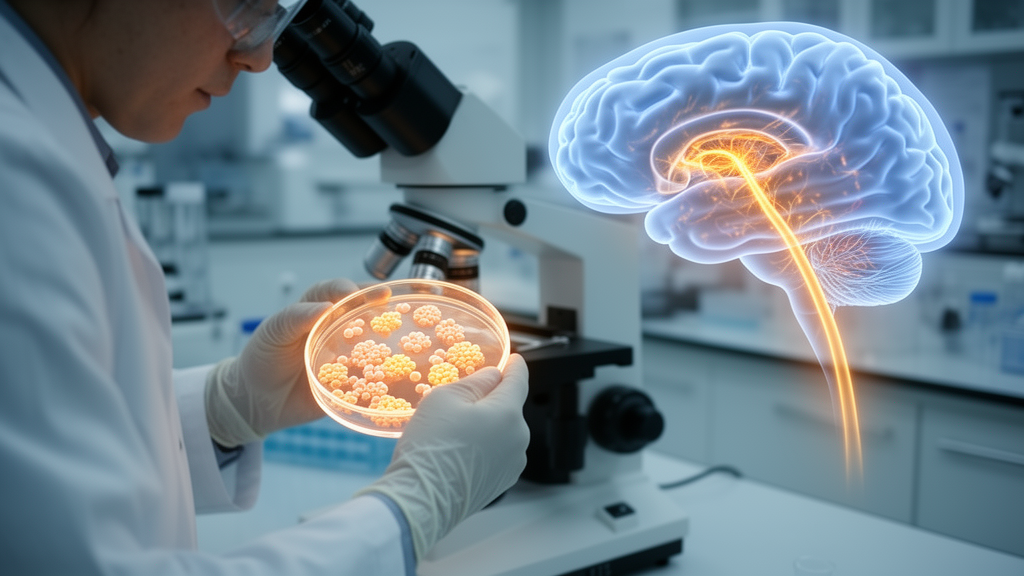
Parkinson’s disease has long been one of neuroscience’s most stubborn adversaries, but a new review published in npj Parkinson’s Disease suggests that the field of stem cell-based brain repair is entering a decisive phase. Written by Giulia Comini and Eilís Dowd of the University of Galway together with Mark Denham of Aarhus University Hospital, the review takes stock of a therapy that has just crossed a historic threshold: induced pluripotent stem cell-derived dopaminergic progenitor transplantation has received conditional approval in Japan for Parkinson’s disease, following the Kyoto Phase I/II trial. That milestone makes the question the authors tackle — how to make transplanted cells survive, mature and wire themselves into the brain — one of the most consequential in modern regenerative medicine.
The logic behind cell replacement therapy is elegantly simple. Parkinson’s disease is driven largely by the progressive loss of dopaminergic neurons in a small, darkly pigmented region of the midbrain called the substantia nigra. These neurons produce dopamine, the chemical messenger that allows the basal ganglia circuits to fine-tune movement. As they die, patients develop the hallmark tremor, rigidity, slowness of movement and postural instability that define the condition. Standard drugs can replenish dopamine for years, but they do not replace the lost cells, and their effectiveness wanes over time while side effects accumulate. Transplanting new dopamine-producing cells aims to rebuild the failing circuitry from within, offering something no current drug can: a potentially durable, self-regulating source of dopamine in the brain itself.
The idea is not new. Early trials in the 1980s and 1990s used tissue from aborted fetal brains as a source of developing dopamine neurons, and some patients experienced lasting benefit decades after surgery. But fetal tissue brought formidable problems: scarce and variable material, ethical controversy, and inconsistent clinical outcomes across trials. Pluripotent stem cells — embryonic stem cells and induced pluripotent stem cells, the latter created by reprogramming adult cells back to an embryonic-like state — promised a renewable, standardisable supply of dopaminergic neurons. That promise has now matured into clinical reality, with recent Phase I trials of both embryonic stem cell-derived and induced pluripotent stem cell-derived dopaminergic cells reporting encouraging early results, and the Japanese regulatory system granting conditional approval to the iPS cell approach after the Kyoto trial.
Yet the review’s authors are careful to temper the excitement. The early clinical studies demonstrate favourable safety and preliminary efficacy, but their interpretation is limited by open-label designs, meaning both patients and assessors knew that real cells had been transplanted. In a condition famous for the power of placebo — Parkinson’s patients given sham surgery have shown measurable improvements — open-label results must be read with caution. Larger, blinded trials will be needed before cell therapy can be declared truly efficacious. The conditional approval in Japan is best understood as a bold bet on a promising but still-proving technology, one whose ultimate value will be settled by the rigorous trials now in progress.
More troubling still are the findings from the laboratory. Preclinical evidence, the review reports, reveals variable graft survival and low differentiation efficiency. In plain terms, when researchers transplant dopaminergic progenitors into animal models, only a fraction of the cells survive the journey, and only a fraction of those that survive become the right kind of neuron. Differentiation efficiency — the proportion of a cell batch that reliably converts into authentic midbrain dopamine neurons — remains stubbornly low, meaning that much of each precious, laboriously manufactured dose may be biologically wasted. Variable survival means that the number of cells that actually take root in a patient’s brain can differ unpredictably from batch to batch and from brain to brain, making dosing as much an art as a science.
Why do so many transplanted cells die? The answer lies in the hostile environment of the diseased brain and the fragility of the cells themselves. Dopaminergic neurons are metabolically demanding, and their progenitors are vulnerable to the oxidative stress and inflammation that accompany neurodegeneration. The mechanical trauma of injection, the lack of the supportive tissue architecture these cells expect, and the absence of the trophic factors — the nourishing molecular signals — that developing neurons normally receive all conspire against engraftment. A transplanted progenitor must not merely survive; it must arrest its own proliferation to avoid tumour risk, exit the cell cycle, extend long axons along the correct pathways, release dopamine in a regulated fashion, and integrate into host circuits that can modulate its activity. Every one of those steps is a potential point of failure.
It is precisely these failure points that the review systematically examines, gathering the strategies proposed to improve survival, differentiation and functional integration of transplanted dopaminergic progenitors. The optimisation challenge begins long before the cells reach the operating theatre. In the culture dish, researchers can refine the differentiation protocols that coax pluripotent stem cells through the successive stages of neural development, purifying populations so that the graft contains a high proportion of genuine midbrain dopaminergic progenitors rather than a heterogeneous mix. Genetic and molecular engineering approaches can be used to harden the cells against stress, while careful control of maturation state at the time of transplantation — cells that are too immature risk overgrowth, cells that are too mature may not survive the procedure — is a critical balancing act.
Optimisation also extends to the moment of delivery and beyond. The surgical technique, the target site within the striatum, the vehicle in which cells are suspended, and the co-delivery of supportive trophic factors or anti-inflammatory agents all influence how many cells take hold and how well they connect. Biomaterials and scaffolds that mimic the brain’s extracellular environment are among the strategies being explored to cushion the graft and encourage axonal growth. The review’s central message is that engraftment is not a single problem but a chain of them, and that meaningful gains will come from optimising every link: producing purer and more uniform cell batches, protecting cells through the acute stress of transplantation, and creating a host brain environment in which the new neurons can flourish and functionally integrate rather than merely persist.
The stakes of this optimisation effort could hardly be higher. Millions of people worldwide live with Parkinson’s disease, and as populations age, that number is projected to grow sharply. Current therapies manage symptoms but do not halt the underlying degeneration. If the strategies catalogued in this review succeed — if graft survival becomes reliable, differentiation becomes efficient, and integration becomes predictable — cell replacement could shift from an experimental intervention for a few hundred trial participants to a genuine disease-modifying therapy. The conditional approval in Japan gives the field a regulatory foothold and a clinical proving ground; the laboratory work described by Comini, Denham and Dowd will determine whether that foothold becomes a foundation.
For now, the honest summary is one of cautious, hard-won optimism. The field has demonstrated that stem cell-derived dopamine neurons can be made safely, implanted in human brains, and tolerated by patients — achievements that would have sounded like science fiction a generation ago. What remains is engineering: the unglamorous, meticulous work of raising survival rates, sharpening differentiation protocols and ensuring that the new neurons do not just exist in the brain but truly belong there. The Galway and Aarhus review provides a roadmap for that work, funded in part by the Michael J. Fox Foundation for Parkinson’s Research and Science Foundation Ireland, and published open access so that researchers everywhere can build on it. The era of stem cell brain repair for Parkinson’s has begun; the task now is to make it work, cell by cell, connection by connection.
Subject of Research: Strategies to improve engraftment of stem cell-derived dopaminergic progenitors for brain repair in Parkinson's disease
Article Title: Stem cell-derived brain repair for Parkinson’s disease: a review of strategies to improve engraftment
Article References: Comini, G., Denham, M., & Dowd, E. (2026). Stem cell-derived brain repair for Parkinson’s disease: a review of strategies to improve engraftment. npj Parkinson's Disease. https://doi.org/10.1038/s41531-026-01574-7
Image Credits: AI Generated
DOI: 10.1038/s41531-026-01574-7
Keywords: Parkinson's disease, stem cells, induced pluripotent stem cells, dopaminergic neurons, cell transplantation, engraftment, neurodegeneration, regenerative medicine, clinical trials, brain repair, differentiation efficiency, graft survival
Cite Scienmag News
Cassandra Pierce. (October 9, 2026). Scientists Map the Road to Better Stem Cell Brain Repair for Parkinson’s Disease. Scienmag. https://scienmag.com/scientists-map-the-road-to-better-stem-cell-brain-repair-for-parkinsons-disease/
Cassandra Pierce. "Scientists Map the Road to Better Stem Cell Brain Repair for Parkinson’s Disease." Scienmag, 9 October 2026, https://scienmag.com/scientists-map-the-road-to-better-stem-cell-brain-repair-for-parkinsons-disease/. Accessed 9 October 2026.
Cassandra Pierce. "Scientists Map the Road to Better Stem Cell Brain Repair for Parkinson’s Disease." Scienmag. October 9, 2026. https://scienmag.com/scientists-map-the-road-to-better-stem-cell-brain-repair-for-parkinsons-disease/


