


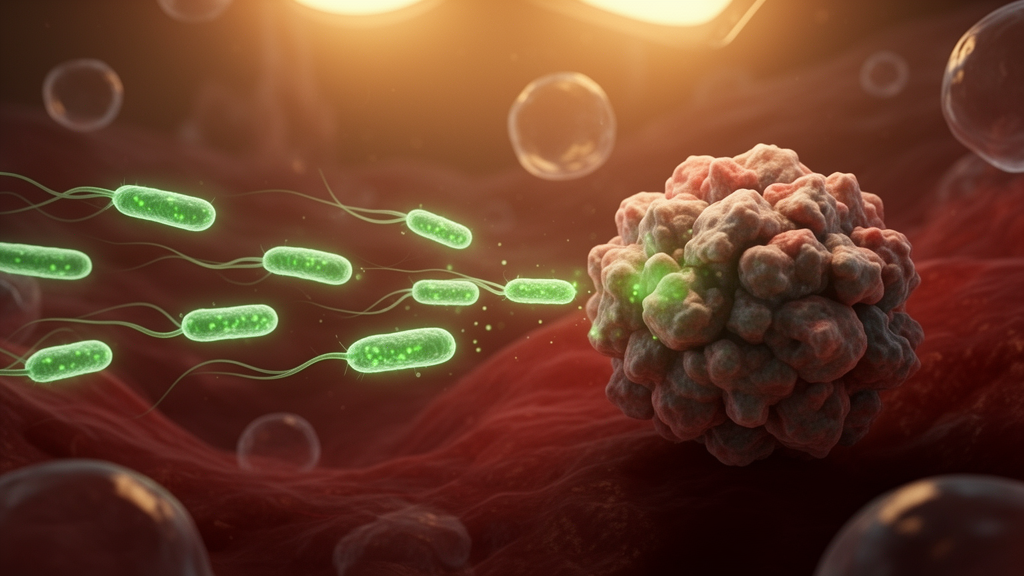
In a milestone for an approach that once sounded more like science fiction than oncology, the U.S. National Institutes of Health has awarded a five-year, $13.1 million grant to a team of researchers engineering therapeutic bacteria to fight one of the most stubborn forms of breast cancer. The effort, led by investigators at the University of Massachusetts Amherst in collaboration with Dr. Sarah Cheal of Weill Cornell Medicine, marks the first grant of its kind that the NIH has awarded for bacterial cancer therapies, and it targets drug-resistant triple-negative breast cancers, a disease that has long frustrated clinicians because it lacks the molecular handles that make other breast cancers vulnerable to targeted drugs.
Triple-negative breast cancer gets its name from what it does not have: the estrogen receptor, the progesterone receptor, and excess HER2 protein. Because none of these three drivers are present, the standard hormonal therapies and HER2-directed antibodies that transformed outcomes for many breast cancer patients simply do not work. Treatment therefore relies heavily on chemotherapy, and when tumors evolve resistance to those drugs, options narrow dramatically. It is precisely this critical gap in the treatment landscape that the new research program is designed to address, using Salmonella bacteria that have been genetically tamed and reprogrammed to serve as delivery vehicles and therapeutic agents in their own right.
The idea of using bacteria against cancer is not entirely new to science. Certain bacterial species, including Salmonella, have a natural affinity for tumors: they colonize the hostile, oxygen-poor cores of solid tumors where many conventional therapies struggle to penetrate, and they can be engineered to be nontoxic while retaining this tumor-homing behavior. What the new grant makes possible is a systematic, multi-pronged effort to turn that biological quirk into a suite of clinical tools, with the team designing nontoxic Salmonella strains capable of delivering three distinct treatment options against drug-resistant disease.
Dr. Cheal, an assistant professor of biological chemistry in radiology at Weill Cornell Medicine and a member of the Sandra and Edward Meyer Cancer Center, will receive $2.7 million of the funding to adapt the Salmonella delivery system for radiopharmaceutical therapy, often abbreviated RPT. Radiopharmaceutical therapy is one of the most elegant concepts in modern cancer medicine: rather than bathing the body in external radiation beams, it delivers radioactive metals directly to tumor cells, concentrating the cancer-killing dose at the disease site while sparing healthy tissue, which translates into far less toxicity than traditional radiation. The catch has always been delivery. The radioactive metals themselves cannot distinguish tumor from healthy tissue, and getting them to find the cancer has been the field’s central challenge.
This is where the bacteria come in, and the logic is delightfully counterintuitive. The Salmonella cannot physically carry the radioactive metals, but they can carry substances that attract them. In effect, the engineered bacteria seed themselves within the tumor and then raise a molecular flag, creating a homing beacon that draws the cancer-killing radioactivity to exactly where it is needed. The bacteria act as an address label for the lethal payload, converting a delivery problem that has limited radiopharmaceutical therapy into a two-step targeting strategy that exploits the bacteria’s own tumor-seeking instincts.
The same beacon strategy has a second life beyond treatment. The researchers will design their Salmonella to carry metals that emit a non-damaging form of beta radiation known as positrons, the signature signal detected by positron emission tomography, or PET, scanning. In practical terms, the bacterial colonies inside a tumor could light up on a PET image, giving physicians a real-time, noninvasive view of where the therapy vehicles have settled and how much of the tumor they have colonized. A single engineered platform that can both guide therapy and report on its own location represents exactly the kind of dual-purpose tool that imaging scientists have been pursuing for years.
The grant funds several complementary efforts beyond the radiopharmaceutical work, reflecting the breadth of the collaboration. In one arm, the team will use genetically engineered bacteria to decorate the surface of cancer cells with a protein derived from the virus that causes COVID-19. The goal is immunological sleight of hand: by stamping a familiar viral marker onto tumors that the immune system would otherwise ignore or tolerate, the approach essentially tricks the immune system into recognizing the cancer as infected tissue and mounting an attack against it, harnessing the potent memory and specificity of antiviral immunity for an entirely different target.
Another line of research builds on the team’s previous work combining bacteria and viruses to fight cancer in a new way. Instead of delivering drugs, the Salmonella will ferry cancer-killing viruses directly into tumors, unleashing them where they can infect and destroy malignant cells. The strategy is aimed squarely at the problem of resistance: tumors are remarkably adept at evolving defenses against any single drug, but a viral assault delivered from within the tumor microenvironment presents a fundamentally different challenge that resistant cells may not be equipped to survive. Alongside these therapeutic arms, the program will create a massive library of Salmonella genetics, a resource intended to enable the precise tailoring of the bacteria as vehicles for different therapies, and will refine light-emitting molecules that allow researchers to watch, in real time, how immune cells behave in response to the various Salmonella-based treatments.
Behind the science stands a deep bench of collaborators. Dr. Cheal is working with UMass Amherst investigators Dr. Neil Forbes, a professor of chemical and biomolecular engineering; Dr. Lisa M. Minter, a professor of veterinary and animal sciences; Dr. Lauren Andrews, an associate professor of chemical and biomolecular engineering; Dr. Ashish Kulkarni, a professor of chemical and biomolecular engineering; and Dr. Joseph Jerry, a professor emeritus of veterinary and animal sciences. The pairing of a radiopharmaceutical specialist at a major cancer center with a team of bacterial engineers and immunologists at a flagship public research university reflects how modern cancer research increasingly crosses disciplinary and institutional boundaries, pooling expertise in microbiology, immunology, radiochemistry, and tumor biology around a single engineered platform.
For patients with triple-negative breast cancer that has stopped responding to chemotherapy, the stakes of this work could hardly be higher, and the NIH’s decision to fund bacterial cancer therapies at this scale signals a growing institutional confidence that engineered microbes are ready to move from promising curiosities toward serious therapeutic candidates. Much work remains between the laboratory and the clinic, and the five-year timeline of the grant reflects the deliberate pace of turning nontoxic bacterial strains into reliable medical tools. But the vision animating the program is clear: bacteria that home in on tumors, flag them for radioactive destruction, illuminate themselves for imaging, disguise them for the immune system, and smuggle in cancer-killing viruses, all built from the same programmable biological chassis. If the team succeeds, one of medicine’s oldest enemies, the pathogenic bacterium, may be rewritten into one of its most versatile allies against one of its most difficult cancers.
Subject of Research: Engineered Salmonella bacteria as delivery vehicles for radiopharmaceutical, viral, and immune-based therapies against drug-resistant triple-negative breast cancer
Article Title: NIH grant awarded to treat breast cancer with bacteria
Article References: NIH grant awarded to treat breast cancer with bacteria. (n.d.). Original publication
Image Credits: AI Generated
DOI: Not provided
Keywords: Salmonella, triple-negative breast cancer, radiopharmaceutical therapy, NIH grant, bacterial cancer therapy, PET imaging, immunotherapy, oncolytic viruses, Weill Cornell Medicine, UMass Amherst, drug resistance, genetic engineering
Cite Scienmag News
Nathaniel Bowman. (October 9, 2026). NIH Backs $13.1 Million Effort to Attack Breast Cancer with Engineered Salmonella. Scienmag. https://scienmag.com/nih-backs-13-1-million-effort-to-attack-breast-cancer-with-engineered-salmonella/
Nathaniel Bowman. "NIH Backs $13.1 Million Effort to Attack Breast Cancer with Engineered Salmonella." Scienmag, 9 October 2026, https://scienmag.com/nih-backs-13-1-million-effort-to-attack-breast-cancer-with-engineered-salmonella/. Accessed 9 October 2026.
Nathaniel Bowman. "NIH Backs $13.1 Million Effort to Attack Breast Cancer with Engineered Salmonella." Scienmag. October 9, 2026. https://scienmag.com/nih-backs-13-1-million-effort-to-attack-breast-cancer-with-engineered-salmonella/


