


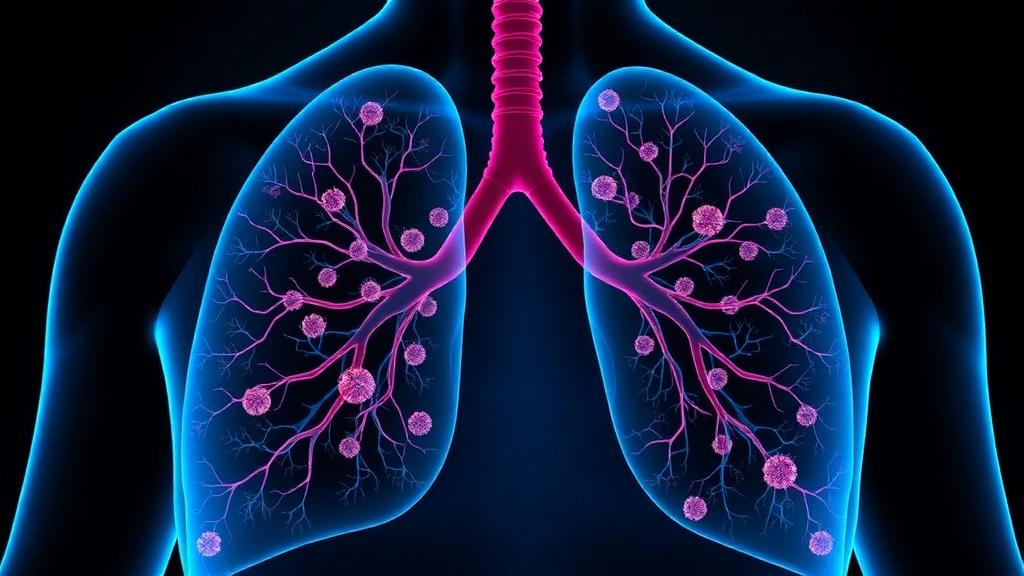
Lung cancer remains the deadliest malignancy worldwide, and the vast majority of those deaths come from non-small cell lung cancer, or NSCLC, an umbrella term covering lung adenocarcinoma, squamous cell carcinoma, and large cell carcinoma. While much of the past two decades of progress has centred on genetic mutations and immunotherapy, a quieter revolution has been building in cancer metabolism research. A comprehensive review published in the Journal of Translational Medicine by Shengze Chen, Haoyang Zhang, Qiang Luo, and colleagues at Union Hospital, Tongji Medical College of Huazhong University of Science and Technology, now pulls together the evidence that lipids, the fatty molecules long treated as mere cellular fuel and structural padding, are in fact central players in how NSCLC begins, spreads, resists treatment, and manipulates the immune system around it.
The core idea is called lipid metabolic reprogramming. Healthy cells take up and synthesise fats in carefully balanced amounts, using them to build membranes, store energy, and send signals. Cancer cells throw that balance into disarray. To divide relentlessly, a tumour cell must manufacture enormous quantities of new membranes, and the raw material for those membranes is fatty acids and cholesterol. NSCLC cells therefore crank up both the import of lipids from their surroundings and their own internal fat factories, a process known as de novo lipogenesis. The review details how this heightened lipid metabolism satisfies the biosynthetic and energetic demands of the tumour while simultaneously generating signalling molecules that remodel the tumour microenvironment, the complex neighbourhood of immune cells, fibroblasts, and blood vessels in which the cancer lives.
At the molecular level, the machinery of this reprogramming is intricate. Glucose and glutamine that would otherwise be burned for energy are diverted into citrate, which the enzyme ATP citrate lyase, or ACLY, cleaves in the cytoplasm to supply acetyl-CoA for fatty acid synthesis. Acetyl-CoA carboxylase, ACC, then commits this substrate to the fatty acid pathway, and fatty acid synthase, FASN, assembles the growing carbon chains. The master transcriptional regulator behind much of this activity is SREBP, the sterol regulatory element-binding protein, whose activation is promoted by well-known oncogenic drivers in lung cancer, including mutant KRAS, EGFR, ALK, and the transcription factor MYC. Alongside synthesis, tumour cells ramp up lipid uptake through surface proteins such as CD36, the fatty acid transporter family FATP, and receptors for low-density lipoprotein, then stash the cargo in lipid droplets, organelles that act as intracellular fat warehouses. When energy is scarce or the cell is under stress, fatty acid oxidation, driven by enzymes such as carnitine palmitoyltransferase 1, CPT1, releases that stored energy inside mitochondria.
What makes the picture especially compelling is that different histological and molecular subtypes of NSCLC lean on lipids in distinct ways. Lung adenocarcinoma, the most common subtype, frequently shows enhanced de novo lipogenesis tied to KRAS and LKB1 mutations, while squamous cell carcinoma displays its own lipid signatures. The review also highlights how lipid metabolism intersects with resistance to targeted therapies: tyrosine kinase inhibitors that block EGFR or ALK, for example, can be blunted when tumour cells compensate by shifting their energy supply toward fatty acid oxidation. Lipid droplets can also buffer cytotoxic stress, and enzymes such as stearoyl-CoA desaturase 1, SCD1, which converts saturated into monounsaturated fatty acids, help tumour cells manage the lipotoxic and oxidative stresses that chemotherapy and radiotherapy inflict. In other words, the lipid network is not just a growth engine but a survival kit.
Perhaps the most striking section of the review concerns the tumour microenvironment. Lipids do not stay politely inside tumour cells. Tumours release fatty acids, prostaglandins, leukotrienes, and other lipid mediators that re-educate nearly every cell type around them. Tumour-associated macrophages, for instance, can be pushed toward a pro-tumour phenotype by lipid signals such as prostaglandin E2, and in malignant pleural effusions, foamy macrophages laden with ingested lipid accumulate and dampen antitumour immunity. Cancer-associated fibroblasts, meanwhile, can donate lipids to tumour cells, acting as metabolic supply depots. Myeloid-derived suppressor cells exploit fatty acid oxidation to fuel their immunosuppressive activity, and even dendritic cells, the sentinels that launch T cell responses, can be paralysed by lipid accumulation that disrupts their antigen-presenting machinery.
The consequences for T cells, the workhorses of modern cancer immunotherapy, are particularly sobering. The review describes how high lipid levels in the microenvironment drive CD8-positive tumour-infiltrating lymphocytes into an exhausted state, characterised by loss of effector function and upregulation of inhibitory receptors such as PD-1, TIM-3, and LAG-3. Regulatory T cells, by contrast, can thrive on fatty acid oxidation, giving them a metabolic advantage over the antitumour T cells they suppress. Cholesterol and its metabolites add further layers of complexity, with certain cholesterol pools supporting T cell function while oxysterols and related derivatives can promote immune evasion. This metabolic crosstalk offers a mechanistic explanation for why immune checkpoint inhibitors, which have transformed NSCLC treatment, still fail in a substantial fraction of patients: the lipid-rich microenvironment itself may be sabotaging the immune response the drugs are meant to unleash.
All of this biology points toward a tempting therapeutic strategy: starve the tumour of its lipid advantage. Preclinical studies have produced encouraging results with inhibitors of FASN, SCD1, ACC, ACLY, and CPT1, as well as blockers of lipid uptake through CD36 and inhibitors of the mevalonate pathway that supplies cholesterol and lipid-modified signalling proteins. Some of these approaches have also shown synergy with EGFR tyrosine kinase inhibitors and with immune checkpoint blockade in laboratory models, raising hopes for rational combination regimens. The review notes preliminary clinical signals as well. In a phase I study of an FASN inhibitor, 64 percent of patients with KRAS-mutant NSCLC remained progression-free for more than twelve weeks on monotherapy, compared with none of the six patients with KRAS-wildtype disease, a statistically significant difference that hints at a biomarker-defined patient population worth pursuing.
Yet the authors are refreshingly candid about the gap between promise and practice. No lipid-targeted therapy has so far demonstrated clinically meaningful efficacy in unselected NSCLC patients. The reasons are fundamental rather than incidental. Lipid metabolism is essential to every cell in the body, so systemic inhibition risks toxicity to the liver, the immune system, and other lipid-dependent tissues, a problem of target selectivity. Tumour-type specificity matters too: strategies that work in adenocarcinoma may fail in squamous disease, and metabolic redundancy allows tumours to reroute around blocked pathways. Clinical validation has largely been confined to specific molecular subtypes, and the field still lacks the biomarkers needed to identify which patients will benefit from which metabolic intervention. The authors argue that realising the therapeutic potential of lipid targeting will require closing these gaps in selectivity, specificity, and validation, guided by a deeper map of the lipid metabolic networks operating inside individual tumours.
Technology is beginning to provide that map. Advances in mass spectrometry, including gas chromatography-mass spectrometry and high-performance liquid chromatography-tandem mass spectrometry, now allow researchers to profile hundreds of lipid species in tumour samples, while single-cell approaches are revealing how lipid handling differs between individual tumour cells and their neighbours. Such tools could eventually yield lipid biomarkers that predict immunotherapy response, identify metabolic vulnerabilities, and monitor treatment resistance in real time. The review also points to the potential of repurposing existing drugs that touch lipid pathways, from statins that inhibit HMG-CoA reductase to agents affecting lipid signalling, though it cautions that epidemiological signals must be tested in rigorous prospective trials before any clinical recommendations change.
The broader message of this review is that the Warburg-era focus on glucose, while enormously productive, captured only half of the metabolic story of cancer. Lipids are simultaneously fuel, building material, signalling currency, and a language by which tumours speak to their surroundings. In NSCLC, that language appears to shape immune escape, therapy resistance, and disease progression in ways that are only now coming into focus. If the field can convert its extensive preclinical rationale into subtype-specific, biomarker-guided clinical strategies, lipid metabolic reprogramming may finally move from the pages of review articles into the oncology clinic, offering new options for patients whose tumours have exhausted the current arsenal.
Subject of Research: Lipid metabolic reprogramming and its role in non-small cell lung cancer progression, tumour microenvironment crosstalk, and therapeutic targeting
Article Title: Lipid metabolic reprogramming in NSCLC: mechanisms, microenvironment crosstalk, and therapeutic opportunities
Article References: Chen, S., Zhang, H., Luo, Q., You, S., Du, P., Chen, L., Zhang, D., & Meng, R. (2026). Lipid metabolic reprogramming in NSCLC: mechanisms, microenvironment crosstalk, and therapeutic opportunities. Journal of Translational Medicine. https://doi.org/10.1186/s12967-026-08854-z
Image Credits: AI Generated
DOI: 10.1186/s12967-026-08854-z
Keywords: non-small cell lung cancer, lipid metabolism, metabolic reprogramming, tumour microenvironment, fatty acid oxidation, de novo lipogenesis, FASN inhibitor, immune checkpoint inhibitors, tumour-associated macrophages, KRAS mutation, therapy resistance, cancer metabolism
Cite Scienmag News
Nathaniel Bowman. (October 7, 2026). How Lung Cancer Rewires Fat Metabolism to Grow, Spread, and Evade Treatment. Scienmag. https://scienmag.com/how-lung-cancer-rewires-fat-metabolism-to-grow-spread-and-evade-treatment/
Nathaniel Bowman. "How Lung Cancer Rewires Fat Metabolism to Grow, Spread, and Evade Treatment." Scienmag, 7 October 2026, https://scienmag.com/how-lung-cancer-rewires-fat-metabolism-to-grow-spread-and-evade-treatment/. Accessed 7 October 2026.
Nathaniel Bowman. "How Lung Cancer Rewires Fat Metabolism to Grow, Spread, and Evade Treatment." Scienmag. October 7, 2026. https://scienmag.com/how-lung-cancer-rewires-fat-metabolism-to-grow-spread-and-evade-treatment/


