


Iron deficiency remains the most widespread micronutrient shortfall on the planet, and one of the most stubborn. The problem is not simply that people fail to eat enough iron; it is that much of the iron in plant-based diets never actually reaches the bloodstream. Non-heme iron, the form found in beans, grains and vegetables, is often absorbed at rates below ten percent, and the surrounding food matrix can make things dramatically better or worse. A new study published in Current Research in Food Science has now mapped exactly how that matrix behaves when whole pulse flours are transformed into ready-to-eat puffed snacks, and the results point to a single crop as a standout candidate for fighting iron deficiency at scale.
The research team, led by Mursalin Sajib and Lutz Grossmann at the University of Massachusetts Amherst together with USDA collaborators including Raymond Glahn and Karen Cichy, took five pulse flours through an identical low-moisture extrusion process: a Manteca-type yellow bean called USDA Yellowjacket, a commercial navy bean mix, California Blackeye 77 cowpea, and commercially purchased chickpea and red lentil flours. The goal was twofold. First, to test whether unrefined whole-pulse flours, with all their inherent chemical complexity, could be reliably extruded into expanded snacks. Second, to determine whether the type of pulse and the type of processing changed how much iron the human intestine could actually take up.
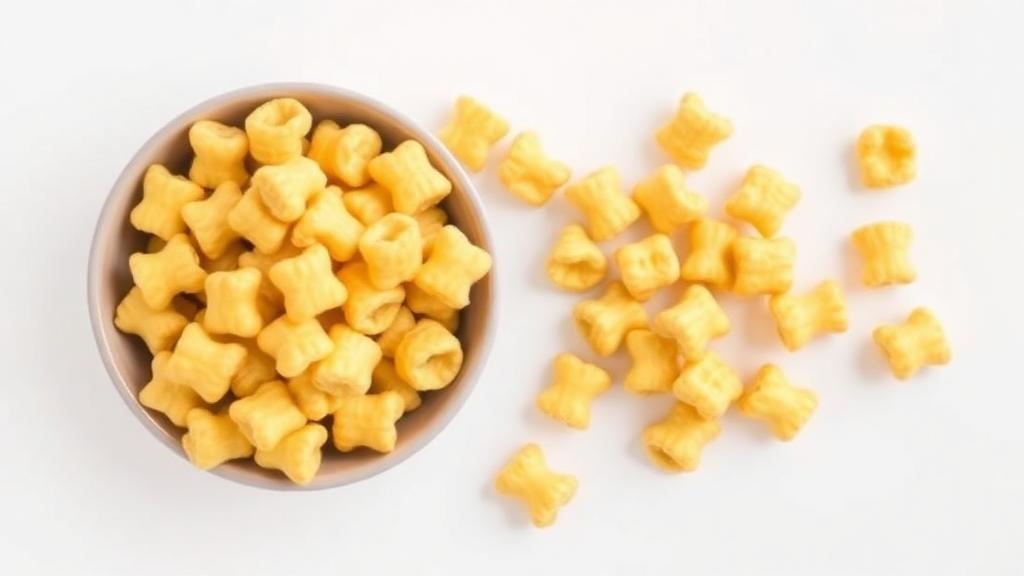
On the processing side, the answer was a qualified yes. Using a co-rotating twin-screw extruder with a barrel temperature profile reaching 160 degrees Celsius and a feed moisture of 20 percent, all five flours produced puffed extrudates, but with strikingly different properties. Specific mechanical energy and die pressure varied significantly across flours, reflecting differences in starch composition and lipid content. Chickpea flour, with roughly six percent fat acting as an internal lubricant, expanded the least and produced the hardest puffs, with an expansion ratio of only 2.44 and a hardness of nearly 25 newtons. Red lentil, with the lowest fiber content, expanded the most at 6.44 and yielded the softest product. Yellow and navy bean puffs landed in a favorable middle ground, with expansion ratios above 4.3, hardness values around 2.2 to 2.5 newtons, and relatively low water activity, performing comparably to red lentil, a pulse already established in commercial puffed snacks.
The nutritional story proved even more interesting. Total iron concentrations were highest in the yellow bean, navy bean and cowpea flours, and processing into porridge or puffs barely changed them. But iron content alone told almost nothing about bioavailability. When the researchers ran each product through an in vitro digestion followed by the Caco-2 cell bioassay, a validated model in which intestinal cells respond to iron uptake by producing ferritin, the differences were dramatic. Yellow bean porridges and puffs produced ferritin responses of roughly 30 nanograms per milligram of cell protein, far above every other pulse product and approaching, though not matching, the 44 to 49 nanograms per milligram seen with cooked ground beef and a plant-based burger reference. Navy bean products came second. Cowpea products, despite their high iron content, performed worst of all.
The explanation lay in the chemistry of inhibitors rather than the abundance of iron. Phytic acid, the classic antinutrient that chelates ferric iron in the gut, was reduced by both boiling and extrusion, with puffs showing greater reductions than porridges. All puffed products achieved phytate-to-iron molar ratios between 6 and 9, below the threshold of 10 associated with meaningful inhibition. Lectin activity, a safety concern in undercooked beans, was undetectable in all porridges and in most puffs, confirming that both processing routes rendered the products safe. Yet these improvements applied broadly and could not explain why yellow bean so clearly outperformed the rest.
The decisive factor turned out to be flavonoids, the polyphenols concentrated in bean seed coats. Flavonoids split into two camps with opposite effects on iron uptake. Enhancers such as kaempferol and its glycosides, along with epicatechin, keep iron soluble and available for transport. Inhibitors, particularly galloylated compounds like myricetin, delphinidin and gallocatechin derivatives, form stable, non-transportable iron complexes. The dose-response is brutally asymmetric: previous work has shown that adding just 10 percent myricetin to an epicatechin mixture cuts iron bioavailability by about 65 percent. Yellow bean flour was rich in kaempferol and its glucosides, with over 770 nanomoles per gram of kaempferol 3-glucoside, while containing essentially no inhibitory flavonoids. Cowpea, by contrast, carried a full payload of galloylated inhibitors, including myricetin 3-glucoside, delphinidin 3-glucoside and petunidin 3-glucoside, which persisted at elevated levels even after processing.
Statistical analysis confirmed the hierarchy of effects. Spearman correlation and principal component analysis converged on the same conclusion: cellular iron uptake correlated negatively with summed inhibitory flavonoids (rho of minus 0.75), zinc (minus 0.72) and phytic acid (minus 0.62), while total iron showed no significant correlation at all (rho of 0.12). The summed enhancer flavonoids were likewise uncorrelated with uptake, suggesting that their benefit is realized only when inhibitors are nearly absent, as they are in yellow bean. Extrusion itself provided a modest additional boost over porridge processing, most visibly for chickpea and red lentil, likely through disruption of cotyledon cell walls that otherwise shield iron from digestive enzymes.
The practical implications are considerable. A standard snack serving of 30 to 50 grams of yellow bean puffs could make a nutritionally relevant contribution to daily iron intake, which ranges from 8 milligrams for adult men to 27 milligrams during pregnancy, assuming the in vitro findings translate to human absorption. Beyond standalone snacks, the authors calculate that incorporating roughly 35 percent yellow bean flour into plant-based meat alternatives would deliver iron comparable to lean meat on a weight-for-weight basis, while also contributing about 17 percent protein and 20 percent dietary fiber. Because the flour is unrefined, no fractionation side streams are generated, aligning the approach with sustainability goals. The Manteca yellow bean market class has already been formulated into a pasta with higher iron bioavailability than enriched wheat or commercial chickpea and lentil pastas, though the authors caution that not all yellow bean market classes share these favorable traits.
Important caveats remain. The Caco-2 model measures cellular iron uptake rather than transepithelial transport or true fractional absorption in humans, and whole-meal context, iron status of the consumer, and unmeasured matrix components all influence real-world outcomes. The extrusion trials were limited to two independent replicates per flour, and the phenolic profiling was targeted rather than untargeted. The authors call for animal and human intervention studies, broader compositional screening, and testing of yellow bean ingredients within complete meals. Still, the central message stands: when it comes to plant-based iron, the company iron keeps inside the food matrix matters more than how much of it is there, and breeding and processing strategies that minimize inhibitory flavonoids while preserving enhancers offer a scalable, evidence-based route to better iron nutrition.
Subject of Research: Iron bioavailability in extruded whole-pulse snack foods
Article Title: Matrix-controlled iron bioavailability in unrefined whole-pulse low-moisture extrudates
Article References: Sajib, M., Wiesinger, J., Xie, H., Cichy, K., Hooper, S., Howe, K., Glahn, R., & Grossmann, L. (2026). Matrix-controlled iron bioavailability in unrefined whole-pulse low-moisture extrudates. Current Research in Food Science, Article 101589. https://doi.org/10.1016/j.crfs.2026.101589
Image Credits: AI Generated
DOI: 10.1016/j.crfs.2026.101589
Keywords: iron bioavailability, yellow bean, pulses, extrusion, phytic acid, flavonoids, Caco-2 cells, plant-based nutrition, iron deficiency, food matrix, snack foods, non-heme iron
Cite Scienmag News
Alan Morgan. (October 1, 2026). Yellow Bean Puffs Turn Snacks Into a Surprisingly Good Source of Iron. Scienmag. https://scienmag.com/yellow-bean-puffs-turn-snacks-into-a-surprisingly-good-source-of-iron/
Alan Morgan. "Yellow Bean Puffs Turn Snacks Into a Surprisingly Good Source of Iron." Scienmag, 1 October 2026, https://scienmag.com/yellow-bean-puffs-turn-snacks-into-a-surprisingly-good-source-of-iron/. Accessed 1 October 2026.
Alan Morgan. "Yellow Bean Puffs Turn Snacks Into a Surprisingly Good Source of Iron." Scienmag. October 1, 2026. https://scienmag.com/yellow-bean-puffs-turn-snacks-into-a-surprisingly-good-source-of-iron/


