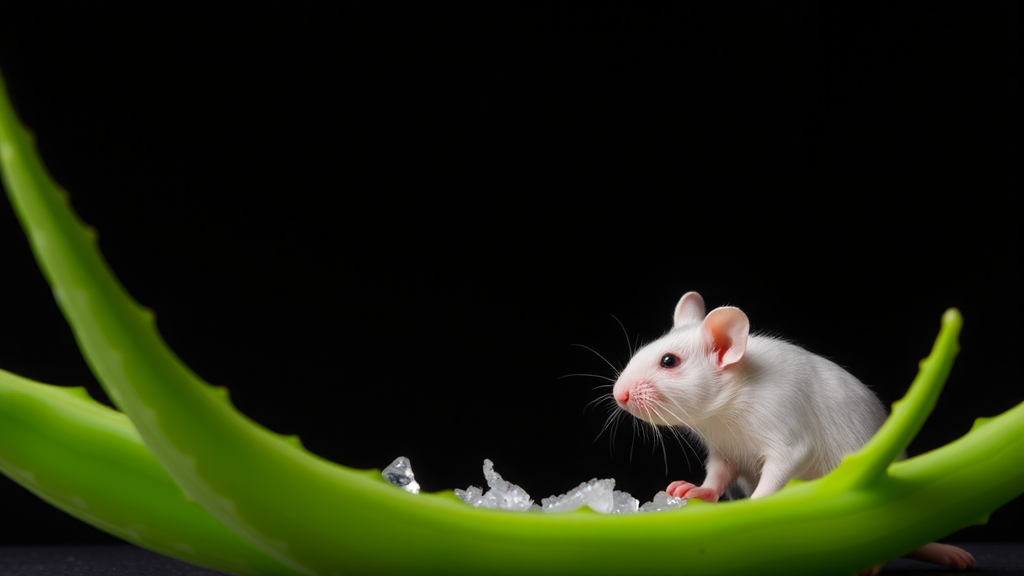
A humble succulent long celebrated in folk medicine may hold a genuine clue to protecting the aging brain. New research published in the journal 3 Biotech reports that acemannan, a complex sugar molecule extracted from Aloe vera, substantially reversed memory and motor deficits in a rat model of cognitive impairment. The findings, which combine behavioral testing, an extensive panel of biochemical assays, and computational molecular docking, position this little-studied polysaccharide as a candidate worth serious attention in the search for neuroprotective therapies.
Cognitive impairment is one of the defining features of neurodegenerative disorders such as Alzheimer’s disease, and it arises from a convergence of damaging processes rather than a single failure point. The research team, led by Sami I. Alzarea of Jouf University in Saudi Arabia together with colleagues at several Saudi and Indian institutions, focused on four intertwined culprits: dysfunction of the cholinergic neurotransmitter system, oxidative stress, neuroinflammation, and the loss of neuroplasticity, the brain’s capacity to rewire and adapt. Because acemannan, an acetylated beta-(1→4)-linked polymannan, is already known to possess antioxidant and anti-inflammatory properties, the investigators reasoned that it might counter several of these processes at once.
To test that idea, the researchers used Wistar rats treated with scopolamine, a drug that blocks acetylcholine receptors and reliably produces learning and memory deficits that mirror aspects of Alzheimer’s pathology. Scopolamine models are widely used in preclinical dementia research precisely because the compound rapidly disrupts cholinergic signaling, elevates oxidative damage, and triggers inflammatory responses in the hippocampus and cortex. Animals in the study were assessed with a battery of established behavioral instruments: the Morris Water Maze for spatial learning and memory, the Y-maze for working memory, the Novel Object Recognition test for recognition memory, and the rotarod test for motor coordination.
The results were striking. Rats given scopolamine performed poorly across the behavioral suite, showing impaired navigation, reduced spontaneous alternation, diminished recognition of novel objects, and compromised motor performance. Biochemical analysis of brain tissue confirmed the expected damage: distorted levels of the neurotransmitters acetylcholine, GABA, dopamine, serotonin, and glutamate; disturbed activity of the cholinergic enzymes acetylcholinesterase and choline acetyltransferase; elevated malondialdehyde and nitric oxide, both hallmarks of oxidative injury; and surging levels of the pro-inflammatory cytokines IL-1β, IL-6, and TNF-α. Histopathology revealed degenerating pyramidal neurons, the workhorse cells of memory circuitry.
Acemannan treatment turned much of this picture around. Treated animals improved their performance in the water maze, Y-maze, and object recognition tasks, and recovered motor function on the rotarod. At the molecular level, the polysaccharide restored neurotransmitter balance, normalized the cholinergic enzymes, and reduced oxidative stress markers while boosting the antioxidant defenses of the brain, including superoxide dismutase, catalase, and reduced glutathione. Inflammatory cytokine levels fell, and the cell-death executor caspase-3 was decreased. Perhaps most strikingly, acemannan increased the expression of neuroplasticity markers, brain-derived neurotrophic factor, CREB, SIRT1, and PGC-1α, a signaling quartet central to learning, memory consolidation, and neuronal resilience.
The histological evidence reinforced the biochemical story. Brains from acemannan-treated rats showed substantial neuroprotection, with pyramidal cells appearing mostly normal under the microscope, a sharp contrast to the degeneration observed in the scopolamine-only group. The researchers also demonstrated an inhibitory effect of acemannan on acetylcholinesterase in vitro, the same enzymatic target exploited by several approved Alzheimer’s drugs, suggesting a plausible mechanism for the restored acetylcholine signaling seen in vivo.
To probe how acemannan might engage its molecular targets directly, the team turned to GlycoTorch Vina, a carbohydrate-specific molecular docking tool. Carbohydrates pose unusual challenges for conventional docking software because of their flexibility and complex hydrogen-bonding patterns, making a glycan-specialized approach particularly appropriate. The docking results showed that acemannan binds favorably to the muscarinic acetylcholine receptor CHRM1, with binding energies ranging from −6.1 to −5.4 kcal/mol, the strongest interaction observed. Weaker but still favorable affinities were predicted for brain-derived neurotrophic factor (−4.8 to −4.4 kcal/mol) and TNF-α (−4.3 to −3.0 kcal/mol), hinting that a single sugar polymer could simultaneously touch cholinergic, neurotrophic, and inflammatory pathways.
What makes the study notable is its breadth. Rather than testing a single endpoint, the authors connected behavior, neurotransmitter chemistry, enzymology, oxidative stress, cytokine biology, apoptosis, neuroplasticity signaling, tissue pathology, and computational structural biology into one coherent picture. The convergence of evidence from so many angles strengthens the case that acemannan’s effect is not an artifact of any one assay but reflects genuine, multi-mechanism neuroprotection in this animal model. The work was funded by the Deanship of Graduate Studies and Scientific Research at Jouf University, and the authors report no conflicts of interest.
Acemannan itself has an interesting history. It is the principal bioactive polysaccharide of Aloe vera gel, and earlier toxicological studies dating back decades evaluated injectable formulations in mice, rats, and dogs with acceptable safety profiles. More recent work has explored its role in wound healing, immune modulation, and even diabetes, where it attenuated inflammatory cytokines and apoptosis in a rat model. The new findings extend this portfolio into neuroscience, a field where naturally sourced bioactive polysaccharides are attracting growing interest as sources of low-toxicity, multi-target protective agents.
Caution is nonetheless warranted before celebrating a brain-boosting aloe remedy. The evidence remains preclinical, derived from a chemically induced model in rats rather than from human patients with Alzheimer’s or other dementias, and questions of dosage, bioavailability, blood-brain barrier penetration, and long-term safety in the context of cognitive disease remain open. Scopolamine-induced impairment, while useful, captures only a slice of the pathology of human neurodegeneration. Still, the study offers a rigorous proof of concept that a sugar molecule from a common succulent can shield the brain through cholinergic, antioxidant, anti-inflammatory, and neuroplastic mechanisms at once. If future studies confirm and extend these results, acemannan could join a promising class of natural polysaccharides under investigation for protecting the aging mind.
Subject of Research: Neuroprotective effects of the Aloe vera polysaccharide acemannan against scopolamine-induced cognitive impairment in rats
Article Title: Acemannan as a potential therapeutic agent for cognitive impairment via modulation of cholinergic, oxidative, and inflammatory pathways: in vivo and in silico evidence
Article References: Alzarea, S. I., Alsahli, T. G., Alzarea, A. I., Almutairi, M., Alquraini, A., Zafar, A., & Sayyed, N. (2026). Acemannan as a potential therapeutic agent for cognitive impairment via modulation of cholinergic, oxidative, and inflammatory pathways: in vivo and in silico evidence. 3 Biotech, 16(10), Article 439. https://doi.org/10.1007/s13205-026-05068-4
Image Credits: AI Generated
DOI: 10.1007/s13205-026-05068-4
Keywords: acemannan, Aloe vera, cognitive impairment, neuroprotection, scopolamine, oxidative stress, neuroinflammation, molecular docking, Alzheimer's disease, BDNF, acetylcholinesterase, Wistar rats
Cite Scienmag News
Cassandra Pierce. (September 22, 2026). Aloe Vera Sugar Molecule Shows Promise Against Memory Loss in Rat Study. Scienmag. https://scienmag.com/aloe-vera-sugar-molecule-shows-promise-against-memory-loss-in-rat-study/
Cassandra Pierce. "Aloe Vera Sugar Molecule Shows Promise Against Memory Loss in Rat Study." Scienmag, 22 September 2026, https://scienmag.com/aloe-vera-sugar-molecule-shows-promise-against-memory-loss-in-rat-study/. Accessed 22 September 2026.
Cassandra Pierce. "Aloe Vera Sugar Molecule Shows Promise Against Memory Loss in Rat Study." Scienmag. September 22, 2026. https://scienmag.com/aloe-vera-sugar-molecule-shows-promise-against-memory-loss-in-rat-study/