


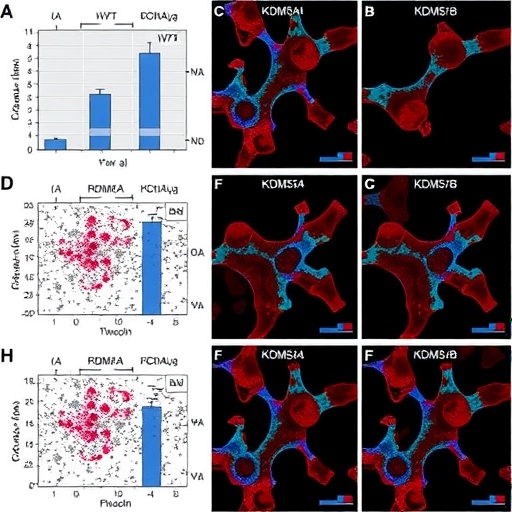
Zhou, Fiches, Wu and colleagues report that blocking the chromatin-regulating enzymes KDM5A and KDM5B can strengthen antitumor innate immune responses in B-cell lymphomas associated with human herpesvirus 8, also known as Kaposi’s sarcoma-associated herpesvirus, or HHV-8/KSHV. The findings, published in npj Viruses in 2026, place epigenetic control at the center of the continuing struggle between oncogenic herpesviruses and the immune system. Rather than focusing solely on the virus or the malignant B cell, the study highlights how enzymes that remodel the accessibility and activity of cellular genes may determine whether immune defenses remain silent or become capable of recognizing and attacking infected tumor cells. The work adds to growing evidence that cancer treatments aimed at chromatin regulators can have consequences extending beyond direct effects on tumor-cell growth.
HHV-8/KSHV is a persistent gammaherpesvirus capable of establishing lifelong infection. In a subset of individuals, particularly when immune surveillance is weakened, the virus is linked to several malignancies, including primary effusion lymphoma and multicentric Castleman disease-associated lymphoproliferative disorders. These diseases arise from abnormal B cells carrying viral genetic material and are often biologically aggressive. KSHV does not simply transform cells through a single molecular switch. Instead, it uses a coordinated program of viral proteins and noncoding RNAs to alter cellular signaling, proliferation, apoptosis, inflammatory responses and immune recognition. The virus also manipulates the epigenetic landscape of its host cell, creating conditions that support latency, survival and malignant development. This makes chromatin-modifying enzymes attractive targets for therapies designed to expose vulnerabilities shared by the virus and the tumor.
KDM5A and KDM5B belong to the Jumonji C-domain family of histone demethylases. Their principal biochemical function is the removal of methyl groups from lysine 4 on histone H3, particularly the transcription-associated marks H3K4me2 and H3K4me3. Because these histone modifications are frequently found near active promoters and enhancers, KDM5 enzymes can influence whether immune, stress-response and growth-control genes are available for transcription. Their activity is not equivalent to a simple on-or-off switch: the effect depends on genomic location, interacting proteins and the wider chromatin environment. In cancer, elevated or misdirected KDM5 activity has been associated with transcriptional plasticity, treatment resistance and the maintenance of stem-like cell states. In virus-associated malignancies, these enzymes may also help maintain a cellular state that tolerates persistent infection while limiting the expression of genes capable of alerting the immune system.
The central implication of the study is that inhibiting KDM5A and KDM5B can release an antitumor innate immune program in HHV-8/KSHV-positive B-cell lymphomas. Innate immunity provides the rapid, first-line system for detecting infection and cellular danger. It relies on sensors that recognize viral nucleic acids, abnormal patterns of gene expression or signs of cellular stress. Once activated, these pathways can stimulate transcription factors such as interferon regulatory factors and NF-κB, leading to production of type I interferons, inflammatory cytokines and chemokines. These signals can restrict viral replication, recruit immune cells and increase the visibility of malignant cells. The research therefore points to KDM5A/B inhibition as a way of altering the transcriptional state of lymphoma cells so that they become more immunologically conspicuous, rather than remaining protected within a virus-shaped state of immune evasion.
This concept is especially significant in KSHV-associated disease because viral latency depends on a delicate balance. The virus must preserve the infected cell and maintain its own genetic program without generating an immune alarm strong enough to eliminate the host cell. KSHV-associated tumors often express only a limited subset of viral genes, while cellular pathways are extensively remodeled to support survival and proliferation. Epigenetic repression can help enforce this restricted expression pattern and suppress host defense genes at the same time. If KDM5A and KDM5B inhibition reverses part of that repression, the result may be a broader change in the tumor microenvironment: infected malignant cells could produce more immune-stimulating signals, while neighboring immune cells receive stronger cues to respond. The therapeutic value would not necessarily depend on forcing the virus into a fully active replicative phase, but on making the tumor less capable of hiding from immune surveillance.
The findings also illustrate why innate immune activation is becoming an important objective in cancer drug development. Many immunotherapies depend on pre-existing immune recognition, yet virus-associated lymphomas may suppress the signals required to initiate that recognition. Epigenetic inhibitors could help solve this problem by functioning as immune-priming agents. In principle, a KDM5A/B inhibitor might increase the expression of interferon-stimulated genes, antigen-processing components or chemokines that promote the recruitment of natural killer cells and other immune effectors. Such changes could complement treatments that act directly on immune checkpoints or on the malignant B-cell compartment. However, the biological effects of chromatin drugs are context-dependent. The same intervention can activate beneficial defense pathways in one tumor while producing toxicity, unwanted inflammation or compensatory survival responses in another. The study consequently supports a strategy that combines molecular targeting with careful analysis of the immune state of each lymphoma.
The work is also relevant to a broader question in viral oncology: whether the epigenetic dependencies of a cancer can be therapeutically separated from the normal functions of the infected tissue. KDM5A and KDM5B regulate gene expression in healthy cells as well as tumor cells, so selective treatment will require attention to dose, exposure and the molecular features of individual tumors. HHV-8/KSHV-positive lymphomas are not uniform. They can differ in viral gene expression, cellular mutations, inflammatory signaling and sensitivity to immune attack. Determining which tumors depend most strongly on KDM5A/B activity, and which transcriptional changes predict a response, will be essential for translating the findings into clinical trials. Biomarkers might include KDM5A/B abundance, histone methylation patterns, interferon-response signatures or measures of viral latency, although their usefulness would need to be established experimentally.
The study further raises the possibility that chromatin-directed therapy could influence both sides of the infection-cancer relationship. Inhibiting KDM5A/B may weaken tumor-cell fitness through changes in growth and survival genes while simultaneously improving immune detection. These effects could reinforce one another: a stressed lymphoma cell may be more vulnerable to immune-mediated killing, and a stronger innate response may prevent surviving cells from re-establishing a protected malignant state. Yet viral tumors are adept at adapting. KSHV encodes multiple mechanisms that interfere with innate sensing, interferon signaling and antigen presentation, and these defenses may remain active even after epigenetic repression is relieved. Future work will therefore need to determine how KDM5A/B inhibition interacts with viral immune-evasion proteins, whether it changes the balance between latent and lytic infection, and how immune cells in the surrounding tissue respond to treated lymphoma cells.
For patients with HHV-8/KSHV-positive B-cell lymphomas, the report offers a mechanistically informed avenue for therapeutic development rather than an immediate clinical treatment. Its importance lies in connecting a defined class of epigenetic enzymes with the immune behavior of a virus-driven cancer. By identifying KDM5A/B inhibition as a means of promoting antitumor innate immunity, Zhou, Fiches, Wu and colleagues extend the search for KSHV therapies beyond conventional cytotoxic drugs and direct antiviral approaches. The next stages will require validation in disease-relevant models, assessment of drug selectivity and toxicity, and testing of rational combinations with immune-based or lymphoma-directed treatments. If those studies confirm that epigenetic release of innate immune programs can be achieved safely, KDM5A and KDM5B could become part of a new therapeutic framework in which the tumor’s hidden viral biology is converted into an exploitable immune vulnerability.
Cite Scienmag News
Kristina Jarvis. (August 24, 2026). Blocking KDM5A/B boosts antitumor immune responses in HHV-8-positive B-cell lymphomas. Scienmag. https://scienmag.com/blocking-kdm5a-b-boosts-antitumor-immune-responses-in-hhv-8-positive-b-cell-lymphomas/
Kristina Jarvis. "Blocking KDM5A/B boosts antitumor immune responses in HHV-8-positive B-cell lymphomas." Scienmag, 24 August 2026, https://scienmag.com/blocking-kdm5a-b-boosts-antitumor-immune-responses-in-hhv-8-positive-b-cell-lymphomas/. Accessed 3 September 2026.
Kristina Jarvis. "Blocking KDM5A/B boosts antitumor immune responses in HHV-8-positive B-cell lymphomas." Scienmag. August 24, 2026. https://scienmag.com/blocking-kdm5a-b-boosts-antitumor-immune-responses-in-hhv-8-positive-b-cell-lymphomas/


