


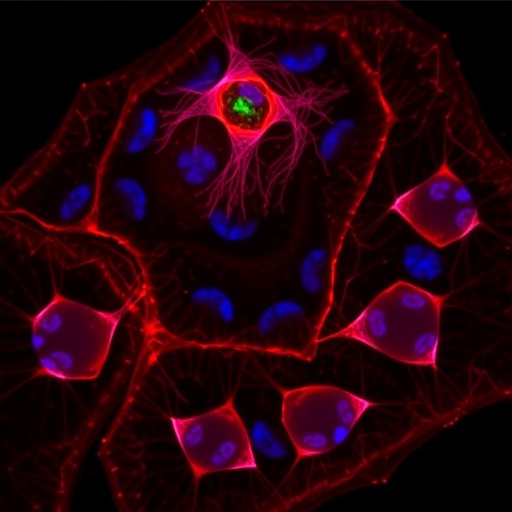
A newly reported nucleus pulposus cell population could reshape how scientists understand the spine’s natural capacity for repair. In a study published in Nature Communications, Zhang, Chen, Shi and colleagues describe a previously unrecognized group of cells expressing Myh11, a gene traditionally associated with contractile smooth-muscle cells and vascular tissues. The discovery places these Myh11-expressing cells at the periphery of the nucleus pulposus, the soft, gel-like core of the intervertebral disc, and points to their possible therapeutic value in degenerative disc disease.
Intervertebral discs function as shock absorbers between the vertebrae. Each disc contains a hydrated nucleus pulposus surrounded by the tougher, collagen-rich annulus fibrosus, with specialized endplate structures connecting the disc to adjacent vertebral bodies. The nucleus pulposus distributes mechanical loads and allows the spine to bend, rotate and move smoothly. Over time, however, disc cells can lose their ability to maintain the extracellular matrix, the complex network of proteins and sugars that provides the tissue with its structure and elasticity. Water content declines, structural fissures develop and inflammatory signals accumulate, contributing to pain and impaired mobility.
Disc degeneration has traditionally been linked to the gradual failure of mature nucleus pulposus cells and to changes in the surrounding matrix. The newly identified Myh11-expressing population introduces another layer of biological complexity. Myh11 encodes myosin heavy chain 11, a contractile protein commonly used as a marker of smooth-muscle-like cells. Its detection in a peripheral subset of nucleus pulposus cells suggests that at least some cells in the disc may possess a distinctive contractile or mechanically responsive identity that has been overlooked in conventional descriptions of disc biology.
The location of these cells may be particularly important. The nucleus pulposus is not a uniform structure: cells at its center experience a different biochemical and mechanical environment from those near the boundary with the annulus fibrosus. Peripheral cells are positioned close to regions where mechanical forces, matrix tension and signals from neighboring tissues converge. A specialized population in this zone could help monitor tissue stress, influence matrix organization or coordinate responses to injury. Understanding how these cells behave may therefore reveal why some discs deteriorate rapidly while others retain function for decades.
The study’s central significance lies in the possibility that Myh11-expressing nucleus pulposus cells are not merely molecularly unusual, but biologically useful. If they participate in maintaining disc structure or responding to damage, they could become targets for regenerative medicine. Future treatments might aim to preserve the cells in their native environment, stimulate their activity with carefully selected molecular signals or use them as a source for cell-based therapies. Their molecular profile could also help researchers design engineered cells that reproduce the functions of healthy nucleus pulposus tissue.
Such an approach would address a major limitation of current treatment. Clinical care for disc degeneration often focuses on controlling symptoms through medication, physical therapy, injections or surgery. These interventions can reduce pain or stabilize the spine, but they do not generally restore the original cellular architecture of a damaged disc. Regenerative strategies seek to rebuild the matrix and recover the disc’s mechanical properties. A defined cell population with a potential role in tissue maintenance could provide a more precise starting point than the broad, mixed cell preparations used in some experimental therapies.
The discovery also raises important technical questions. Researchers will need to determine whether Myh11 expression identifies a stable cell lineage or reflects a temporary state induced by mechanical stress, inflammation or aging. It will be essential to establish whether these cells produce matrix components, communicate with annulus fibrosus cells, respond to injury or change in number during degeneration. Scientists must also clarify whether Myh11 itself contributes to cell function or simply serves as a marker of a broader gene-expression program. These distinctions will determine whether the cells can be safely manipulated for therapy.
Translation into human treatment will require extensive validation. A promising cell population in laboratory studies may behave differently in the human spine, where discs are subjected to years of compression, limited nutrient supply and complex inflammatory conditions. Potential therapies would need to preserve the disc’s structure, avoid abnormal tissue formation and function within a largely avascular environment. Nevertheless, the identification of a peripheral Myh11-expressing nucleus pulposus population offers a fresh biological foothold. By revealing that the disc contains more specialized cellular states than previously recognized, the work could help move regenerative disc medicine from broad repair concepts toward targeted, cell-informed interventions.
Cite Scienmag News
Ophelia Keating. (August 8, 2026). Peripheral Myh11-Expressing Nucleus Pulposus Cells Show Promise Against Disc Degeneration. Scienmag. https://scienmag.com/peripheral-myh11-expressing-nucleus-pulposus-cells-show-promise-against-disc-degeneration/
Ophelia Keating. "Peripheral Myh11-Expressing Nucleus Pulposus Cells Show Promise Against Disc Degeneration." Scienmag, 8 August 2026, https://scienmag.com/peripheral-myh11-expressing-nucleus-pulposus-cells-show-promise-against-disc-degeneration/. Accessed 3 September 2026.
Ophelia Keating. "Peripheral Myh11-Expressing Nucleus Pulposus Cells Show Promise Against Disc Degeneration." Scienmag. August 8, 2026. https://scienmag.com/peripheral-myh11-expressing-nucleus-pulposus-cells-show-promise-against-disc-degeneration/


