


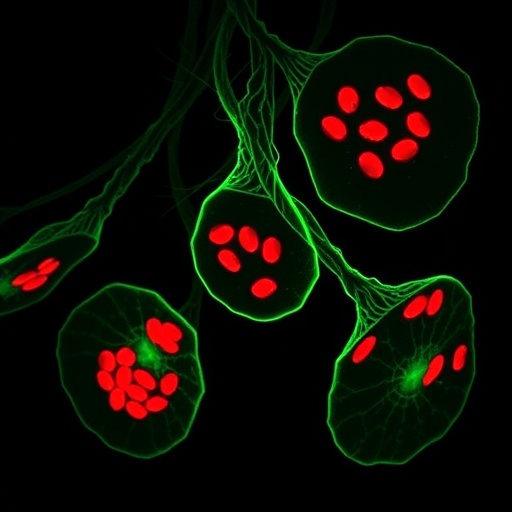
Hepatocellular carcinoma, the most common primary cancer of the liver, has become a major testing ground for immunotherapy. Drugs that block the PD-1 immune checkpoint can restore the ability of T cells to attack tumor cells, but many patients either fail to respond from the outset or eventually develop resistance. A study by Chen, Xiong, Huang and colleagues, published in Nature Communications, identifies a potential way to overcome one particularly difficult form of resistance: the protective, fibroinflammatory environment that surrounds liver tumors. The researchers report that activating the metabolic regulator PPARα can reprogram this hostile setting and promote a form of inflammatory cell death called GSDME-dependent pyroptosis.
The finding addresses a central problem in cancer immunology. Anti-PD-1 therapy does not work simply because a drug is present in the bloodstream; it depends on a coordinated interaction between tumor cells, immune cells, connective-tissue-producing cells and inflammatory signals. In some hepatocellular carcinomas, the tumor is embedded in a dense, scar-like network created by fibroblasts and other stromal cells. This fibroinflammatory microenvironment can restrict the movement of immune cells, alter the chemical signals reaching the tumor and help malignant cells avoid immune destruction. In effect, the tumor becomes biologically concealed even when the immune system has been pharmacologically released from PD-1 inhibition.
The study focuses on peroxisome proliferator-activated receptor alpha, or PPARα, a nuclear receptor that controls broad aspects of lipid metabolism, energy use and inflammatory signaling. Nuclear receptors function as transcriptional regulators: after activation, they can enter the nucleus or influence nuclear gene programs, changing the expression of multiple proteins at once. Because liver cells are highly dependent on metabolic regulation, PPARα has particular significance in hepatic biology. Chen and colleagues investigated whether activating this pathway could change the conditions that allow fibroinflammatory liver tumors to resist anti-PD-1 treatment.
Their proposed mechanism involves gasdermin E, commonly known as GSDME. Gasdermins are proteins capable of forming pores in the cell membrane when released from an inactive precursor. GSDME-dependent pyroptosis is a highly inflammatory form of programmed cell death. Unlike the relatively quiet dismantling associated with apoptosis, pyroptosis causes the affected cell to swell and rupture, releasing intracellular molecules that can alert and recruit immune cells. This process can convert the death of a tumor cell into an immunological signal, potentially helping the immune system recognize and attack neighboring malignant cells.
According to the study, PPARα activation increased the susceptibility of hepatocellular carcinoma cells to this GSDME-mediated process, helping anti-PD-1 therapy produce a stronger antitumor effect. The significance of the result lies not only in the destruction of individual cancer cells, but also in the possibility that pyroptosis may reshape the communication between tumor cells and the surrounding immune microenvironment. When tumor cells undergo inflammatory death, they can release danger-associated molecular patterns and other signals that stimulate immune surveillance. In principle, this can create a reinforcing cycle in which immune activation leads to more tumor-cell killing, which then generates additional immune stimulation.
The fibroinflammatory environment remains an important part of the story. Tumor-associated fibroblasts and the extracellular matrix they produce are not passive scaffolding; they can influence cancer growth, drug penetration and immune-cell behavior. Excessive fibrosis may physically complicate access to malignant cells, while inflammatory mediators can produce an immunosuppressive landscape. By linking PPARα activity to GSDME-dependent pyroptosis, the researchers suggest that a metabolic intervention may help weaken this barrier without relying exclusively on direct stromal destruction. The approach could therefore represent a form of microenvironmental reprogramming, in which the tumor is made more visible and vulnerable to immune attack.
The work also highlights why combinations are increasingly important in modern oncology. PD-1 blockade targets an immune checkpoint, but checkpoint inhibition alone cannot guarantee that a tumor contains sufficient danger signals or that immune cells can effectively engage cancer cells. A PPARα-directed treatment could provide a complementary function by changing tumor-cell metabolism and death behavior. Rather than replacing immunotherapy, it may make the existing treatment biologically more effective. Such a strategy is especially relevant for patients whose tumors show features of fibroinflammatory resistance, although identifying those patients will require reliable molecular and tissue-based biomarkers.
The findings should be interpreted as a mechanistic advance rather than immediate proof of a new standard treatment. PPARα has complex roles in normal liver metabolism and in cancer biology, and its effects may depend on tumor subtype, treatment dose and the condition of the surrounding tissue. Likewise, pyroptosis can be beneficial when it stimulates productive antitumor immunity, but excessive or poorly controlled inflammation could damage healthy tissue or create other complications. Future studies will need to determine how consistently the pathway operates in human tumors, whether PPARα activation can be safely combined with approved checkpoint inhibitors and which molecular signals best predict benefit.
For hepatocellular carcinoma, the report offers a compelling example of how cancer resistance can be attacked from several directions at once. The tumor is not merely a mass of malignant cells; it is an ecosystem shaped by metabolism, fibrosis, inflammation and immune surveillance. By connecting PPARα activation with GSDME-dependent pyroptosis, Chen and colleagues propose a way to turn a resistant liver tumor from an immunologically sheltered site into a source of inflammatory signals. If validated in further preclinical research and clinical trials, the strategy could expand the reach of anti-PD-1 therapy and provide a new framework for treating cancers protected by fibroinflammatory microenvironments.
Cite Scienmag News
Nathaniel Bowman. (August 6, 2026). PPARα Activation Overcomes Fibroinflammatory Anti-PD-1 Resistance in Liver Cancer via GSDME Pyroptosis. Scienmag. https://scienmag.com/ppar%ce%b1-activation-overcomes-fibroinflammatory-anti-pd-1-resistance-in-liver-cancer-via-gsdme-pyroptosis/
Nathaniel Bowman. "PPARα Activation Overcomes Fibroinflammatory Anti-PD-1 Resistance in Liver Cancer via GSDME Pyroptosis." Scienmag, 6 August 2026, https://scienmag.com/ppar%ce%b1-activation-overcomes-fibroinflammatory-anti-pd-1-resistance-in-liver-cancer-via-gsdme-pyroptosis/. Accessed 3 September 2026.
Nathaniel Bowman. "PPARα Activation Overcomes Fibroinflammatory Anti-PD-1 Resistance in Liver Cancer via GSDME Pyroptosis." Scienmag. August 6, 2026. https://scienmag.com/ppar%ce%b1-activation-overcomes-fibroinflammatory-anti-pd-1-resistance-in-liver-cancer-via-gsdme-pyroptosis/


