


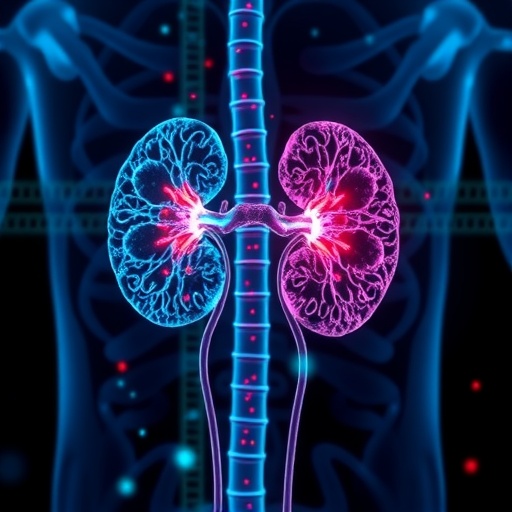
A new study published in Nature Communications is drawing attention to the possibility that end-stage renal disease is shaped not only by damaged kidney tissue and disrupted physiology, but also by chemical changes that alter how human genes are switched on and off. Led by X. Zhou, D. Shi, J. Xu and colleagues, the research used genome-wide DNA methylation analysis to investigate the epigenetic mechanisms associated with the final stage of chronic kidney disease. The work adds to a growing body of evidence suggesting that the biological memory of long-term disease may be written into the genome without changing the DNA sequence itself.
End-stage renal disease, or ESRD, occurs when the kidneys can no longer maintain the body’s essential chemical balance. At this point, patients generally require dialysis or kidney transplantation to replace the filtration and regulatory functions normally performed by the kidneys. The condition can develop after years of diabetes, hypertension, immune-mediated injury or other forms of chronic kidney damage. Although the initiating causes are diverse, ESRD often converges on a common set of biological problems, including inflammation, fibrosis, vascular injury, oxidative stress and the progressive loss of functioning nephrons. Understanding how these processes are coordinated at the molecular level is one of the central challenges in renal medicine.
The Zhou-led investigation focused on DNA methylation, an epigenetic modification in which chemical groups called methyl groups attach to specific DNA bases, most often cytosine residues located next to guanine, known as CpG sites. Methylation does not rewrite the genetic code. Instead, it can influence whether nearby genes are accessible to the cellular machinery that produces RNA and proteins. Depending on its location and genomic context, altered methylation may reduce gene activity, enhance regulatory programs or mark changes in the identity and behavior of cells. Because methylation patterns can respond to inflammation, metabolism, toxins and aging, they offer a molecular record of the biological pressures experienced by tissues over time.
A genome-wide approach allows researchers to examine methylation across a vast number of sites rather than concentrating on a single suspected gene or pathway. This is important in ESRD because kidney failure is not driven by one molecular switch. It reflects the interaction of immune responses, metabolic disturbances, scarring processes and changes in the kidney’s microscopic environment. By comparing methylation landscapes, scientists can identify regions of the genome that are consistently altered in association with disease. Those regions may point to genes or regulatory networks involved in the progression of renal injury, although an observed methylation difference does not automatically prove that it causes the disease.
The study’s central message, as indicated by its title, is that genome-wide methylation patterns reveal an epigenetic mechanism underlying ESRD. That finding places epigenetic regulation alongside more familiar genetic and clinical risk factors. A person’s inherited DNA sequence may influence susceptibility to kidney disease, but environmental exposures and chronic physiological stress can alter gene regulation during a lifetime. In this model, methylation changes could help explain why patients with apparently different initiating conditions eventually develop overlapping features of advanced kidney failure. They may also help clarify why disease severity and treatment responses vary substantially from one patient to another.
The implications extend beyond understanding the disease’s biology. If particular methylation signatures are reliably associated with ESRD, they could eventually become biomarkers detectable in kidney tissue or, potentially, in more accessible biological samples such as blood. A biomarker that identifies patients at high risk of progression could complement conventional measures, including estimated glomerular filtration rate, urinary protein levels and blood pressure. Epigenetic profiles might also help distinguish active disease processes from more stable damage. However, such applications require extensive validation. A useful clinical test must perform consistently across populations, account for age and medication use, and demonstrate that it improves decisions beyond existing diagnostic tools.
The findings may also raise the prospect of epigenetic therapies, but that possibility remains distant and technically difficult. Methylation is widespread throughout the genome, and broad attempts to increase or decrease it could disrupt essential genes in healthy cells. Future treatments would need to target specific regulatory regions or pathways without producing harmful effects elsewhere. In addition, researchers must determine whether methylation changes are drivers of kidney injury, consequences of reduced kidney function, or both. Because the kidneys influence metabolism, hormone signaling and the removal of waste products, ESRD itself may alter the cellular environment in ways that reshape methylation patterns throughout the body.
As with all genome-wide studies, the significance of the results depends on the design of the research, the biological samples examined, the size and diversity of the study population, and the methods used to distinguish meaningful signals from statistical noise. Methylation can vary between cell types, and a kidney sample may contain changing proportions of immune cells, scar-forming cells, blood-vessel cells and damaged tubular cells. Researchers therefore need follow-up experiments to test whether the identified epigenetic differences directly modify gene activity and contribute to fibrosis, inflammation or loss of filtration capacity. Longitudinal studies will be especially important for determining whether the methylation signatures appear before ESRD develops or emerge during advanced disease.
Even with those questions still open, the study highlights a powerful shift in how scientists view chronic kidney failure. ESRD is not simply the endpoint of mechanical filtration failure; it is the result of prolonged interactions between genes, cells, metabolism and the environment. By mapping chemical marks across the genome, Zhou, Shi, Xu and their colleagues provide a framework for investigating how those interactions become biologically embedded. The research may ultimately help move nephrology toward earlier detection and more individualized treatment, while reinforcing a broader lesson of modern medicine: disease can alter not only what genes a person carries, but also how those genes are read.
Cite Scienmag News
Juliet Wilcox. (August 3, 2026). Genome-wide methylation study uncovers epigenetic mechanism driving end-stage kidney disease. Scienmag. https://scienmag.com/genome-wide-methylation-study-uncovers-epigenetic-mechanism-driving-end-stage-kidney-disease/
Juliet Wilcox. "Genome-wide methylation study uncovers epigenetic mechanism driving end-stage kidney disease." Scienmag, 3 August 2026, https://scienmag.com/genome-wide-methylation-study-uncovers-epigenetic-mechanism-driving-end-stage-kidney-disease/. Accessed 3 September 2026.
Juliet Wilcox. "Genome-wide methylation study uncovers epigenetic mechanism driving end-stage kidney disease." Scienmag. August 3, 2026. https://scienmag.com/genome-wide-methylation-study-uncovers-epigenetic-mechanism-driving-end-stage-kidney-disease/


