


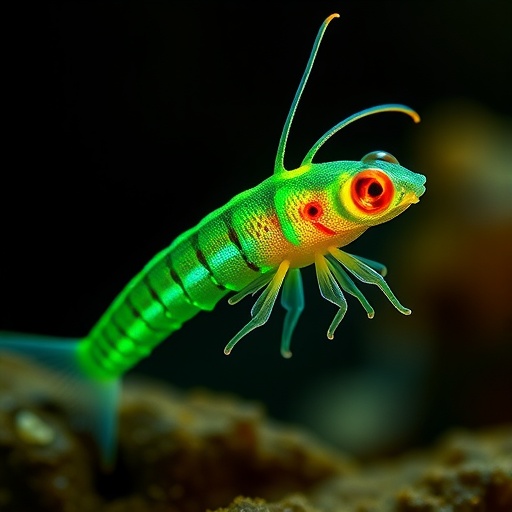
A microscopic animal best known for surviving some of Earth’s harshest conditions has become the focus of a discovery that could reshape scientists’ understanding of electrical signaling in living cells. Bdelloid rotifers, tiny freshwater invertebrates with remarkable abilities to endure desiccation, radiation and prolonged environmental stress, harbor a voltage-gated proton channel with mechanistic features unlike those previously characterized in other organisms, according to a study by L. Yan, C. Boschetti and L. Hong published in Nature Communications in 2026.
Voltage-gated proton channels are specialized membrane proteins that allow protons, or hydrogen ions, to move across the cell membrane when the electrical voltage changes. Their activity links the cell’s electrical state to its chemical environment. By controlling proton flow, these channels can influence membrane acidity, regulate reactive oxygen species and support immune, metabolic and reproductive processes. In animals, proton channels have attracted particular interest because they help maintain the balance between electrical charge and pH during cellular activity.
The newly reported channel in bdelloid rotifers is significant because it appears to operate through a distinct molecular mechanism. Although the citation does not disclose every structural or biophysical detail, the central finding identifies a voltage-gated proton channel in an animal lineage that is evolutionarily unusual and exceptionally resilient. Bdelloid rotifers have been evolving independently for millions of years, and their genomes contain adaptations associated with surviving the loss of nearly all body water. Their biology offers scientists a natural laboratory for studying how fundamental cellular systems can be modified without losing their essential functions.
At the heart of the discovery is the relationship between voltage and proton movement. A voltage-gated channel does not simply remain open or closed; it responds dynamically to changes in the electrical potential across the membrane. When the voltage reaches a particular range, charged parts of the protein shift position, altering the channel’s conformation and creating a pathway for ions. In a proton channel, that pathway must be highly selective, distinguishing hydrogen ions from the far more abundant sodium, potassium and other ions surrounding the cell.
That selectivity is particularly demanding because protons are exceptionally small and often move through water-linked networks rather than passing through a channel as isolated particles. Proteins that conduct protons can therefore rely on carefully positioned amino acids and chains of hydrogen-bonded water molecules. A small change in the arrangement of these components can affect how quickly the channel opens, how efficiently it conducts protons and whether it favors movement into or out of the cell. The bdelloid rotifer channel’s distinct mechanistic features suggest that evolution has found another solution to these constraints.
For researchers, the finding raises questions that reach beyond rotifers. Voltage-gated proton channels are present in several branches of life, but their properties are not identical across species. Some are associated with immune cells, where they help control electrical compensation during the production of reactive oxygen species. Others participate in sperm physiology, epithelial regulation or cellular responses to changes in acidity. Comparing the rotifer channel with better-studied counterparts could reveal which features are ancient and broadly conserved, and which evolved later in response to specialized biological demands.
The discovery may also help scientists investigate how ion channels function under extreme conditions. Bdelloid rotifers can enter a dormant state when water disappears, then resume activity after rehydration. During this transition, cells must prevent uncontrolled ion leakage, preserve membrane integrity and restore electrical gradients. Proton channels could be involved in maintaining or rebuilding these gradients, although the study’s citation alone does not establish the channel’s complete physiological role. Determining when the protein is active and how its behavior changes during dehydration and recovery will be important next steps.
The work arrives as researchers increasingly turn to unusual organisms to expand the catalogue of biological solutions. Many important principles of cell physiology were first understood through organisms that seemed too simple or too obscure to attract broad attention. A channel from a microscopic rotifer may eventually inform the design of engineered membranes, biosensors or molecular tools capable of detecting changes in voltage and acidity. Such applications remain speculative, but mechanistic differences in naturally occurring proteins often provide the starting point for technological innovation.
For now, the study’s most immediate contribution is evolutionary and biophysical: it shows that a voltage-gated proton channel in bdelloid rotifers can follow rules that differ from familiar examples. The result adds a new branch to the growing map of ion-channel diversity and highlights how much remains unknown about electrical signaling outside traditional laboratory organisms. In a creature that can disappear into a dry state and return to life, even a microscopic membrane protein becomes part of a much larger story about survival, adaptation and the creative chemistry of evolution.
Cite Scienmag News
Gavin Prescott. (August 3, 2026). Bdelloid Rotifers Possess a Distinctive Voltage-Gated Proton Channel. Scienmag. https://scienmag.com/bdelloid-rotifers-possess-a-distinctive-voltage-gated-proton-channel/
Gavin Prescott. "Bdelloid Rotifers Possess a Distinctive Voltage-Gated Proton Channel." Scienmag, 3 August 2026, https://scienmag.com/bdelloid-rotifers-possess-a-distinctive-voltage-gated-proton-channel/. Accessed 3 September 2026.
Gavin Prescott. "Bdelloid Rotifers Possess a Distinctive Voltage-Gated Proton Channel." Scienmag. August 3, 2026. https://scienmag.com/bdelloid-rotifers-possess-a-distinctive-voltage-gated-proton-channel/


