


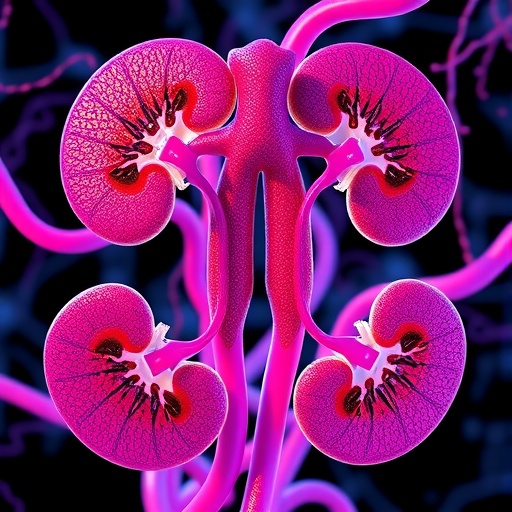
IgA nephropathy, a kidney disease driven by abnormal immune activity, is often described in pathology reports through a dense mixture of clinical observations, microscopic findings and specialist terminology. Those reports contain the clues physicians use to estimate how aggressively the disease may progress, yet much of the information remains locked inside free-text narratives that are difficult to compare at scale. A new study published in Nature Communications explores whether large language models can convert that unstructured language into clinically meaningful disease subtypes.
The study, led by Zhang, Lu, Jiang and colleagues, focuses on the potential of artificial intelligence to interpret narrative pathology reports from patients with IgA nephropathy. Rather than treating pathology reports as simple collections of keywords, large language models are designed to analyze relationships between words and concepts across an entire passage. This makes them potentially useful for recognizing that a finding described in one sentence may modify, qualify or intensify a finding mentioned several lines later.
IgA nephropathy is the most common primary glomerular disease worldwide. It occurs when immunoglobulin A, or IgA, forms abnormal immune complexes that become deposited in the glomeruli, the microscopic filtration units of the kidneys. These deposits can trigger inflammation and damage the delicate capillary networks responsible for filtering waste from blood. Patients may develop blood or protein in the urine, high blood pressure and declining kidney function, but the clinical course varies considerably. Some people remain stable for years, while others progress to chronic kidney failure.
Kidney biopsy remains central to diagnosis and risk assessment. Pathologists examine tissue using light microscopy, immunofluorescence and, in some cases, electron microscopy. The resulting report may describe mesangial proliferation, segmental sclerosis, endocapillary hypercellularity, crescents, tubular atrophy, interstitial fibrosis and the intensity or distribution of IgA staining. These features are not isolated labels; their combination helps clinicians understand the biological behavior of the disease. However, the language used to record them can differ between institutions and specialists, creating challenges for research databases and clinical decision-support systems.
The researchers’ approach addresses this problem by using large language models to “decode” the narrative content of pathology reports. In technical terms, such models use neural networks trained to represent words and sentences as patterns of meaning rather than as independent terms. A model can be adapted to identify medically relevant concepts, connect pathology findings with their context and organize reports into groups that may reflect distinct disease phenotypes. In IgA nephropathy, this could allow researchers to move beyond a checklist of biopsy features and examine how combinations of lesions are described in real-world clinical practice.
The study’s central contribution, as indicated by its title, is the definition of clinically relevant subtypes from these narrative reports. Subtyping matters because IgA nephropathy is biologically heterogeneous. Two patients may receive the same broad diagnosis while having markedly different patterns of inflammation, scarring or tissue injury. If language models can reliably identify these patterns, they could help researchers investigate why some patients respond to treatment while others continue to lose kidney function. They may also support more consistent patient selection for clinical trials, where subtle differences in disease phenotype can influence outcomes.
The promise of this approach extends beyond speed. Conventional analysis of pathology reports often requires manual annotation by trained experts, a process that is expensive, time-consuming and difficult to standardize across large cohorts. An automated system could rapidly process thousands of reports, uncover recurring combinations of findings and create structured datasets for epidemiology and precision medicine. It could also help reveal information that is present in the report but omitted from conventional databases, preserving the nuance of the pathologist’s interpretation instead of reducing the biopsy to a handful of coded variables.
Yet the use of artificial intelligence in pathology does not eliminate the need for medical expertise. Narrative reports can contain ambiguous wording, institution-specific conventions, missing information and differences in reporting style. A model may also learn accidental correlations, such as associations between certain phrases and local clinical practices, rather than true biological relationships. For that reason, any AI-derived subtype must be tested against independent patient groups and evaluated for reproducibility, clinical usefulness and fairness. The most valuable systems are likely to function as analytical partners, helping specialists organize evidence while leaving diagnosis and treatment decisions under human supervision.
The work arrives as medicine moves rapidly toward multimodal artificial intelligence, in which text, medical images, laboratory results and genomic data are analyzed together. Pathology reports represent an important bridge between visual tissue assessment and clinical decision-making. By turning specialist narratives into analyzable biological signals, the study suggests a route toward more detailed classification of IgA nephropathy and, potentially, more individualized care. The broader message is striking: some of the most useful medical data may already exist in hospitals, hidden not in images or machines, but in the language clinicians use to describe what they see.
Cite Scienmag News
Jerry Hayes. (August 3, 2026). AI models identify clinically relevant IgA nephropathy subtypes from pathology narratives. Scienmag. https://scienmag.com/ai-models-identify-clinically-relevant-iga-nephropathy-subtypes-from-pathology-narratives/
Jerry Hayes. "AI models identify clinically relevant IgA nephropathy subtypes from pathology narratives." Scienmag, 3 August 2026, https://scienmag.com/ai-models-identify-clinically-relevant-iga-nephropathy-subtypes-from-pathology-narratives/. Accessed 3 September 2026.
Jerry Hayes. "AI models identify clinically relevant IgA nephropathy subtypes from pathology narratives." Scienmag. August 3, 2026. https://scienmag.com/ai-models-identify-clinically-relevant-iga-nephropathy-subtypes-from-pathology-narratives/


