

Wednesday, July 29, 2026
Science
No Result
View All Result
  • Login
  • HOME
  • SCIENCE NEWS
  • CONTACT US
  • HOME
  • SCIENCE NEWS
  • CONTACT US
No Result
View All Result
Scienmag
No Result
View All Result
Home Science News Medicine

Study tracks mosaic chromosome changes to reveal factors shaping blood cell clones

July 29, 2026
in Medicine
Reading Time: 2 mins read
0
Study tracks mosaic chromosome changes to reveal factors shaping blood cell clones

Study tracks mosaic chromosome changes to reveal factors shaping blood cell clones

65
SHARES
587
VIEWS
Share on FacebookShare on Twitter
ADVERTISEMENT

A new study published in Nature Communications reports a longitudinal map of mosaic chromosomal alterations, tracking how these genomic events reshape the cellular “clones” that circulate through the blood over time. The work, led by Kelly, Brown, Zhou and colleagues, focuses on the clonal dynamics of leukocytes—immune cells whose populations can drift, expand, or retreat as selection pressures change.

Mosaic chromosomal alterations are genomic abnormalities present in only a subset of cells. Though often subtle, they can accumulate with age and can influence immune function and disease risk. To understand why some clones persist while others fade, the researchers combined longitudinal sampling with detailed characterization of structural changes across hematopoietic lineages.

Technically, the study leverages high-resolution genomic profiling to detect and quantify chromosomal alterations from sequential blood specimens. By integrating variant signals over time, the authors reconstructed the trajectories of individual clonal populations rather than relying on single time-point snapshots.

A key finding is that clonal behavior is not random. Certain alterations show patterns consistent with ongoing competitive expansion, while others display reduced persistence or gradual contraction. The authors interpret these differences as evidence that biological factors—potentially including fitness effects and microenvironmental constraints—govern which clones dominate.

The analysis also highlights how the allele fractions of mosaic events can evolve between sampling intervals, reflecting changes in the balance of stem and progenitor activity. This temporal resolution makes it possible to distinguish early stochastic emergence from later sustained growth.

Importantly for viral science news, the study provides a framework for assessing how genome instability and clonal immunologic remodeling might interact with infection outcomes. Immune system composition can influence susceptibility, viral control, and the durability of protective responses, suggesting that mosaic-driven immune shifts may modulate viral disease trajectories.

By identifying variables tied to clonal dynamics, the researchers offer candidate markers that could support risk stratification in future longitudinal cohorts. Such markers may also inform when immune remodeling begins to accelerate, potentially before clinical symptoms emerge.

Overall, the results refine our understanding of how mosaic genomic alterations shape leukocyte populations across time. They also set the stage for connecting clonal genomic landscapes to functional immune phenotypes, an essential step toward predicting how individuals respond to viral threats and emerging pathogens.

Subject of Research: Mosaic chromosomal alterations and clonal dynamics of leukocytes over time.

Article Title: Longitudinal characterization of mosaic chromosomal alterations identifies factors influencing clonal dynamics of leukocytes.

Article References: Kelly, R.L., Brown, D.W., Zhou, W. et al. Longitudinal characterization of mosaic chromosomal alterations identifies factors influencing clonal dynamics of leukocytes. Nat Commun (2026). https://doi.org/10.1038/s41467-026-75996-5

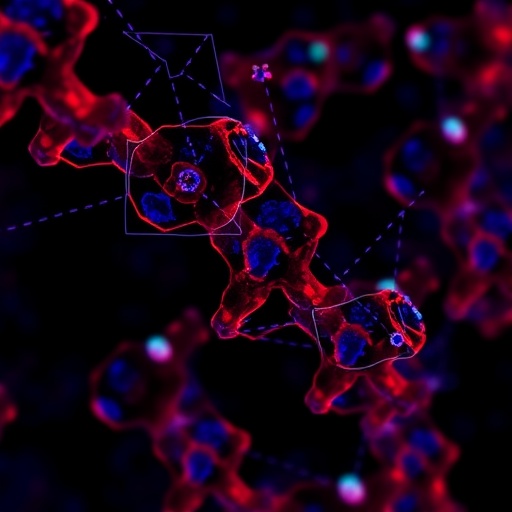
Image Credits: AI Generated

DOI: 10.1038/s41467-026-75996-5

Keywords: Mosaic chromosomal alterations; leukocyte clones; longitudinal genomics; clonal dynamics; genomic instability; immune remodeling.

Tags: age-related somatic mutationsblood cell clone dynamicsclonal evolution in blood cellsclonal hematopoiesisfactors influencing blood cell clone persistencegenomic abnormalities and disease riskhematopoietic lineage analysishigh-resolution chromosomal alteration detectionimmune cell clonal expansionlongitudinal genomic profilingmosaic chromosomal alterationsstructural genomic changes in blood
Share26Tweet16
Previous Post

Endothelial Activation Fuels Thromboinflammation in Long COVID, Study in Children

Next Post

Study Finds Small Genetic Mutation Causes Major Effects in Rare Heart Diseases

Related Posts

Conformations of Neuronal Na+, K+-ATPase Isoforms and a Disease-Causing Variant
Medicine

Conformations of Neuronal Na+, K+-ATPase Isoforms and a Disease-Causing Variant

July 29, 2026
Ocean Sounds During ROP Exams Improve Physiology, Pain, and Comfort in Preemies
Medicine

Ocean Sounds During ROP Exams Improve Physiology, Pain, and Comfort in Preemies

July 29, 2026
American College of Lifestyle Medicine urges remission as chronic disease goal
Medicine

American College of Lifestyle Medicine urges remission as chronic disease goal

July 29, 2026
Scoping Review Highlights Silent Struggles From Internalizing Disorders After HIE
Medicine

Scoping Review Highlights Silent Struggles From Internalizing Disorders After HIE

July 29, 2026
Study shows experience reorganizes content-specific memory traces in macaques
Medicine

Study shows experience reorganizes content-specific memory traces in macaques

July 29, 2026
Maternal Hyperglycemia Drives Offspring mtDNA Release via CaMKIIδ O-GlcNAcylation
Medicine

Maternal Hyperglycemia Drives Offspring mtDNA Release via CaMKIIδ O-GlcNAcylation

July 29, 2026
Next Post
Study Finds Small Genetic Mutation Causes Major Effects in Rare Heart Diseases

Study Finds Small Genetic Mutation Causes Major Effects in Rare Heart Diseases

  • Mothers who receive childcare support from maternal grandparents show more

    Mothers who receive childcare support from maternal grandparents show more parental warmth, finds NTU Singapore study

    27656 shares
    Share 11059 Tweet 6912
  • University of Seville Breaks 120-Year-Old Mystery, Revises a Key Einstein Concept

    1061 shares
    Share 424 Tweet 265
  • Bee body mass, pathogens and local climate influence heat tolerance

    682 shares
    Share 273 Tweet 171
  • Researchers record first-ever images and data of a shark experiencing a boat strike

    546 shares
    Share 218 Tweet 137
  • Groundbreaking Clinical Trial Reveals Lubiprostone Enhances Kidney Function

    531 shares
    Share 212 Tweet 133
Science

Embark on a thrilling journey of discovery with Scienmag.com—your ultimate source for cutting-edge breakthroughs. Immerse yourself in a world where curiosity knows no limits and tomorrow’s possibilities become today’s reality!

RECENT NEWS

  • Resting-State Brain Activity Abnormalities Linked to Late-Life Depression Meta-Analysis
  • Hybrid bioelectrochemical system boosts C, N, and P removal for negative carbon wastewater
  • Conformations of Neuronal Na+, K+-ATPase Isoforms and a Disease-Causing Variant
  • Process Mapping Informs Design Strategies to Curb Inappropriate HFNC Use

Categories

  • Agriculture
  • Anthropology
  • Archaeology
  • Athmospheric
  • Biology
  • Biotechnology
  • Blog
  • Bussines
  • Cancer
  • Chemistry
  • Climate
  • Earth Science
  • Editorial Policy
  • Marine
  • Mathematics
  • Medicine
  • Pediatry
  • Policy
  • Psychology & Psychiatry
  • Science Education
  • Social Science
  • Space
  • Technology and Engineering

Subscribe to Blog via Email

Enter your email address to subscribe to this blog and receive notifications of new posts by email.

Join 5,147 other subscribers

© 2025 Scienmag - Science Magazine

Welcome Back!

Login to your account below

Forgotten Password?

Retrieve your password

Please enter your username or email address to reset your password.

Log In
No Result
View All Result
  • HOME
  • SCIENCE NEWS
  • CONTACT US

© 2025 Scienmag - Science Magazine

Discover more from Science

Subscribe now to keep reading and get access to the full archive.

Continue reading
