

Monday, July 27, 2026
Science
No Result
View All Result
  • Login
  • HOME
  • SCIENCE NEWS
  • CONTACT US
  • HOME
  • SCIENCE NEWS
  • CONTACT US
No Result
View All Result
Scienmag
No Result
View All Result
Home Science News Medicine

Urinary Microbiome Links to Overactive Bladder, Pain Syndrome, and New Therapies

July 27, 2026
in Medicine
Reading Time: 2 mins read
0
Urinary Microbiome Links to Overactive Bladder, Pain Syndrome, and New Therapies

Urinary Microbiome Links to Overactive Bladder, Pain Syndrome, and New Therapies

65
SHARES
587
VIEWS
Share on FacebookShare on Twitter
ADVERTISEMENT

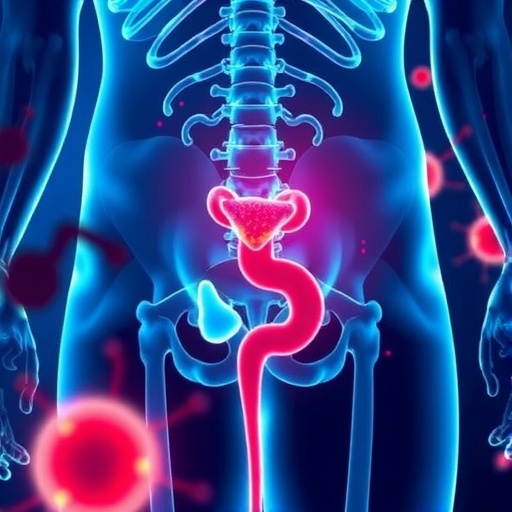
New research is reshaping how clinicians think about lower urinary tract disorders by challenging the long-held assumption that urine is sterile. In a perspective published in Nature Reviews Urology, Spazzapan and colleagues argue that the urinary microbiome—now routinely detected using sensitive sequencing methods—may be a mechanistic contributor to both urgency and pain syndromes.

Overactive bladder (OAB) and bladder pain syndrome/interstitial cystitis (BPS/IC) are common, multifactorial conditions whose underlying biology has remained elusive. The review highlights mounting evidence that bladder microbial communities can influence urothelial signaling, calibrate immune tone, and modulate neural pathways involved in urgency and nociception.

For OAB, studies summarized in the article point to community-level signatures rather than single pathogens. Urinary profiles enriched for Lactobacillus are associated with lower symptom burden and better responsiveness to standard pharmacotherapy. By contrast, Gardnerella-enriched and Pseudomonadota-enriched communities correlate with refractory disease, suggesting that microbiome composition may mark distinct disease trajectories.

Mechanistically, the authors emphasize that microbial metabolites and epithelial interactions may drive changes in barrier integrity and inflammatory signaling. Such effects could alter afferent signaling to the spinal cord, thereby increasing perceived urgency and sustaining symptoms even when conventional treatments underperform.

BPS/IC appears more complex: microbial alterations do not converge on a single “pathogenic” organism. Instead, dysbiosis is linked to overlapping disturbances in metabolic and immune pathways, implying that function may matter more than identity. The review notes that low-biomass sampling and contamination control remain critical for drawing reliable conclusions.

To move beyond correlation, the paper discusses multi-omics strategies that integrate metagenomics, metabolomics, and host immune profiling. These approaches aim to connect microbial metabolic outputs to epithelial dysfunction and nociceptor sensitization—two processes thought to underlie chronic bladder pain.

Emerging clinical trial data discussed by the authors suggest a translational path: microbiome profiling could help stratify patients likely to benefit from specific therapies. In parallel, microbiome-targeted interventions—including probiotics, estrogen-based treatments, and dietary modulation—are presented as potential adjuncts that may reshape the urinary environment.

Despite the promise, the review underscores a core unresolved problem: whether the low-biomass urinary microbiome plays a causal role or mainly reflects disease-associated changes in the bladder ecosystem. Establishing causality will require carefully designed longitudinal studies and intervention trials that measure functional outcomes.

Ultimately, the urinary microbiome is positioned as both a potential diagnostic lever and a candidate therapeutic target, bringing precision urology closer to biology-driven treatment selection while highlighting the need for rigorous validation.

Subject of Research: Lower urinary tract disorders; urinary microbiome; overactive bladder; bladder pain syndrome/interstitial cystitis.
Article Title: The urinary microbiome, overactive bladder and bladder pain syndrome/interstitial cystitis — mechanisms, diagnostics and therapeutic opportunities.
Article References: Spazzapan, M., Raison, N., Steves, C. et al. The urinary microbiome, overactive bladder and bladder pain syndrome/interstitial cystitis — mechanisms, diagnostics and therapeutic opportunities. Nat Rev Urol (2026). https://doi.org/10.1038/s41585-026-01174-3
Image Credits: AI Generated
DOI: 10.1038/s41585-026-01174-3
Keywords: urinary microbiome; overactive bladder; bladder pain syndrome/interstitial cystitis; Lactobacillus; Gardnerella; Pseudomonadota; multi-omics; precision urology; probiotics; estrogen therapy; metabolomics

Tags: bladder microbial communitiesbladder pain syndromeimmune modulation in bladderinterstitial cystitismicrobial metabolites in bladder healthmicrobiome-based therapiesoveractive bladderurinary microbiomeurinary microbiome and neural pathwaysurinary microbiome sequencingurinary tract disordersurothelial signaling
Share26Tweet16
Previous Post

Active Learning Aids Design of Fiber Gut Microbiome Interactions

Next Post

Recombinase-Based Genome Mapping Enables Large-Scale Structure Profiling of Prime Edits

Related Posts

Structure Reveals How Crimean-Congo Hemorrhagic Fever Virus Polymerase Is Inhibited
Medicine

Structure Reveals How Crimean-Congo Hemorrhagic Fever Virus Polymerase Is Inhibited

July 27, 2026
Immunological Misadaptation Predicts Spontaneous Preterm Birth in Pregnancies
Medicine

Immunological Misadaptation Predicts Spontaneous Preterm Birth in Pregnancies

July 27, 2026
How Extracellular Histones Disrupt Cardiomyocyte Function: New Mechanisms
Medicine

How Extracellular Histones Disrupt Cardiomyocyte Function: New Mechanisms

July 27, 2026
Simulation Boot Camp Improves Neonatal Critical Care Skills for Senior Fellows
Medicine

Simulation Boot Camp Improves Neonatal Critical Care Skills for Senior Fellows

July 27, 2026
Azacitidine and Venetoclax Impact Inflammatory Markers and Response in Elderly AML
Medicine

Azacitidine and Venetoclax Impact Inflammatory Markers and Response in Elderly AML

July 27, 2026
Empagliflozin and Other SGLT2 Inhibitors Show Cardioprotective Benefits
Medicine

Empagliflozin and Other SGLT2 Inhibitors Show Cardioprotective Benefits

July 27, 2026
Next Post
Recombinase-Based Genome Mapping Enables Large-Scale Structure Profiling of Prime Edits

Recombinase-Based Genome Mapping Enables Large-Scale Structure Profiling of Prime Edits

  • Mothers who receive childcare support from maternal grandparents show more

    Mothers who receive childcare support from maternal grandparents show more parental warmth, finds NTU Singapore study

    27656 shares
    Share 11059 Tweet 6912
  • University of Seville Breaks 120-Year-Old Mystery, Revises a Key Einstein Concept

    1061 shares
    Share 424 Tweet 265
  • Bee body mass, pathogens and local climate influence heat tolerance

    682 shares
    Share 273 Tweet 171
  • Researchers record first-ever images and data of a shark experiencing a boat strike

    546 shares
    Share 218 Tweet 137
  • Groundbreaking Clinical Trial Reveals Lubiprostone Enhances Kidney Function

    531 shares
    Share 212 Tweet 133
Science

Embark on a thrilling journey of discovery with Scienmag.com—your ultimate source for cutting-edge breakthroughs. Immerse yourself in a world where curiosity knows no limits and tomorrow’s possibilities become today’s reality!

RECENT NEWS

  • Structure Reveals How Crimean-Congo Hemorrhagic Fever Virus Polymerase Is Inhibited
  • Brain Networks and Peripheral Biomarkers Identified for Major Depressive Disorder
  • Ancient Seawater Groundwater Still Shapes Coastal Paleo-Estuary Legacy
  • Immunological Misadaptation Predicts Spontaneous Preterm Birth in Pregnancies

Categories

  • Agriculture
  • Anthropology
  • Archaeology
  • Athmospheric
  • Biology
  • Biotechnology
  • Blog
  • Bussines
  • Cancer
  • Chemistry
  • Climate
  • Earth Science
  • Editorial Policy
  • Marine
  • Mathematics
  • Medicine
  • Pediatry
  • Policy
  • Psychology & Psychiatry
  • Science Education
  • Social Science
  • Space
  • Technology and Engineering

Subscribe to Blog via Email

Enter your email address to subscribe to this blog and receive notifications of new posts by email.

Join 5,146 other subscribers

© 2025 Scienmag - Science Magazine

Welcome Back!

Login to your account below

Forgotten Password?

Retrieve your password

Please enter your username or email address to reset your password.

Log In
No Result
View All Result
  • HOME
  • SCIENCE NEWS
  • CONTACT US

© 2025 Scienmag - Science Magazine

Discover more from Science

Subscribe now to keep reading and get access to the full archive.

Continue reading
