


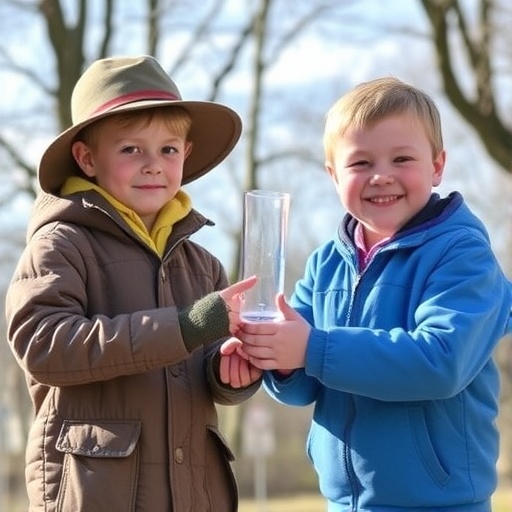
Primary school pupils are becoming “climate detectives” with handheld thermal cameras, helping redesign schools for hotter summers. The University of Surrey’s Heat-Cool programme equips children with the tools to locate heat hotspots on school grounds and develop nature-based cooling strategies grounded in their own measurements.
As heatwaves intensify across the UK, with recorded peaks around 36°C in parts of London, protecting school environments is becoming urgent. Heat-Cool, led by Professor Prashant Kumar, turns that urgency into a hands-on investigation that starts at around age nine.
During two-hour workshops, pupils measure surface temperature differences across playgrounds, paths and outdoor structures using thermal imaging. They then interpret the data to identify where heat accumulates and which features reduce overheating.
Across seven South East schools, the programme reached more than 500 children. In the process, students designed cooling concepts using green roofs, ponds, rain gardens, vegetated elements and shaded areas, aiming to make outdoor spaces more comfortable during extreme heat.
The study, published in Environmental Research Communications, analysed over 1,700 thermal images. Researchers assessed more than 4,300 objects, comparing areas with and without green infrastructure and other engineered or water-linked solutions.
Results indicate that nature-based and engineered green infrastructure is typically 1–3°C cooler than surrounding areas lacking such features. Students often preferred solutions that integrate vegetation into buildings, particularly green roofs, because they are both visible and directly connected to school architecture.
Beyond the measurements, the programme boosted climate literacy. After participation, more than eight in ten pupils reported maintaining or improving their understanding of climate change, and most described the experience as enjoyable and engaging.
“These children are not just learning about climate change,” said Dr Jeetendra Sahani. “They gather real evidence, interpret it, and use it to propose practical solutions for their own environment.”
The approach blends classroom learning with citizen science and technology, suggesting a scalable template for schools. If adopted widely, thermal imaging plus guided ecosystem design could simultaneously improve preparedness and inspire young people to shape more resilient communities.
Cite Scienmag News
Russell Cooper. (July 27, 2026). Children Become Climate Detectives to Help Cool Overheating Schools. Scienmag. https://scienmag.com/children-become-climate-detectives-to-help-cool-overheating-schools/
Russell Cooper. "Children Become Climate Detectives to Help Cool Overheating Schools." Scienmag, 27 July 2026, https://scienmag.com/children-become-climate-detectives-to-help-cool-overheating-schools/. Accessed 3 September 2026.
Russell Cooper. "Children Become Climate Detectives to Help Cool Overheating Schools." Scienmag. July 27, 2026. https://scienmag.com/children-become-climate-detectives-to-help-cool-overheating-schools/


