

Monday, July 27, 2026
Science
No Result
View All Result
  • Login
  • HOME
  • SCIENCE NEWS
  • CONTACT US
  • HOME
  • SCIENCE NEWS
  • CONTACT US
No Result
View All Result
Scienmag
No Result
View All Result
Home Science News Medicine

AI Redesigns Starting Conditions to Improve Protein Evolution Outcomes

July 27, 2026
in Medicine, Technology and Engineering
Reading Time: 3 mins read
0
AI Redesigns Starting Conditions to Improve Protein Evolution Outcomes

AI Redesigns Starting Conditions to Improve Protein Evolution Outcomes

65
SHARES
587
VIEWS
Share on FacebookShare on Twitter
ADVERTISEMENT

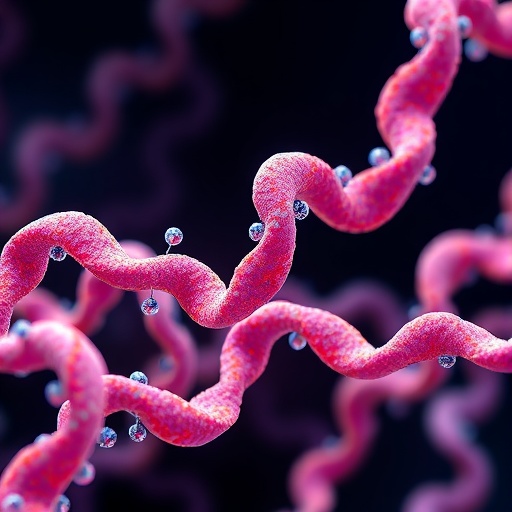
AI-designed protein redesigns are shown to reshape the rules of evolution in a new Nature study, offering a “boosted starting point” for rapidly finding high-function enzyme variants. The work uses PACE (phage-assisted continuous evolution) to evolve a botulinum neurotoxin protease (BoNT/E) under controlled selection pressures, while testing how different AI redesigns change which mutations become beneficial.

The researchers first highlight a key challenge: stabilizing protein redesigns often reduce catalytic performance. They therefore ask whether a highly stabilized—but kinetically impaired—redesign can still outperform the wild-type (WT) enzyme during evolution. Their starting test case is ProteinMPNN redesign D4, which initially expresses well but cleaves substrate far more slowly than WT (about 20-fold lower rate), even though it shows a higher melting temperature.

To extend the comparison beyond a single redesign, the team also selects PROSS1, a top-performing alternative redesign designed to improve both stability and catalysis. Parallel PACE campaigns are then launched from D4 and PROSS1, using the same substrate panel and the same phage flow-rate schedule previously applied to WT and another redesign (D3), enabling a like-for-like assessment of how each redesigned “starting point” alters evolutionary trajectories.

Across 44 independent evolutions on multiple devices and replicates, both D4- and PROSS1-initiated populations clear selection on three substrates spanning low, intermediate, and high difficulty. Sequencing reveals that the consensus genotypes that emerge are consistently distinct from those evolved from WT or D3 backgrounds, indicating that redesign changes the fitness landscape enough to redirect evolution.

A key outcome is that the redesign-derived proteases remain more active than WT-evolved variants across all substrates. D3-evolved and PROSS1-evolved enzymes achieve similar performance, while D4-evolved variants match or exceed the other redesigns despite their slower starting catalysis—evidence that redesign can increase evolvability even when the initial enzyme is functionally handicapped.

The authors further perform a comprehensive “grafting” experiment: evolved genotypes are tested in each alternative protease background. Redesign-to-redesign compatibility is largely high—many variants remain functional when transplanted—yet D4 shows notable variability, with some genotypes becoming highly active only within their original background. They suggest this reflects a trade-off between robustness to destabilizing mutations and sensitivity to slow-catalysis-associated changes.

In contrast, grafting redesign-evolved mutations into the WT protease yields dramatically lower activity, including near-zero function on the easiest substrate and functional variants only for a minority of cases on harder substrates. Activity correlations between redesign backgrounds and WT are poor, implying that redesign enables new evolutionary solutions that WT cannot access efficiently.

Finally, the team maps genotype activity onto an embedding space from a protein language model (ESM-C). In WT, the fitness landscape is sparse: high-function solutions cluster far from the starting sequence, while local single-point mutants show little to no activity. Redesign expands the landscape—raising average fitness and allowing function in sequences closer to the starting point, including single-mutant neighborhoods—consistent with the idea that redesign accelerates adaptation by expanding the set of viable paths.

Subject of Research: AI-redesigned starting points and their effect on protein evolvability and fitness landscapes during PACE evolution

Article Title: AI-redesigned starting points and outcomes enhance protein evolution

Article References: Krasnow, N.A., Xu, J.A., Zhang, E. et al. AI-redesigned starting points and outcomes enhance protein evolution. Nature (2026). https://doi.org/10.1038/s41586-026-10820-0

Image Credits: AI Generated

DOI: https://doi.org/10.1038/s41586-026-10820-0

Keywords: Protein engineering; AI redesign; PACE; fitness landscape; protease evolution; language model embeddings

Tags: AI-driven protein redesignAI-enhanced starting conditions for protein evolutionAI-guided enzyme optimizationeffects of protein redesign on enzyme activityenzyme evolutionenzyme variant discovery through AI and PACEmutation benefit analysis in enzyme evolutionphage-assisted continuous evolutionProtein Engineeringprotein redesign impact on evolutionary pathwaysprotein stability and catalytic performancestabilizing protein structures for improved function
Share26Tweet16
Previous Post

Gate-Tunable Mid-Infrared Electroluminescence via Te/MoS2 p-n Heterojunctions

Next Post

Children Become Climate Detectives to Help Cool Overheating Schools

Related Posts

Gate-Tunable Mid-Infrared Electroluminescence via Te/MoS2 p-n Heterojunctions
Technology and Engineering

Gate-Tunable Mid-Infrared Electroluminescence via Te/MoS2 p-n Heterojunctions

July 27, 2026
High-Throughput Chip Delivers Full-Frequency Encoded Illumination Super-Resolution Imaging
Technology and Engineering

High-Throughput Chip Delivers Full-Frequency Encoded Illumination Super-Resolution Imaging

July 27, 2026
Multicenter Large Language Model Predicts Acute Kidney Injury and Explains Risk
Medicine

Multicenter Large Language Model Predicts Acute Kidney Injury and Explains Risk

July 27, 2026
Emerging Capitalism and Cultural Niche Building in Early Modern Greece
Technology and Engineering

Emerging Capitalism and Cultural Niche Building in Early Modern Greece

July 27, 2026
Immunogenicity and Safety of BNT162b2 in Juvenile Immune-Mediated Inflammatory Disease Patients
Technology and Engineering

Immunogenicity and Safety of BNT162b2 in Juvenile Immune-Mediated Inflammatory Disease Patients

July 27, 2026
PIN1 boosts YAP1 SUMOylation and blocks ferroptosis through autophagy-driven ACSL4 degradation in cervical cancer
Medicine

PIN1 boosts YAP1 SUMOylation and blocks ferroptosis through autophagy-driven ACSL4 degradation in cervical cancer

July 27, 2026
Next Post
Children Become Climate Detectives to Help Cool Overheating Schools

Children Become Climate Detectives to Help Cool Overheating Schools

  • Mothers who receive childcare support from maternal grandparents show more

    Mothers who receive childcare support from maternal grandparents show more parental warmth, finds NTU Singapore study

    27656 shares
    Share 11059 Tweet 6912
  • University of Seville Breaks 120-Year-Old Mystery, Revises a Key Einstein Concept

    1061 shares
    Share 424 Tweet 265
  • Bee body mass, pathogens and local climate influence heat tolerance

    682 shares
    Share 273 Tweet 171
  • Researchers record first-ever images and data of a shark experiencing a boat strike

    546 shares
    Share 218 Tweet 137
  • Groundbreaking Clinical Trial Reveals Lubiprostone Enhances Kidney Function

    531 shares
    Share 212 Tweet 133
Science

Embark on a thrilling journey of discovery with Scienmag.com—your ultimate source for cutting-edge breakthroughs. Immerse yourself in a world where curiosity knows no limits and tomorrow’s possibilities become today’s reality!

RECENT NEWS

  • One in Four U.S. Workers Keep Unwanted Jobs for Health Insurance
  • USC Leads National AI Project to Speed Up Scientific Discovery
  • Many Countries Overusing Potent Antibiotics, Fuels Growing Resistance
  • Sericin directs silk fibroin assembly into ordered nanofibrils, study finds

Categories

  • Agriculture
  • Anthropology
  • Archaeology
  • Athmospheric
  • Biology
  • Biotechnology
  • Blog
  • Bussines
  • Cancer
  • Chemistry
  • Climate
  • Earth Science
  • Editorial Policy
  • Marine
  • Mathematics
  • Medicine
  • Pediatry
  • Policy
  • Psychology & Psychiatry
  • Science Education
  • Social Science
  • Space
  • Technology and Engineering

Subscribe to Blog via Email

Enter your email address to subscribe to this blog and receive notifications of new posts by email.

Join 5,146 other subscribers

© 2025 Scienmag - Science Magazine

Welcome Back!

Login to your account below

Forgotten Password?

Retrieve your password

Please enter your username or email address to reset your password.

Log In
No Result
View All Result
  • HOME
  • SCIENCE NEWS
  • CONTACT US

© 2025 Scienmag - Science Magazine

Discover more from Science

Subscribe now to keep reading and get access to the full archive.

Continue reading
